

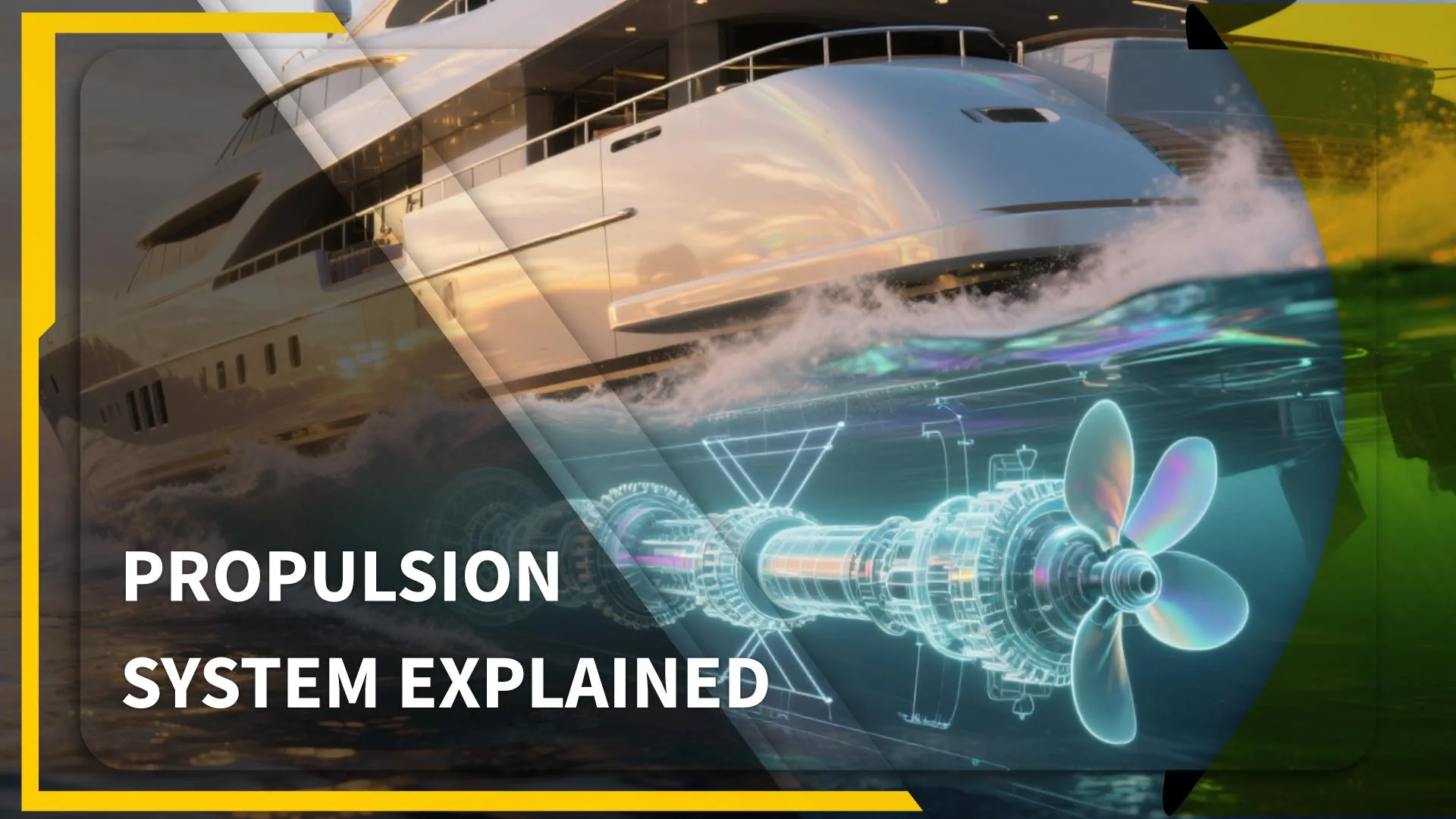
A yacht propulsion system is the chain that turns engine power into controlled thrust. It includes the prime mover, gearbox or transmission route, couplings, shaftline, bearings, seals, stern gear, propeller or thrust device, controls, cooling support, lubrication support, monitoring and the test evidence that proves the yacht is ready to leave the yard.
The system has to be read as a chain because propulsion problems often appear at the interfaces. A main engine runs cleanly alongside, then the yacht vibrates under load. A shaft seal looks serviceable, then alignment changes after launch. A gearbox is overhauled, then the coupling or foundation movement creates a new symptom. A propeller is repaired, then sea-trial data shows load imbalance.
During a refit, propulsion work belongs inside the wider technical release route. The closest service anchors are machinery and equipment for machinery-side scope and tests and surveying where measured evidence affects acceptance.
Propulsion Works as a Full Power Chain
The main engine is only the first visible part of the propulsion route. Power has to pass through mounts, foundations, gearbox, clutch or coupling, shaftline, bearings, seals and propeller before it becomes useful thrust. Controls, alarms, cooling, lubrication, fuel supply, exhaust route and instrumentation all support the same chain.
This chain view matters in a yard period. A symptom at the stern begins somewhere in the propeller, shaftline, coupling, gearbox, engine load, hull condition or control response. Vibration, speed loss and abnormal load have to be separated into power production, power transfer, shaftline geometry, thrust generation and command behaviour.
The strongest troubleshooting starts with the whole route, then narrows. That protects the owner from fixing one visible item while the actual weakness remains in an adjacent interface.
The Machinery Side Starts the Load Story
The machinery side covers the engine or other prime mover, mounts, flexible elements, gearbox, clutch or coupling, lube oil systems, cooling water, fuel supply, exhaust back pressure, controls and monitoring. A propulsion fault often becomes visible here through temperature movement, load imbalance, alarm history, oil condition, smoke, slow acceleration, abnormal sound or repeated shutdowns.
For refit planning, the machinery-side question is direct: does the power unit produce stable output under the load the yacht asks from it? Workshop checks alone give partial confidence. The propulsion package reaches stronger evidence when dockside checks, alignment review, commissioning and sea-trial behaviour agree with each other.
When the engine itself becomes the subject, the deeper adjacent article is engine overhaul. The propulsion-system article keeps the engine inside the wider route and leaves overhaul detail to that page.

Transmission Parts Carry Interface Risk
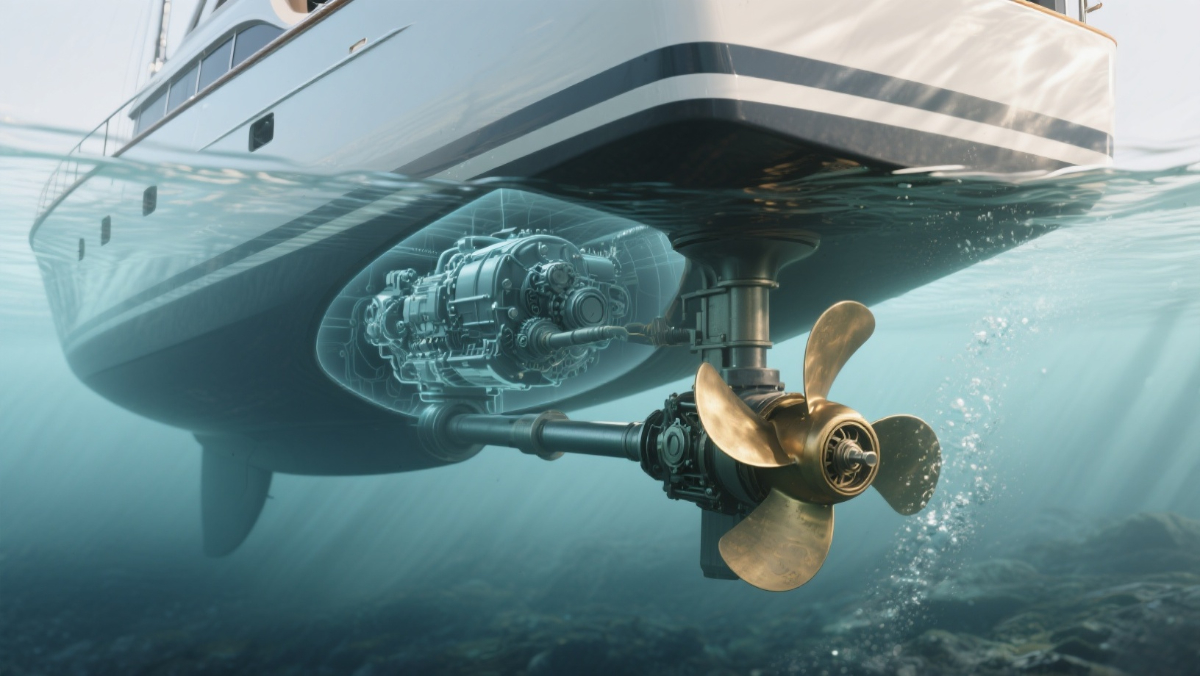
The gearbox, coupling and intermediate connections carry the load between the engine and shaftline. They also concentrate interface risk. Foundation condition, soft foot, mounting condition, coupling fit, backlash, torsional behaviour, oil condition, cooling, control response and alignment all affect how power travels through the yacht.
Transmission work becomes more exposed after removal, overhaul, mount replacement, engine movement, shaft work or collision-related repair. The equipment might look correct on the workshop bench while the installed system still carries geometry or load-transfer problems.
Propulsion release depends on installed checks. The yard has to confirm that the power route behaves as a fitted system with the separate service notes tied into one operating result.
The Shaftline Turns Geometry Into Performance
The shaftline translates machinery output into rotating thrust. Shafts, bearings, seals, stern tube, brackets, couplings and propeller fit all depend on geometry. Small errors become vibration, seal wear, bearing heat, coupling stress, noise, reduced efficiency or repeated maintenance.
Shaftline condition is affected by haul-out support, hull movement, bearing wear, previous repairs, grounding history, propeller strikes, foundation movement and installation sequence. Alignment readings taken at the wrong stage of the yard period give weak confidence because the yacht changes between dry dock, launch and loaded operation.
The detailed geometry topic belongs to shaft alignment. Where the engine position and foundation route are central, the relevant detail page is main engine alignment. The propulsion-system view ties those checks back to thrust and redelivery.
The Propeller Converts the Problem Into Thrust
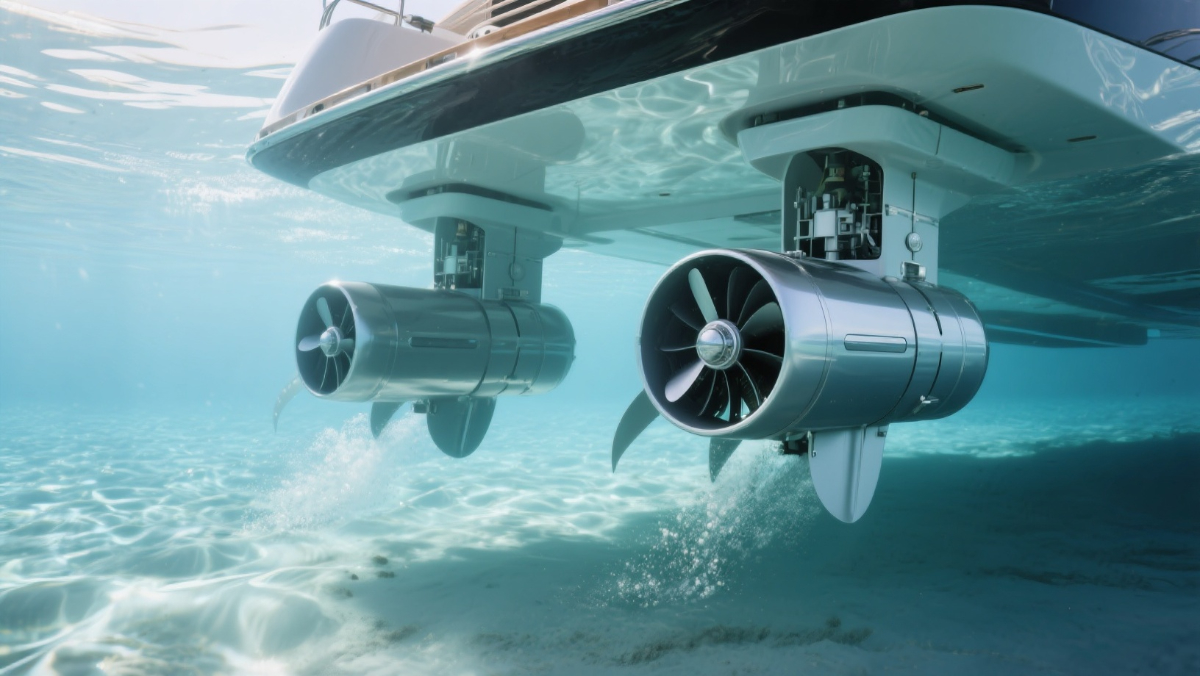
The propeller or thrust device is the final visible part of the propulsion chain. Blade condition, pitch, diameter, balance, surface finish, tip clearance, cavitation marks, fouling, damage history and shaft fit all affect how the yacht turns torque into movement.
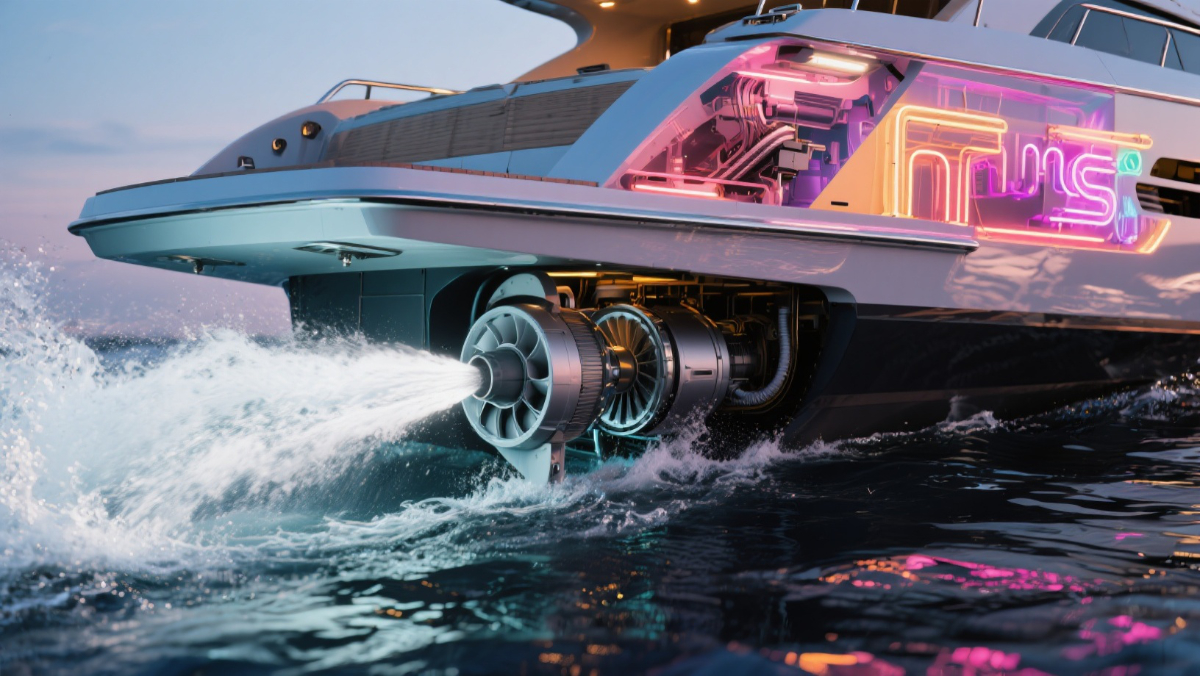
A fixed-pitch propeller gives a direct relationship between engine load, shaft speed and vessel response. A controllable-pitch arrangement adds pitch control, hydraulics, feedback, control logic and commissioning evidence. A waterjet or podded arrangement changes the thrust route again, with different inspection, control and service requirements.
The propeller is often blamed because it is visible, but the sea-trial evidence has to show whether the issue sits in thrust generation, engine load, shaftline condition, controls, hull condition or a combination of these. Propulsion diagnosis works best when the final thrust device is read with the full chain behind it.
Controls Decide How Power Becomes Command
A propulsion system also has an operational layer. Bridge controls, engine-room controls, gear engagement, pitch command, throttle response, alarms, sensors, shutdown logic and monitoring all affect how the crew uses the system.
Control faults create symptoms that look mechanical at first. A delayed command, unstable feedback signal, weak actuator response, calibration issue or alarm input problem changes propulsion behaviour without changing the engine’s basic mechanical condition. During refit, control work also interacts with electrical upgrades, automation work, cable routes, sensor replacement and commissioning.
This connects propulsion to the electrical/electronic service route when controls, monitoring or signal integrity sit on the critical path. The related service page is electric and electronic systems.
Yard Work Widens at the Interfaces
Propulsion scope often widens once the yacht is opened. A gearbox removal exposes mount condition. A shaft seal job reveals bearing wear. A propeller repair points toward shaft run-out. A cooling issue exposes restricted flow. A vibration complaint leads into alignment, foundation checks, coupling condition and sea-trial measurement.
This widening is normal in serious yacht refit work, but it has to be controlled. The owner side requires a clear route for findings, decisions, procurement, specialist attendance, retesting and handover records. Otherwise one technical symptom becomes scattered work across several trades.
For larger packages, superyacht refit project management keeps propulsion findings inside the work plan, budget route and redelivery plan.
Sea Trial Turns the Package Into Evidence
Dockside checks are necessary, but propulsion proves itself under load. Sea trial connects engine load, rpm, gear behaviour, shaftline response, vibration, temperature, pressure, alarms, speed, steering response and crew observations into one operating picture.
The trial has to follow the work that was done. A major engine intervention, shaftline job, propeller repair, control-system change or gearbox package each requires the right checks under the right operating conditions. The yacht has to show stable behaviour across the relevant range, with findings recorded clearly enough for owner-side acceptance.
If the trial creates findings, those findings return to the yard plan. The propulsion package closes when the issue is corrected, retested and recorded after the run.
The Record Closes the Propulsion Package
A propulsion package leaves the yard with usable evidence. That evidence includes scope description, removed and refitted parts, measurements, alignment records, oil or coolant findings where relevant, control checks, calibration notes, commissioning records, sea-trial observations, open-item position and handover recommendations.
Good records protect future maintenance. They also protect the owner side during acceptance because the project team separates completed work, monitored items and follow-up actions. A clean record gives the captain and yacht manager a better baseline for the next operating period.
For a wider yard period, propulsion records belong inside superyacht refit planning. Testing, survey attendance, commissioning and redelivery evidence have to be planned before the final week, especially when the yacht has a fixed departure commitment.
FAQs
Is the propulsion system the same as the main engine?
No. The main engine is one part of the propulsion system. The full route includes transmission, couplings, shaftline, bearings, seals, propeller or thrust device, controls, support systems, monitoring and release evidence.
Is the propeller part of the propulsion system?
Yes. The propeller or thrust device is the final stage that turns delivered torque into vessel movement. Its condition has to be read with engine load, shaftline geometry, hull condition and sea-trial behaviour.
What are common signs of propulsion system problems?
Common signs include vibration, speed loss, abnormal load, high temperature, gear noise, seal issues, bearing heat, smoke, slow acceleration, alarm history and sea-trial readings that differ from expected behaviour.
Does an engine overhaul solve a propulsion problem?
An overhaul solves engine-side condition when the engine is the source. Propulsion problems also come from gearbox, coupling, shaftline, bearings, seals, propeller, controls, cooling, foundations or alignment.
What has to be proven before redelivery after propulsion work?
The yard has to prove installation quality, alignment position where relevant, system operation, control response, temperatures, pressures, vibration behaviour, alarms, sea-trial performance and the final open-item position.