
If you hear the word redressor on a yacht, in a yard conversation, or in some supplier language, the equipment being described is usually a rectifier or a rectifier-based battery charger. That distinction matters. In English-language marine manuals, specifications, and fault reports, rectifier or battery charger is the term you are far more likely to see.
That may sound like a small wording issue, but it affects how people search for parts, read schematics, interpret alarms, and define scope during a refit. A captain or owner may call it a redressor, while the electrician, class surveyor, or OEM documentation refers to the same unit as a charger, DC power supply, or rectifier cabinet.
So the practical job of this page is not to treat redressor as a separate yacht technology. It is to explain what people usually mean by the term on board, where that equipment sits in the yacht’s electrical system, and why it becomes important when charging quality, DC reliability, alarms, or upgrade decisions start to matter.
What people usually mean by “redressor”
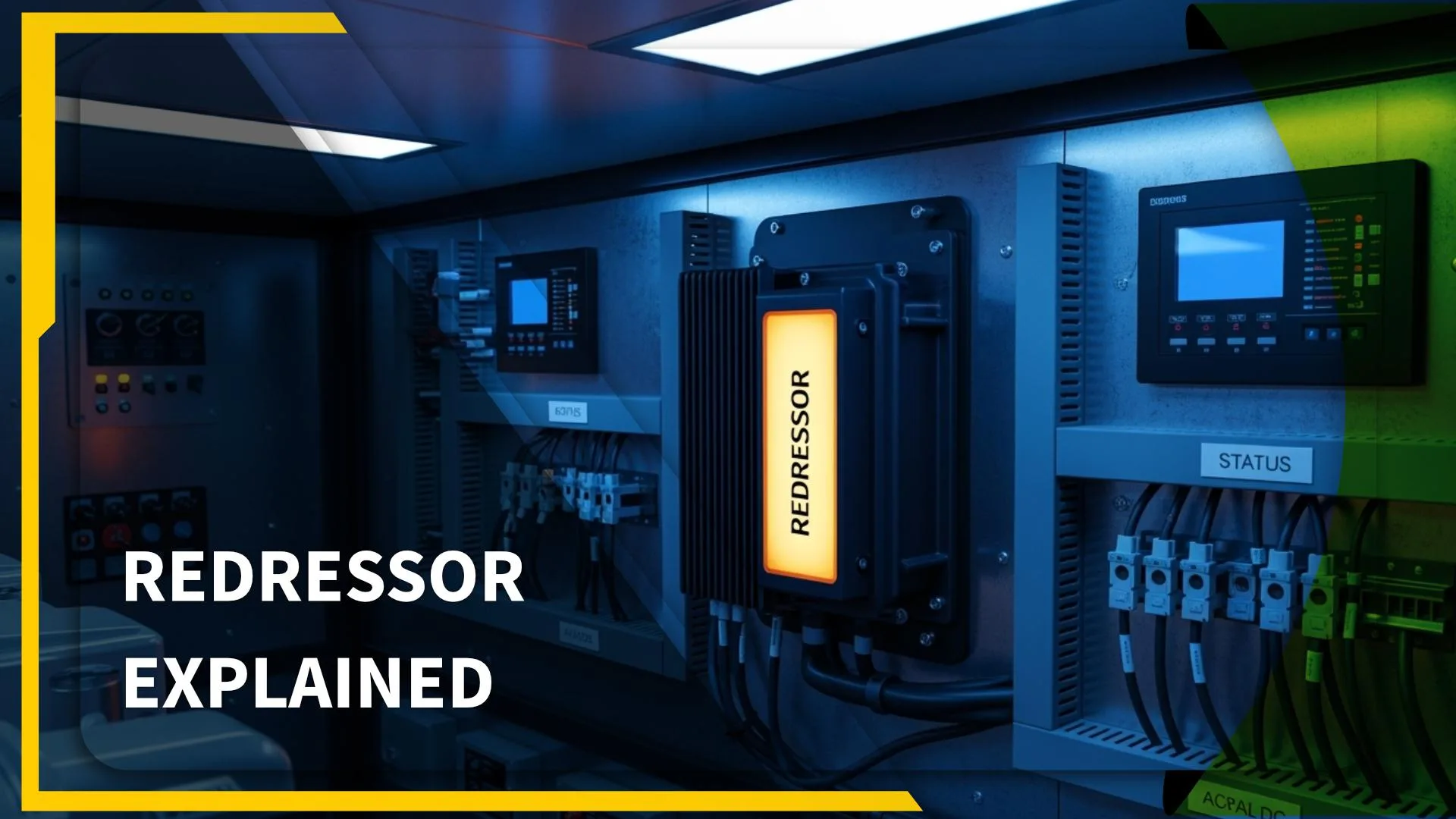
On a yacht, a so-called redressor is normally the equipment that converts AC power into DC power. In pure electrical terms, that conversion is rectification. In real yacht installations, the unit is often more than a simple rectifier. It may regulate output voltage, charge one or more battery banks, feed protected DC circuits, communicate with alarms, and switch between float, boost, or other charging modes.
That is why the plain word rectifier is technically correct, but battery charger is often the more useful onboard term. Many yachts do not have a standalone box whose only job is rectification. They have a charger with a rectifier stage inside it, and that charger supports the yacht’s wider DC system.
If you are working in English and trying to find manuals, spares, or comparable equipment, search for marine rectifier, DC charger, or battery charger rather than relying on the word redressor alone. That simple change usually gets you closer to the real technical documentation.

Where it sits in the yacht’s electrical system
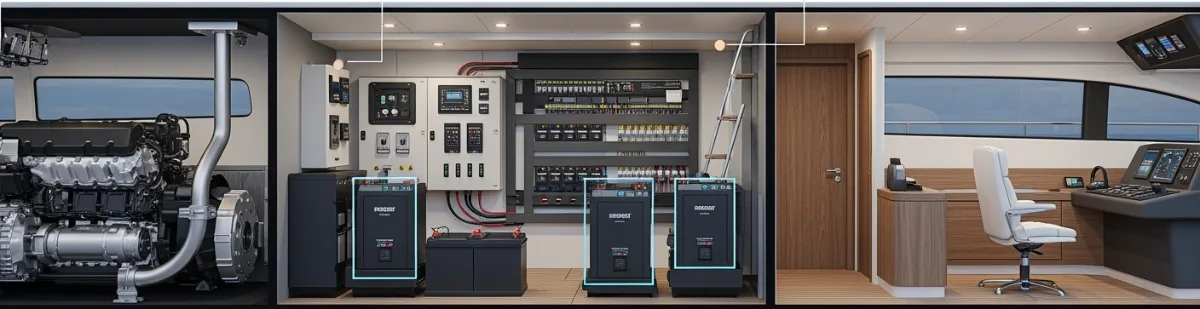
Most yachts live with both AC and DC power at the same time. Shore power and generators supply AC. Batteries store and deliver DC. A rectifier or charger sits between those two worlds by taking AC input and producing the controlled DC output needed for charging and for supported DC loads.
On smaller yachts, that may be a compact charger handling domestic and starter banks. On larger yachts, the arrangement can be more structured: dedicated chargers for service batteries, emergency batteries, bridge and radio supplies, UPS-related DC systems, or automation circuits. On coded and classed yachts, the exact arrangement depends on the vessel’s design, redundancy philosophy, and how critical loads are segregated.
This is also why the subject belongs in a serious electrical and electronics refit scope. A charger is not an isolated accessory. It affects battery life, alarm behavior, DC stability, and sometimes the reliability of equipment people do not immediately associate with charging.
Where it shows up on yachts in practice
The most obvious use is battery charging. When the yacht is on shore power or running a generator, the charger takes AC supply and maintains the battery banks at the right DC voltage. That sounds basic, but the quality of that charging process affects battery condition, heat, service life, and fault frequency.
It also matters for live DC consumers. On many yachts, the charger is not only topping up batteries. It is helping support 12V, 24V, or higher-voltage DC circuits that feed alarms, automation, bridge electronics, communication systems, emergency lighting, and control circuits. If the charger output is poor, the first complaint may be an unexplained alarm or unstable electronics rather than someone saying, “the rectifier has failed.”
A related point that often gets missed is that rectifiers also appear elsewhere in marine systems. For example, impressed current cathodic protection systems use a rectifier to supply controlled DC current to the hull protection circuit. That is a different application from battery charging, but it shows why the word rectifier is broader and more technically accurate than the word redressor.
Why it matters day to day
A charger or rectifier usually gets attention only when there is a problem, but it quietly influences everyday reliability. Batteries charge properly or they do not. DC alarms stay stable or they become noisy. Sensitive electronics see clean voltage or they see ripple, drop, and irregular behavior. Those differences affect crew workload long before they turn into a major defect.
The unit also matters operationally whenever the yacht changes power mode. Moving between shore power, generator supply, and battery-backed operation puts more focus on the quality of the charger, the health of the batteries, and the way protections and alarms are set up. This becomes even more visible when the yacht is taking shore power through a shore transformer, because the wider AC side may be stable while the DC side still has charger-related problems.
For management companies and technical representatives, the practical issue is not whether the unit exists. It is whether the DC system has been sized, configured, and documented properly. A charger that is undersized, poorly ventilated, badly set up for the battery chemistry, or badly integrated into the distribution network will create repeat defects.
What people often confuse it with
The first confusion is with an inverter. A rectifier or charger turns AC into DC. An inverter does the opposite, taking DC from batteries and producing AC for onboard loads. An inverter-charger combines both functions, which is why people often mix the terms up.
The second confusion is with a generic converter. Converter is a broad label. It may describe AC-to-DC conversion, DC-to-AC inversion, DC-to-DC voltage conversion, or frequency conversion. That is useful in conversation, but too vague for technical planning.
The third confusion is with a shore power unit. A shore transformer handles isolation and voltage adaptation on the AC side. It does not do the same job as a battery charger. Both may sit in the wider onboard power chain, but they solve different problems.
A fourth confusion appears in engine rooms: the rectifier inside an alternator is not the same thing as the yacht’s main battery charger cabinet. Both convert AC to DC, but one is part of the engine-driven charging arrangement and the other is part of the vessel’s fixed electrical system.
What goes wrong
Failures are not limited to total shutdown. A charger can still be online and still be a problem. Common faults include failed cooling fans, overheating, damaged diodes or power modules, unstable output voltage, excessive ripple, poor battery temperature compensation, corroded terminals, weak cable connections, blown protective devices, and charging settings that do not match the installed battery type.
On older yachts, a unit may also be functionally obsolete before it is completely dead. A charger that was acceptable for conventional lead-acid banks may become the wrong tool after a battery upgrade, a bridge-electronics refresh, or a wider DC load change. Lithium conversions make this especially important because charger logic, protection philosophy, and BMS integration need to be thought through properly.
Another common problem is poor fault-finding logic. Crew may replace batteries repeatedly when the real issue is charger regulation. Or they may blame a bridge device for nuisance alarms when the DC supply is noisy. Good troubleshooting starts with the system view: input power, charger status, output voltage, load behavior, battery condition, and alarm history together.
Why this becomes a refit topic
Rectifiers and chargers often become more visible during refit because yard periods expose hidden weakness in electrical systems. Once switchboards are opened, battery banks are reviewed, cable routes are renewed, or monitoring is upgraded, it becomes easier to see whether the existing charger is correctly sized, correctly located, and still appropriate for the yacht’s current operating profile.
This is also one of those items that can expand project scope quietly. A simple charger replacement may turn into cable renewal, breaker coordination, new ventilation requirements, updated battery monitoring, revised charger settings, alarm integration, and commissioning tests. None of that is unusual. The charger sits in the middle of a live electrical ecosystem, so changing it often affects more than one box.
During acceptance testing, the useful questions are practical ones. Does the unit hold stable float voltage? Does it respond properly under load? Are boost or equalization settings controlled correctly? Do the alarms report meaningful faults? Does the charger support the installed battery chemistry and bank arrangement? Those answers tell you more than a brochure specification sheet.
If you use the word redressor on a yacht, most professionals will understand what you mean. But if you want the technically correct English term, use rectifier for the AC-to-DC conversion function and battery charger for the onboard equipment most yacht crews are actually dealing with.
That distinction helps when you are reading manuals, discussing defects, scoping an upgrade, or trying to understand why the yacht’s DC side is not behaving properly. On board, the unit may look simple. In practice, it has a direct effect on battery life, DC reliability, fault response, and the quality of an electrical refit.
FAQs about redressors on yachts
How do I know if my yacht actually uses a redressor?
If your yacht has AC power sources (like generators or shore power) and also operates DC systems such as battery banks or emergency circuits, it almost certainly uses a redressor. You can check your yacht’s electrical schematics or ask your engineer to point out the unit — it’s often located in or near the main distribution panel or battery charging area.
Can a redressor charge all types of marine batteries?
Most redressors can charge lead-acid batteries and are often compatible with AGM and gel types, but lithium batteries may require more advanced charging profiles. Always make sure your redressor’s output matches the voltage and charging requirements of your battery system to avoid overcharging or reduced battery life.
What happens if the redressor fails while I’m running on shore power?
If the redressor fails, any systems that rely on DC power could lose function or run solely on battery backup. This might affect navigation electronics, emergency lighting, or alarm systems. That’s why regular checks and built-in redundancy are critical on larger yachts.
Is it possible to upgrade an older redressor to a more modern unit?
Yes. Modern redressors offer better efficiency, more accurate voltage control, and digital monitoring features. During a refit or electrical upgrade, replacing an outdated redressor can help improve overall system reliability and reduce energy waste.
How is a redressor different from an inverter-charger system?
A redressor converts AC to DC only. An inverter-charger is a two-way device that both converts AC to DC (for charging) and DC to AC (for powering appliances). They can sometimes work together on larger yachts, with redressors handling dedicated loads and inverter-chargers managing more dynamic power flows.
Do redressors require regular maintenance?
They’re generally low maintenance, but still need visual inspections, cleaning, and voltage output checks as part of regular engine room routines. Cooling fans and heat sinks should be kept dust-free, and terminals should be checked for corrosion or loose connections.
Can a redressor overheat or cause electrical faults?
Yes, especially if it’s undersized, poorly ventilated, or operating under continuous high load. Overheating can lead to voltage instability or even component failure. Most newer units have built-in thermal protection and alarms to prevent serious damage.
Should I keep a spare redressor onboard?
For critical applications on large yachts, having a backup redressor or at least key spare parts (like fuses, fans, or diodes) is a smart move. For smaller vessels, routine inspection and planned replacement during refits can prevent unexpected failures without needing a spare unit on hand.