


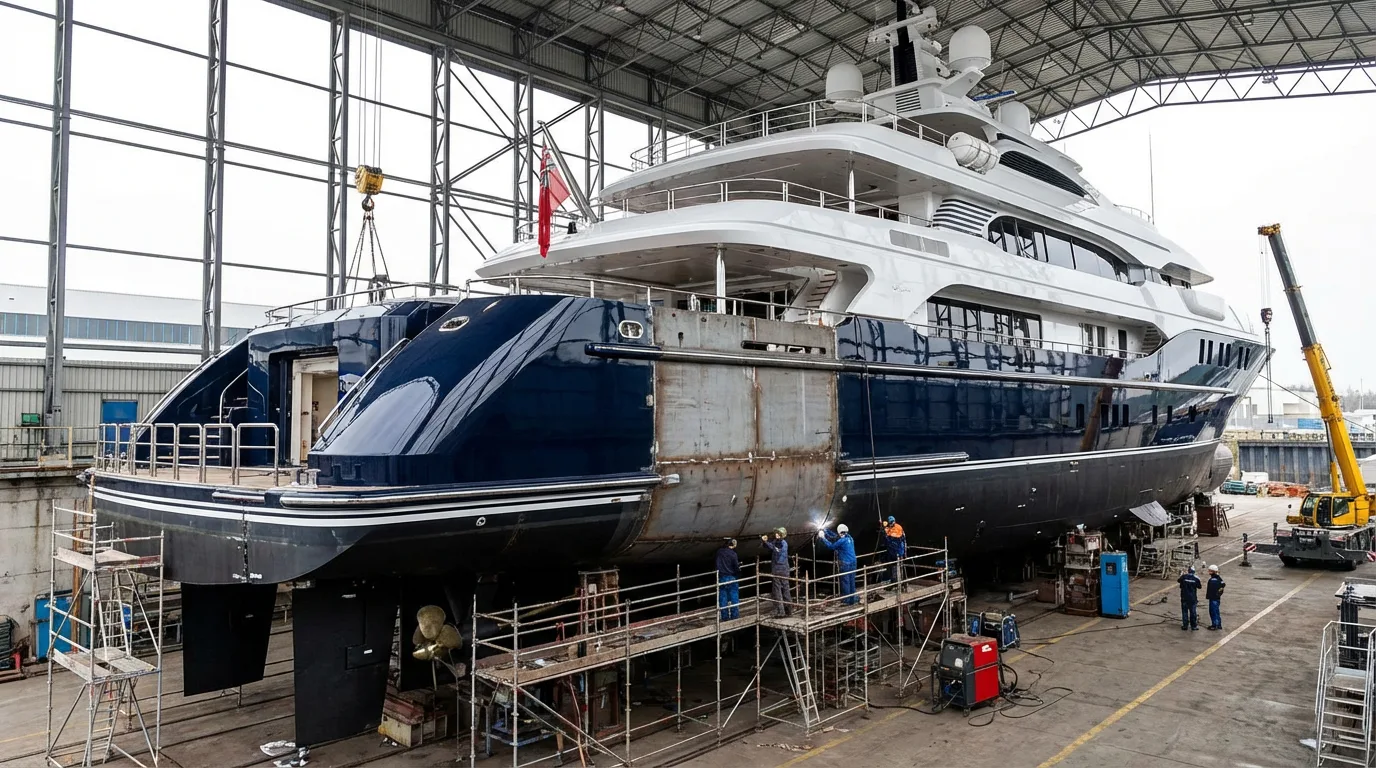
A hull extension is a structural conversion that increases the yacht’s length and adds new buoyancy, new structure, and usually new usable volume. In yacht projects, the extension is often carried aft, though the technical burden depends on where the new section is inserted and how far the original platform is being reworked.
Once the project starts changing hull geometry, longitudinal strength, stability, freeboard, tonnage, shafting or steering interfaces, and certification logic, it sits much closer to rebuild than to a routine superyacht refit. That distinction matters early, because the commercial path, approval path, and redelivery risk all change with it.
What the Extension Changes Immediately
A hull extension adds more than length.
It usually affects several parts of the yacht at the same time:
- buoyancy and trim
- weight distribution and longitudinal strength
- stability and loading condition logic
- watertight and weathertight arrangements
- aft structure, deck geometry, and supporting members
- propulsion, shaftline, steering, and appendage interfaces where the extension sits close to the stern structure
- gross tonnage and regulatory thresholds if the enclosed volume changes materially
That is why the project has to be read as a platform change, not as a cosmetic length gain.
Why Owners Move Into Hull Extension
The commercial reason is usually one of these:
- more aft volume for guest use, crew support, storage, or technical space
- better deck and waterside use through a larger stern arrangement
- layout correction when the original yacht no longer fits the owner’s operational brief
- asset repositioning before resale, charter use, or a wider rebuild program
Those drivers are real, though the project only works when the original platform can absorb the structural and regulatory burden without turning the whole program into uncontrolled drift.
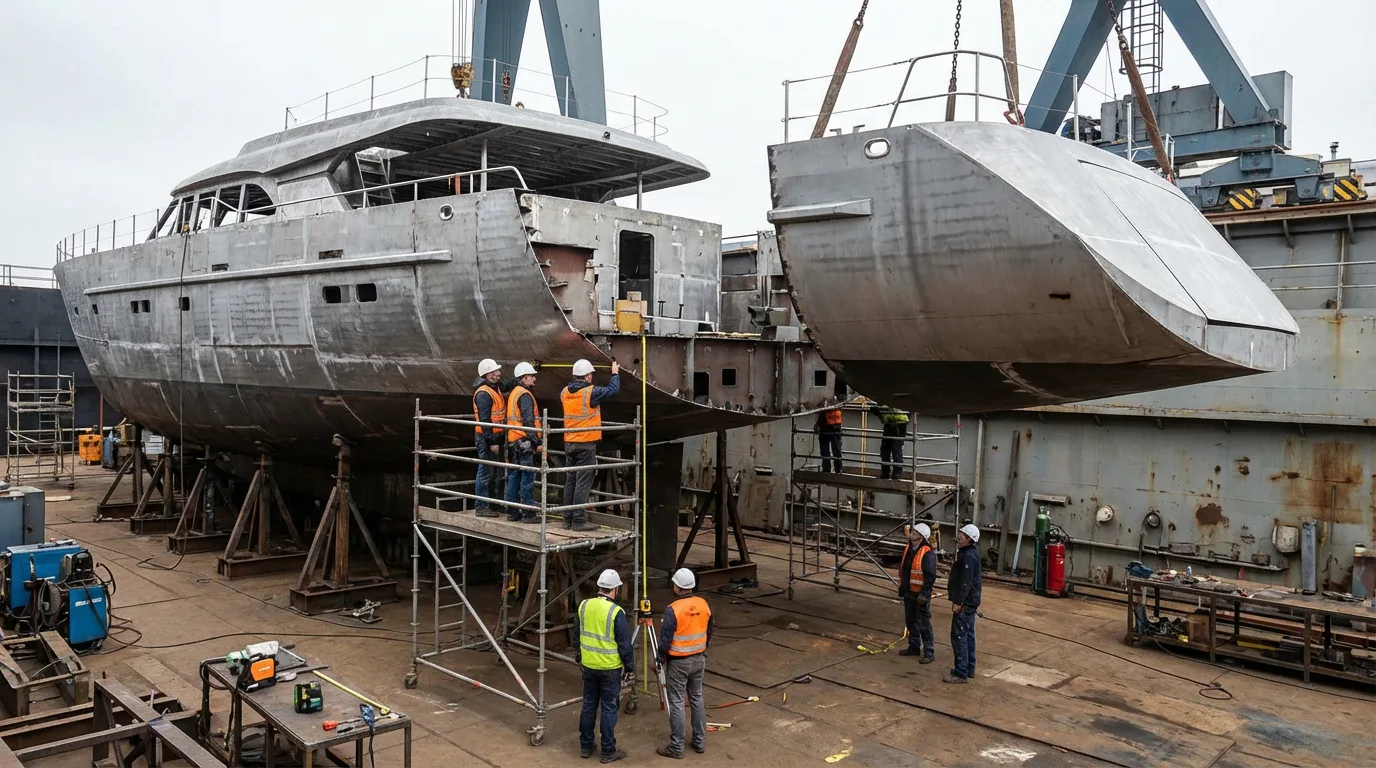
Engineering Has To Lead Before Steel Starts Moving
Hull extension is front-loaded with engineering.
The project normally needs clear answers on:
- the structural concept for the inserted or extended section
- load paths and reinforcement strategy through the existing hull and deck structure
- stability effects across the operating conditions of the yacht
- freeboard, subdivision, and watertight integrity implications
- machinery and systems rerouting if tanks, exhausts, shafts, steering gear, hydraulics, or electrical services are affected
- the revised weight estimate and the new center-of-gravity picture
IMO’s ship design and stability framework places structure, subdivision, stability, load line, tonnage measurement, survey, and certification in the same regulatory field. That matches yard reality well. A hull extension is a multi-discipline engineering package from the first meeting onward.
Approvals Move With the Geometry
A hull extension usually widens the approval path quickly.
The key control points often sit around:
- class review for structural design, scantlings, drawings, calculations, and survey attendance
- flag-side review where statutory implications, certificates, or formal approvals are affected
- stability documentation and the revised operating basis of the yacht
- load line implications because freeboard and watertight integrity sit directly inside hull-form change
- tonnage implications if enclosed volume and measured spaces are altered
A useful shorthand exists in IMO language: under the MARPOL Annex VI interpretation currently published in `MEPC.1/Circ.795/Rev.9`, a major conversion includes a conversion that substantially alters the dimensions, carrying capacity, or engine power of the ship. A hull extension can therefore push the yacht into a major-conversion logic very quickly, depending on the scope.
If the project team still needs to separate the approval roles more clearly, classification society and flag state rules are the closest support pages in the cluster.
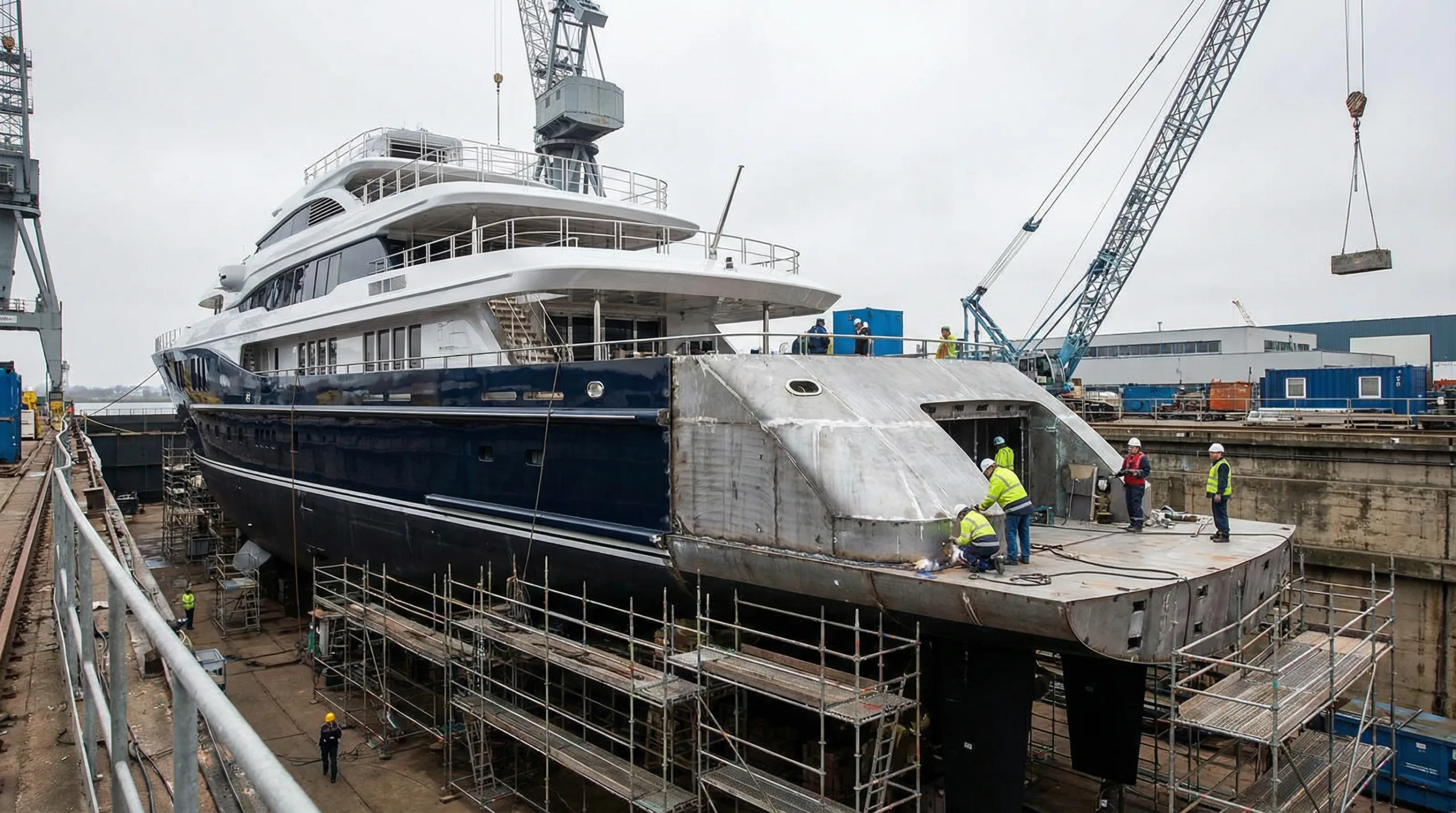
Yard Production Gets Heavy Fast
The fabrication work is only one part of the delivery path.
The critical path usually runs through:
- strip-out and access creation in the affected stern or mid-body areas
- cutting and joining strategy for the existing hull and deck structure
- alignment control so the new geometry lands where the engineering package expects it
- systems integration across piping, cabling, tanks, exhaust runs, controls, and structural penetrations
- inspection, NDT, and survey hold points before close-up and coatings
- recommissioning and sea-trial logic once the yacht returns to live operating condition
This is one of the clearest cases where structural fabrication, outfit work, machinery integration, and approvals all share the same interface risk. Once those work packages start moving in parallel, the project needs rebuild-level coordination rather than a lighter refit rhythm.
Where Cost and Schedule Usually Expand
The biggest pressure points are familiar:
- underestimated engineering depth before steel work starts
- existing-structure findings discovered after opening up
- scope growth around systems and interiors once the new geometry starts affecting neighboring spaces
- stability and approval consequences landing later than planned
- late owner changes after the extension concept is already driving production
That is why hull extension discussions usually belong in the same commercial conversation as rebuild strategy, contract structure, and redelivery risk.
When the Project Has Already Moved Into Rebuild
A hull extension can sit inside a larger rebuild, or become the trigger that turns a refit into one.
The threshold usually appears when the job carries several of these together:
- major structural alteration
- revised arrangement across multiple decks
- deep systems relocation or renewal
- fresh stability and regulatory basis
- significant tonnage or compliance consequences
At that point, the cleaner commercial frame is usually rebuild. The project is still working from an existing yacht, though the engineering, production, and approval burden has already moved beyond a normal refit envelope.
FAQ
Is a hull extension mainly an aft-platform project?
Many yacht extensions are carried aft because that is where owners often want more usable volume and waterside space. The technical burden still depends on structure, systems, stability, and the amount of rework flowing into the existing yacht.
Does a hull extension always trigger new approvals?
It commonly widens the approval path because dimensions, structure, stability, watertight arrangements, and measured volume can all be affected by the conversion.
Can a hull extension stay inside a normal refit budget logic?
Smaller scope changes may stay close to heavy refit territory. Once the job starts altering the platform deeply, the project usually needs rebuild-level budgeting and control.
What usually gets underestimated first?
The biggest underestimation is often the knock-on effect: stability work, structural reinforcement, systems rerouting, interior consequences, inspection gates, and revised certification logic around the new hull geometry.