


Port State Control is the inspection of foreign ships in national ports to check whether the vessel, its equipment, and its operation comply with the applicable international rules.
For yachts moving internationally under the relevant statutory framework, PSC matters because the yacht can leave the yard looking finished while still being operationally exposed at the next port call. A refit only closes cleanly when the physical works, certificate trail, onboard records, and crew readiness all line up. That is why PSC readiness sits inside both the wider superyacht refit path and the project’s tests and surveying path.

IMO defines PSC as the inspection of foreign ships in national ports to verify that the ship’s condition and equipment comply with international regulations and that the ship is manned and operated in compliance with those instruments.
In practice, PSC works as a back-up to flag-state implementation. The flag Administration carries the primary responsibility for the ship’s standards. PSC acts as the second control line when the vessel arrives in a foreign port.
That distinction matters in refit work because the yard may complete the technical scope, while the next port authority is looking at something different: whether the ship’s real condition still matches its certificates, documents, and operational readiness.
What the PSC Officer Usually Looks At First
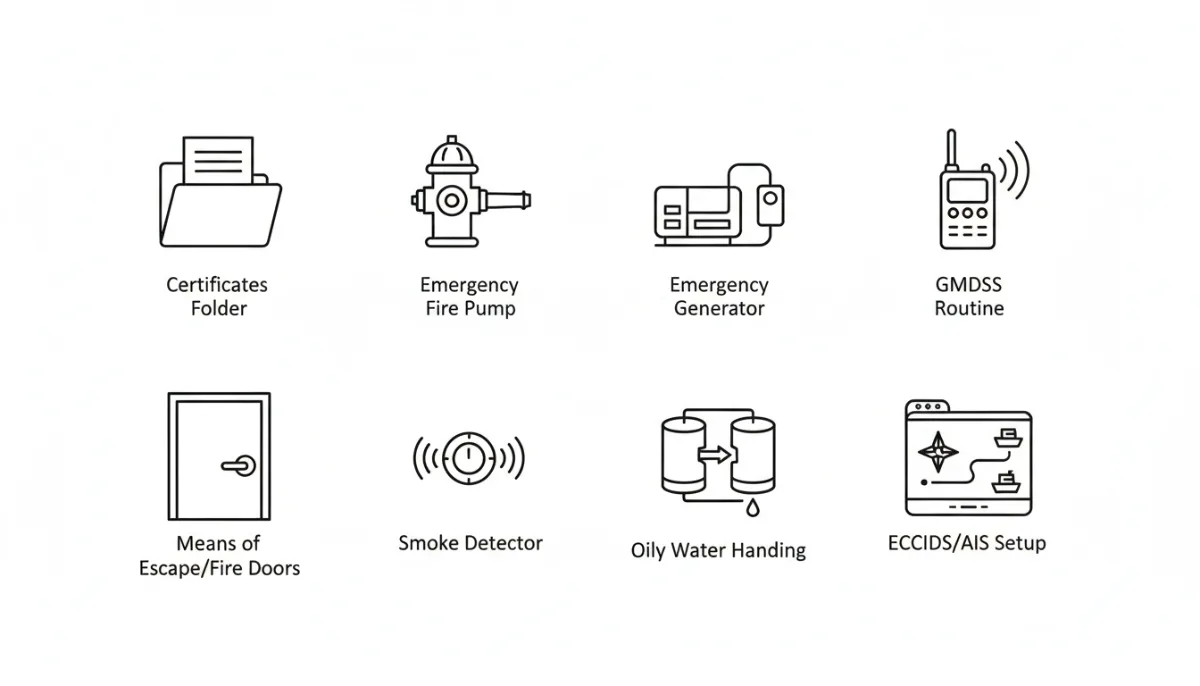
A PSC inspection normally starts with the basics on board.
That usually means:
- valid certificates and statutory documents
- whether the ship’s condition matches those documents
- key equipment condition in the areas covered by the relevant conventions
- crew familiarity with essential shipboard procedures
IMO’s PSC guidance is clear here: where there are no clear grounds for concern, the inspection should stay limited. Once clear grounds appear, the inspection can widen into a more detailed one.
That is one reason refit close-out needs more than a signed work list. The yacht needs a coherent certificate, documentation, and familiarization picture when it leaves the yard.
How a Clean Inspection Turns Into Deficiencies or Detention
PSC matters commercially because the outcome is not binary.
In practical inspection handling, the usual progression looks like this:
- Clean inspection: no deficiencies recorded.
- Deficiency report: deficiencies are recorded with convention references and required follow-up action.
- Rectification window: some items may be allowed to be corrected within a short defined period.
- Before departure action: some items must be corrected before the ship sails.
- Detention: serious deficiencies can lead to detention until rectification is verified.
Paris MoU inspection guidance shows how practical this becomes in port: some items can be recorded as rectified, some are left to be corrected within a short period, some must be corrected before departure, and serious cases can trigger detention.
For the owner team, this is the real consequence of weak close-out. PSC does not read the yard invoice. It reads the ship as presented in port.
Why PSC Matters Directly After a Refit
A refit can create PSC exposure in familiar ways:
- certificates or endorsements lag behind the completed works
- updated manuals, records, or statutory files are incomplete
- new or modified systems have been installed, though testing and familiarization remain weak
- open items have been accepted commercially, though they still affect compliance or operational readiness
- crew know the old arrangement better than the new one
This is why PSC should be treated as a redelivery filter, especially on yachts that will trade internationally after the yard period. The yacht may be technically out of the yard and still operationally unready for the next inspection environment.
What the Owner Team Should Lock Before Departure
PSC readiness should be built before the yacht sails, not explained after the inspection.
The owner-side file should be clear on:
- which certificates, endorsements, and onboard documents must match the refit outcome
- which test records and commissioning records must be complete
- which deficiencies, temporary measures, or open items remain and whether they affect departure
- which crew familiarization steps are required on modified systems
- which class and flag actions have been completed
This is where a disciplined refit brief and a strong owner-side control point help. On heavier projects, that control often sits with the captain, yacht manager, or owner’s representative.
How PSC Relates to Flag State, Class, and Survey Work
PSC sits downstream from the rest of the governance chain.
Flag state rules govern the statutory side of the vessel. Classification society follows the class side where classed works are involved. A marine survey may support condition review, compliance checks, or post-work verification.
PSC then becomes the foreign-port control point that checks whether the ship being presented in port still stands up against the applicable framework.
So PSC is best understood as a consequence check. It tests whether the refit team has actually closed the statutory and operational loop.
FAQ
Does PSC apply to every yacht?
PSC applies to foreign ships visiting national ports under the relevant convention and control framework. On larger yachts operating internationally, especially where statutory certification is in play, PSC readiness becomes much more relevant.
Can a yacht be delayed after a refit even if the yard work is finished?
Yes. A vessel can face deficiency action or detention if the port State finds serious gaps between the ship’s condition, its certificates, its documents, or its operational readiness.
What usually triggers a more detailed PSC inspection?
Clear grounds that the ship or its equipment does not correspond substantially with the certificates, or that the crew are unfamiliar with essential procedures, can trigger a more detailed inspection.
Why should refit teams think about PSC before redelivery?
Because the next port may be the first real external check of whether the refit was closed properly from a statutory and operational point of view.