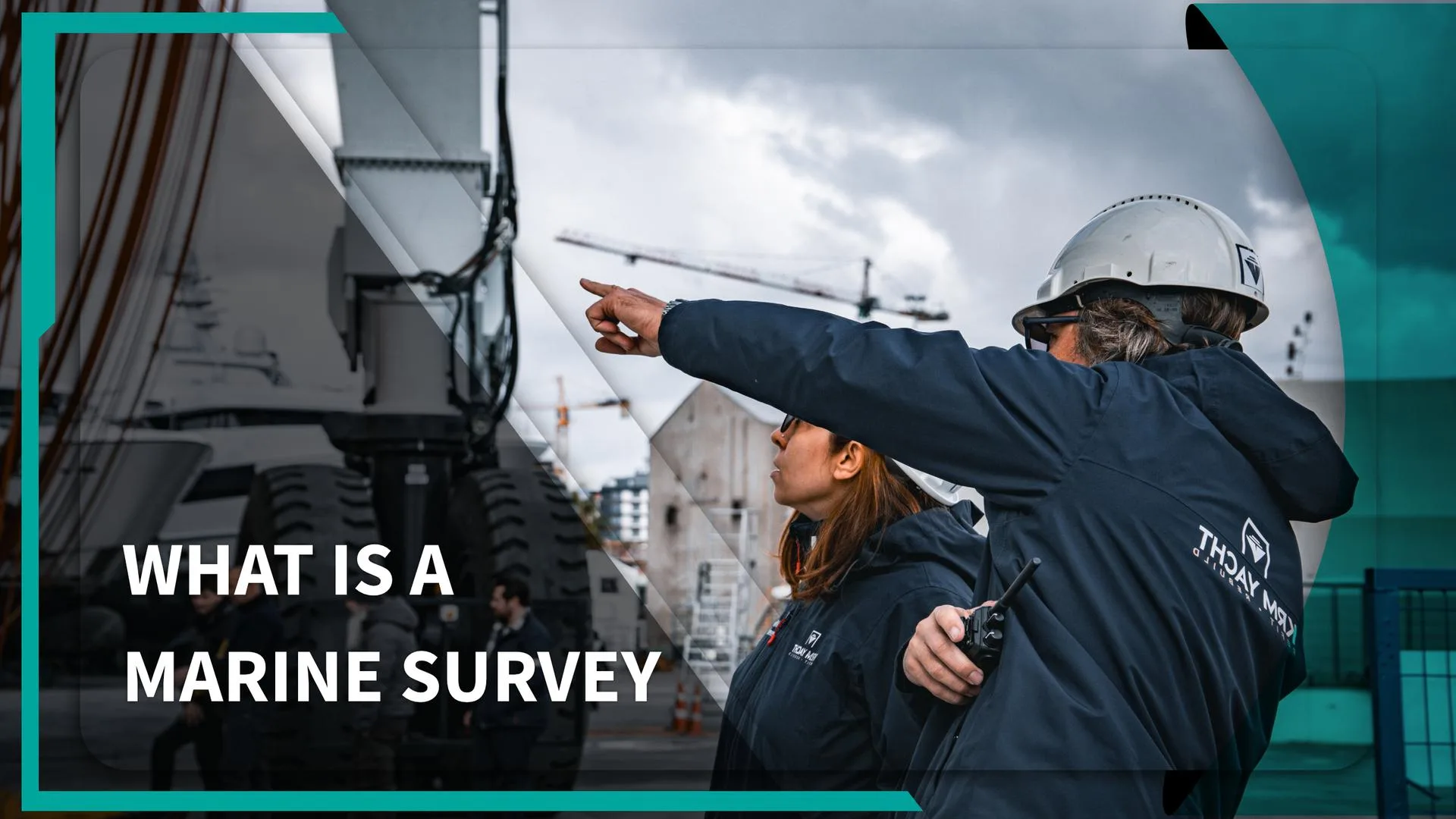
A marine survey is a professional inspection of a vessel carried out to assess condition, identify defects, and document findings for a specific purpose. On a yacht, that purpose may be purchase, insurance, class or statutory compliance, damage review, or refit planning.
The key point is that “marine survey” is a broad term. The scope changes with the assignment. A pre-purchase survey, an underwriting survey, and a class renewal survey all look at the yacht through different lenses and produce different outcomes.
What a marine survey usually covers
A marine survey can include some or all of the following, depending on the brief:
- Hull, structure, coatings, corrosion, and watertight integrity
- Machinery, shafting, steering gear, and auxiliary equipment
- Electrical systems, navigation equipment, and safety systems
- Tanks, piping, HVAC, hotel systems, and onboard services
- Certificates, maintenance records, previous findings, and repair history
- Operational testing, sea trial attendance, haul-out inspection, or thickness checks where required
On larger yachts, the survey often becomes more discipline-specific. Structural areas, machinery spaces, bridge systems, lifesaving appliances, and compliance items may each need separate attention.
Common types of marine survey
Pre-purchase survey
This is the survey most people recognize first. It is used before buying a yacht and focuses on condition, defects, risks, and likely cost exposure. It often includes a physical inspection, system checks, and sea trial attendance.
Insurance or underwriting survey
This survey supports an insurer’s risk review. It is usually narrower than a full pre-purchase survey and concentrates on condition, safety, and insurability.
Damage survey
A damage survey records the nature and extent of damage after an incident. It may also help separate old defects from new incident-related findings and support repair planning.
Class or statutory survey
These surveys are tied to compliance. They are carried out under the rules of a classification society, flag administration, or recognized organization so certificates can be issued, renewed, or maintained.
Refit-entry or scope-definition survey
In a refit context, the survey helps define the work package before yard production starts. It is used to confirm actual condition, expose hidden repair items, and turn assumptions into a workable scope. That is also where a solid refit brief starts to matter.
Who requests a marine survey
The client depends on the job. A marine survey may be requested by:
- A buyer before acquisition
- An owner reviewing condition or damage
- An insurer or lender
- A class society or flag-related authority
- A yacht manager or owner’s representative
- A yard team building the refit scope around verified findings
That matters because the report follows the client brief. A buyer wants decision clarity. An insurer wants risk visibility. A class-related survey focuses on compliance. A refit survey needs findings that can be turned into planning, procurement, access, and repair actions.
What you normally receive at the end
The usual output is a written report. Depending on the survey type, that report may include:
- Vessel identification details
- Inspection observations
- Defects and deficiencies
- Photographs
- Recommendations for repair or further testing
- Compliance-related findings
- Valuation comments where the brief requires them
A useful report tells the reader what was inspected, what was found, how serious it is, and what needs to happen next.
Why marine surveys matter in yacht refit
In refit work, survey findings often decide whether a package stays small or grows into a wider yard period. A survey may uncover steel renewal, coating breakdown, pipe wastage, machinery wear, electrical issues, or certification items that were not fully visible at the quoting stage.
That changes the planning sequence. Once defects are verified, the team can define access, arrange specialist attendance, line up class or flag involvement where needed, and build a scope of work on confirmed condition rather than assumptions.
For that reason, marine surveys are often one of the first technical filters in a serious yard period.
Marine survey, marine surveyor, and class survey: the difference
These terms are often mixed together.
A marine survey is the inspection and reporting process.
A marine surveyor is the professional carrying out that work.
A class survey is one specific survey type tied to classification rules and certificate status. It sits inside the wider marine-survey world, but it is not the same as every independent condition or pre-purchase survey.
If the question is whether a yacht needs a marine survey, start with the decision being made. Purchase, insurance, compliance, damage review, and refit planning each require a different survey brief.
If the findings are feeding directly into technical work, the next step is usually to convert that report into a defined yard package through tests and surveying.