

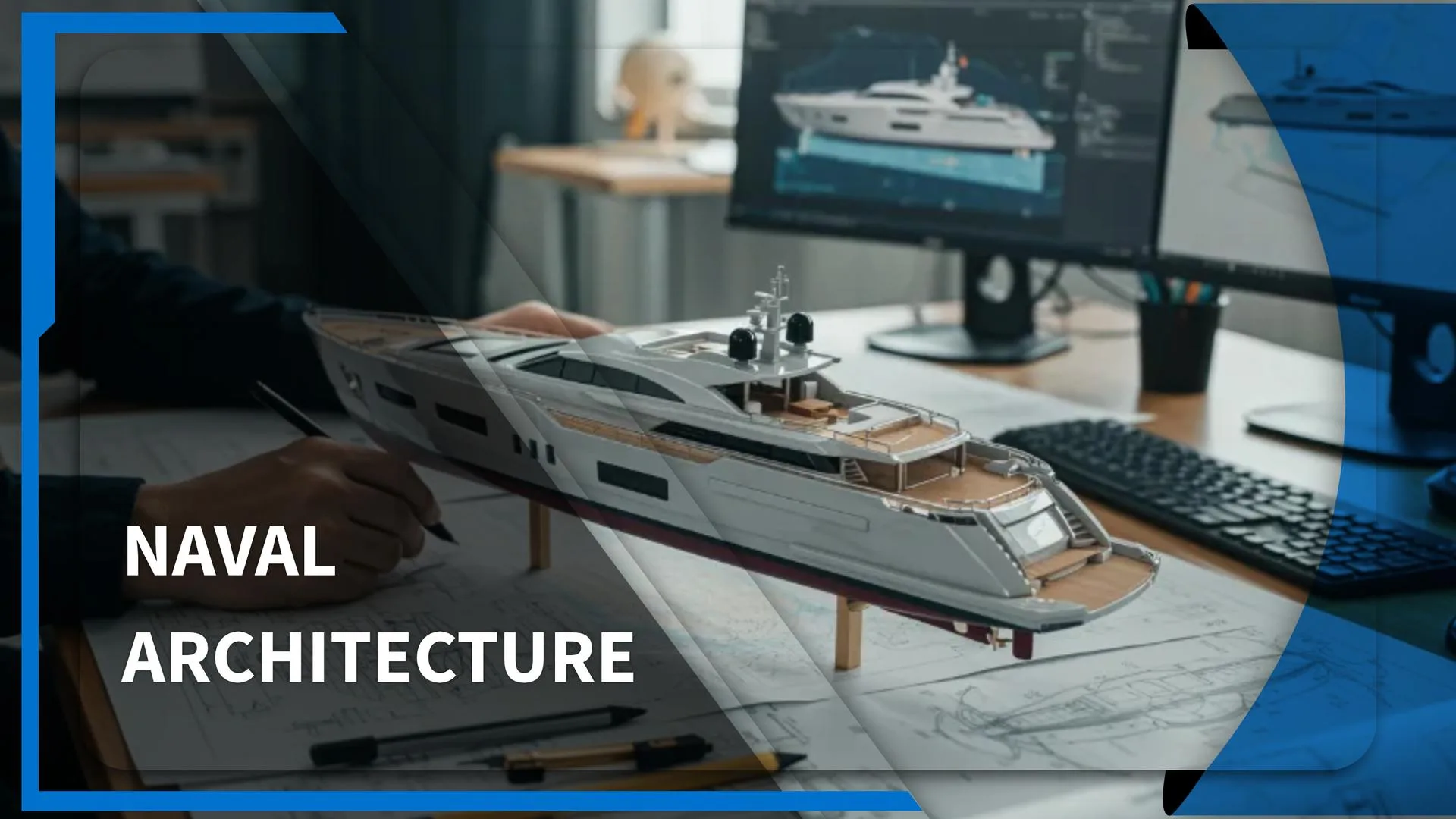
Short answer: Naval architecture is the engineering discipline concerned with the design, construction, maintenance and operation of ships, yachts and other marine vessels and structures. A naval architect makes sure a vessel floats correctly, stays stable, is strong enough, moves efficiently and meets the rules that apply to it. On a yacht, naval architecture matters not only when she is built but also whenever she is significantly modified in a refit or rebuild.
What Does Naval Architecture Mean?
Naval architecture is the engineering of ship and yacht design: it covers the engineering behind any vessel. Its main areas are:
- Hydrostatics and stability: how the vessel floats, its trim, and whether it stays upright and recovers from heeling.
- Resistance and propulsion: the hull’s resistance through water, and the engines, propellers and power needed to move it.
- Seakeeping and manoeuvring: how the vessel behaves in waves and how it turns and handles.
- Structural design: making the hull and superstructure strong enough for the loads they carry.
- Weight control: tracking weight and centre of gravity through design, build and later modifications.
- Rules and compliance: meeting classification society and flag requirements.
In Turkish, naval architecture is usually translated as “gemi inşaatı mühendisliği”, the engineering of ship design and construction.
What Does a Naval Architect Do?
A naval architect turns a concept into a vessel that works. On a yacht project, that typically includes:
| Area | What the naval architect does |
|---|---|
| Hull form | Develops the hull shape for speed, efficiency, seakeeping and comfort |
| Stability | Calculates stability for each loading condition and prepares the stability information |
| Structure | Designs the hull and superstructure structure and scantlings |
| Weight | Estimates and tracks weight and centre of gravity |
| Propulsion | Matches engines, propellers and power to the hull and speed |
| Approvals | Prepares drawings and calculations for the classification society and flag state |
Naval Architect vs Yacht Designer vs Marine Engineer
A naval architect, a yacht designer and a marine engineer handle different parts of a vessel, and on many projects they work together:
- A yacht designer or stylist focuses on exterior styling and interior concept, and may also handle technical design.
- A naval architect develops stability, hydrodynamics, structure and technical compliance.
- A marine engineer focuses on machinery and systems, such as engines and propulsion; electrical and HVAC work may involve specialist engineers.
The same firm can offer more than one of these services, or they can be separate companies on the same project.
Naval Architecture in Yacht Refit and Rebuild
Naval architecture becomes critical in a refit whenever the yacht’s weight, structure or arrangement changes. Typical examples are hull extensions, new or enlarged superstructure, moving or adding heavy equipment such as tenders, cranes, stabilizers or engines, and changes to tanks or layout.
After significant modifications that affect the yacht’s lightship weight or centre of gravity, the stability is reassessed under the applicable flag and code requirements. Where needed, this involves a lightweight survey or an inclining experiment, and revised stability information approved by the flag Administration or a recognised organisation acting for it. Structural changes also need drawings and calculations approved by the classification society where class applies.
For example, M/Y Newal, a 1988 Heesen in aluminium, came into KRM Yacht at 28 m and left at 31.8 m after a 3.8 m stern extension with a new aluminium transom. See the M/Y Newal project, hull extension and rebuild.
KRM Yacht is a refit and rebuild yard, not a design firm. On structural projects, naval architects prepare the calculations and submissions for class and flag approval, and the yard carries out the structural work. See engineering and design.

Weight, structure and layout changes in a refit need naval architecture input early.
Stability Rules for Yachts and Ships
Stability rules depend on the vessel type, its use and its flag. The IMO 2008 Intact Stability Code sets intact stability criteria for ships within its scope: Part A is mandatory and Part B contains recommendations. Yachts follow the stability requirements of the applicable flag requirements and yacht codes, such as the Red Ensign Group Yacht Code, whose Part B covers yachts carrying 13 to 36 passengers on international voyages. Requirements for private yachts vary by flag and class. See classification society and flag state rules.
Why Naval Architecture Matters to Owners
Good naval architecture shows up in everyday use: a comfortable motion at sea, efficient fuel use and range, good handling, enough interior volume and headroom, and low noise and vibration. Poor decisions, especially weight added during refits without proper stability checks, can reduce safety margins.
Frequently Asked Questions
What is naval architecture?
Naval architecture is the engineering discipline of designing, building, maintaining and operating ships, yachts and other marine vessels, covering stability, hydrodynamics, structure, propulsion and weight.
What does naval architecture mean in Turkish?
It is usually translated as “gemi inşaatı mühendisliği”, the engineering of ship design and construction.
What is the difference between a naval architect and a yacht designer?
A yacht designer usually focuses on styling and interior concept, while a naval architect develops the stability, hull form, structure and technical compliance. The roles can sit in the same firm or in separate firms.
Do I need a naval architect for a refit?
It depends on the technical effect of the changes. If the refit changes the yacht’s weight, structure, layout or tanks, stability and structure may need to be reassessed and approved by class and flag. Even interior work can add significant weight, for example heavy stone or new furniture, so it is worth checking early.
What is an inclining experiment?
It is a test that determines a vessel’s vertical centre of gravity by moving known weights across the deck and measuring the heel. The lightship displacement is found separately from draught readings, water density and hydrostatic data. It is used to confirm stability after build or significant modifications, where required.
I’m extending my yacht’s hull: does the yard do the naval architecture, or do I hire a naval architect?
It depends on the project. A naval architect prepares the stability and structural calculations and the class and flag submissions, either appointed by the owner or arranged within the project; the yard carries out the structural work. Agree early who is responsible for the calculations and approvals.
What should I prepare before asking a yard about a structural modification?
Gather the yacht’s existing drawings, stability booklet, class and flag documents, recent survey reports and a clear description of the change you want, such as an extension, new superstructure or heavy equipment. These help the yard and naval architect assess the stability and approval route early.