
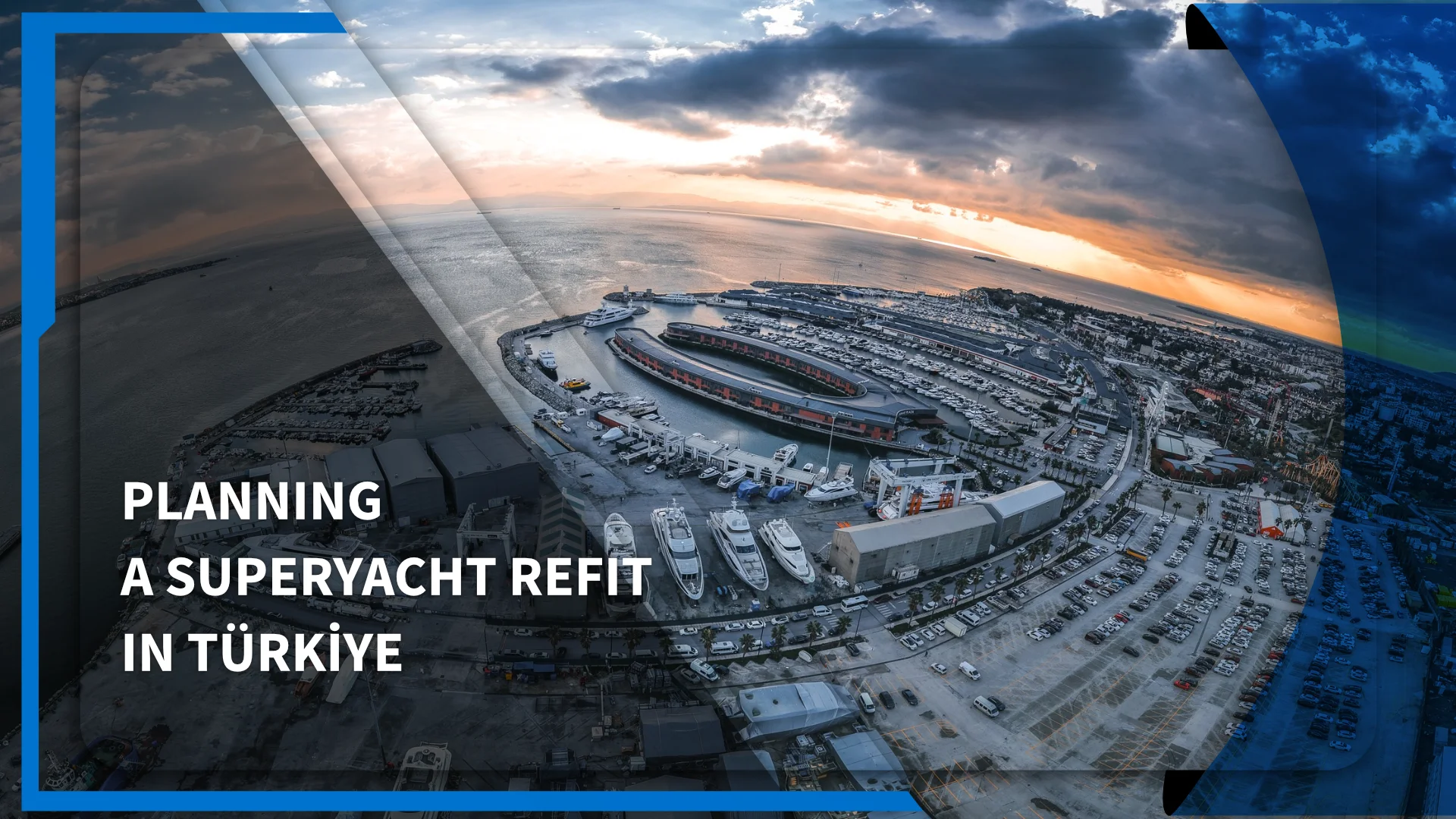
Short answer: For a yacht based in the Western or Central Mediterranean, a refit in Türkiye means a non-stop passage of roughly one and a half to five and a half days at 12 knots depending on the starting port, a yard period often planned for the winter window between seasons, and a few administrative steps: the yacht’s temporary importation through a local agent, crew travel documents, and, for yachts in the EU, a check of their customs and VAT position before leaving and returning. Owners and captains usually consider Türkiye when the scope is larger than seasonal maintenance, needs haul-out capacity and in-house workshops, and benefits from a yard where the trades work under one roof.
Yachts that spend the summer in Monaco, the Côte d’Azur, Italy, Spain or Greece usually refit close to home. When the scope grows, with structural work, a full repaint, interior renewal or systems upgrades running together, the shortlist often widens to the Eastern Mediterranean. This guide covers the practical side of that decision: passage, timing, paperwork and how to plan the yard period. For KRM Yacht’s own facilities and approach, see KRM Yacht’s refit facilities in Tuzla.
Passage to Istanbul From Common Mediterranean Bases
| Starting point | Approximate distance to Tuzla, Istanbul | At 12 knots (non-stop) |
|---|---|---|
| Piraeus (Athens) | 350–380 nm | about 1.3 days |
| Naples | 950–1,100 nm | about 3.5–4 days |
| Genoa | 1,300–1,450 nm | about 4.5–5 days |
| Monaco / Antibes | 1,350–1,450 nm | about 4.5–5 days |
| Palma de Mallorca | 1,430–1,550 nm | about 5–5.5 days |
Distances are approximate, measured along the usual route through the Strait of Messina or around southern Sicily, across the Ionian and Aegean, through the Dardanelles and the Sea of Marmara. Tuzla lies on the Sea of Marmara, so the yacht does not need to transit the Bosphorus. The agent can confirm reporting and pilotage arrangements for the Dardanelles transit. Actual passage time depends on the yacht’s cruising speed, weather, fuel and crew-change stops, and the route the captain chooses. Many yachts split the passage with a stop in Greece or southern Italy.
The passage itself is part of the plan: it is a chance to log defects under way, test systems and arrive with a clearer list for the yard.
When to Refit: Fitting the Yard Period Around the Season
The Mediterranean charter and private-use season runs mainly from late spring to early autumn, so most refits are planned for the winter window, roughly from October to April. A typical planning sequence is:
| Timing | Step |
|---|---|
| 6–12 months before | Define the scope, survey the yacht, shortlist yards and request quotes on the same written scope |
| 3–6 months before | Agree the contract, schedule, long-lead equipment, class and flag approvals |
| 1–2 months before | Confirm passage plan, agent, crew arrangements and the arrival condition list |
| End of season | Passage to the yard, arrival survey, haul-out or berthing |
| Winter | Yard period, with variations reviewed and approved as work is opened up |
| Before the next season | Commissioning, sea trial and redelivery |
Larger refits and rebuilds can run longer than one winter, so the season the yacht must be back in service is a key input from the start. See the superyacht refit planning guide for scope and contract steps, and what it costs to refit a yacht for the cost drivers.
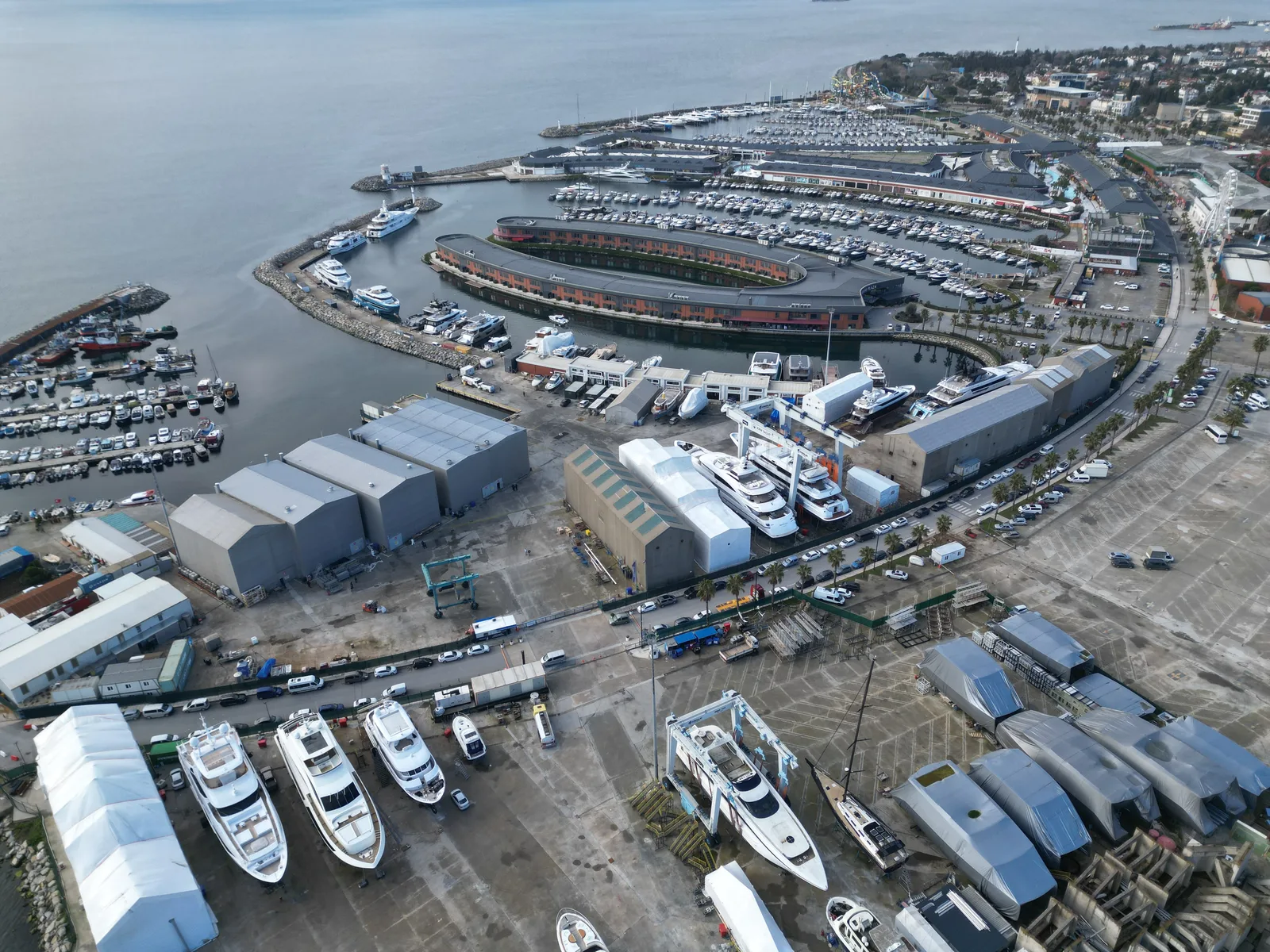
The KRM Yacht yard in Tuzla on the Sea of Marmara, with yachts on the hard-standing and covered sheds.
Paperwork: Agent, Customs and Crew
Temporary importation. A foreign-flagged yacht entering Türkiye for a refit is handled through a local yacht agent, who arranges entry formalities and temporary importation. At KRM Yacht, the yacht’s own agent handles temporary importation, as is standard practice in Türkiye, and KRM’s team handles customs clearance for parts and materials arriving under ship-in-transit status as part of the yard period.
Customs status in the EU. For yachts that normally operate in the EU, the customs and VAT position should be checked before leaving and before returning. Under EU rules, a non-EU yacht used privately by a person established outside the EU, and meeting the other temporary-admission conditions, can usually stay in the EU for up to 18 months. The European Commission’s guidance indicates that a yacht leaving the EU can start a new period when it re-enters, but this guidance is not binding and member states have applied it differently. For EU VAT-paid yachts, VAT-paid status alone does not settle how the yacht is treated on re-entry: work carried out outside the EU can create duty or VAT liabilities on its value, so returned-goods relief and any outward-processing arrangement should be discussed with a customs adviser before the yacht leaves. In every case, keep clearance and yard records as evidence of the stay outside the EU.
Crew. Crew travel documents, visas and crew lists depend on nationality and should be checked early with the agent. Many nationalities need a Turkish visa or e-visa, including crew joining or leaving by air, so this should be arranged before travel. Türkiye is outside the Schengen area, so days spent there do not count toward Schengen stay limits for crew who need them.
What Makes a Yard Period Work at a Distance
When the yard is several days from the yacht’s base, how the project is run matters as much as the price. Points to check:
- Scope and survey. A pre-contract survey and priced scope, followed by an arrival survey and written approval of variations.
- Haul-out and berthing. Lift capacity, hard-standing and quay length for the yacht’s size and draught.
- In-house trades. Which work is done in the yard’s own workshops and which is subcontracted.
- Painting conditions. Covered, climate-controlled space for paint work in winter.
- Reporting. Regular progress reports, photographs and a clear process for approving variations.
- Attendance. How easily owners, captains, surveyors and suppliers can reach the yard; KRM’s yard is about 15 minutes from Sabiha Gökçen International Airport.
- Close-out. Commissioning, sea trial and a documented handover, so the yacht leaves ready for the season.
These are the same questions to ask of any yard; distance only makes reporting and approval discipline more important. Project control across the yard period is covered under project management.
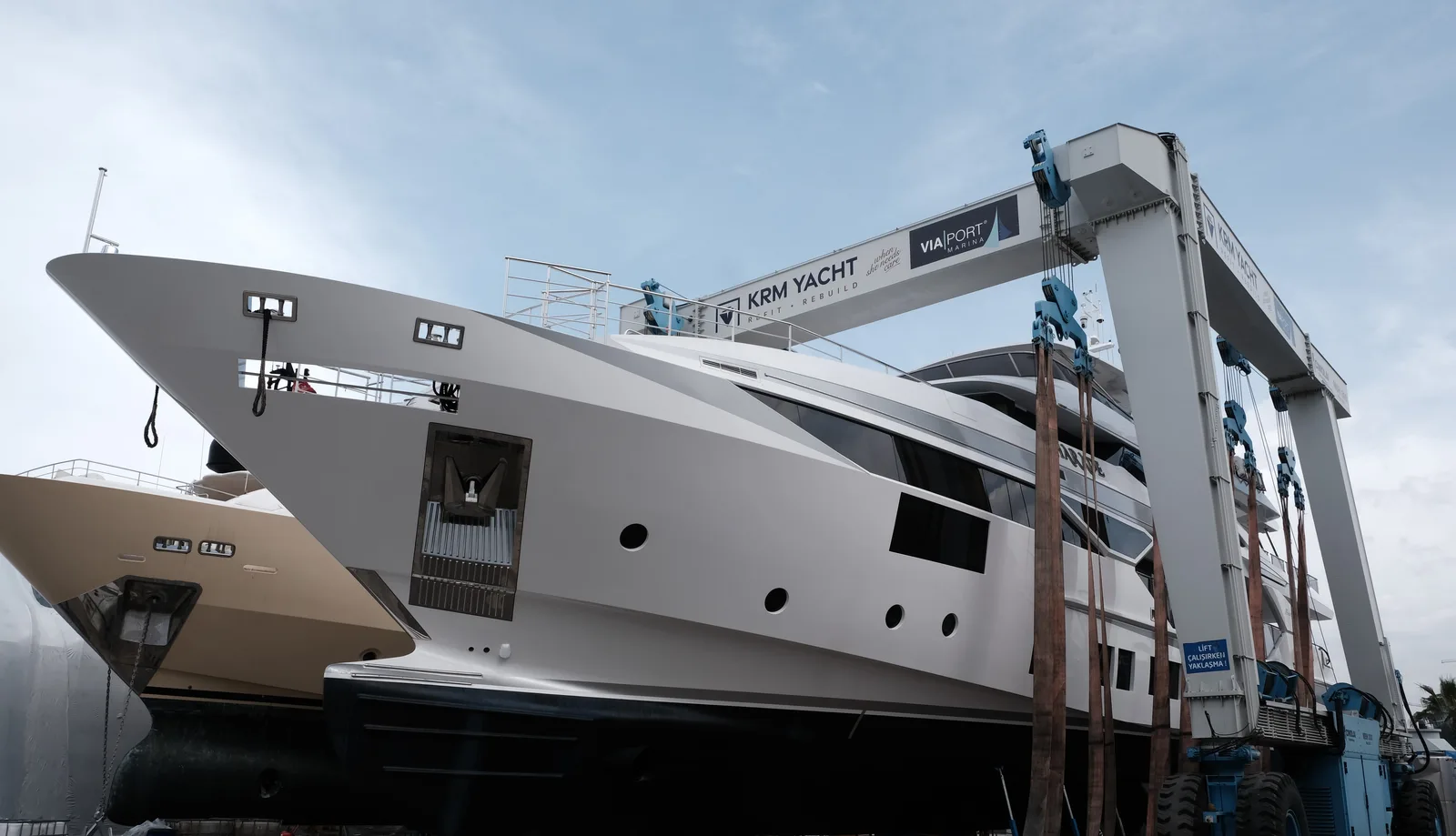
A superyacht hauled out in the travel lift at KRM Yacht. The 900-ton lift takes yachts up to 70 metres.
Frequently Asked Questions
How long does it take to sail a yacht from the Côte d’Azur to Istanbul?
About 1,350–1,450 nautical miles, or roughly four and a half to five days non-stop at 12 knots. Allow additional time for weather, fuel and crew stops.
When is the best time to plan a refit in Türkiye?
Most refits are planned for the winter window between Mediterranean seasons, roughly October to April. Planning should start six to twelve months earlier for larger scopes, so approvals and long-lead equipment are in place.
Does a foreign yacht need an agent for a refit in Türkiye?
In practice, yes. Entry formalities and the yacht’s temporary importation are normally arranged through a local yacht agent, and yards in Türkiye expect this. The yard can coordinate customs clearance for parts and materials sent to the yacht.
Does leaving the EU for a refit reset temporary admission?
The European Commission’s guidance indicates that a non-EU yacht leaving the EU can start a new temporary admission period on re-entry, but the guidance is not binding and member states have applied it differently; customs authorities have refused a reset where there was no genuine third-country port call. A yard period in Türkiye is a documented third-country stay, but keep clearance and yard records, and check the yacht’s position, including any VAT on work done abroad, with a customs adviser before departure.
How often should a yacht be refitted?
Most yachts have a maintenance period every winter, with larger refits at longer intervals, often timed around class renewal surveys, a sale or a change of use. The larger scope is the one that usually justifies a passage to a yard further away. See the superyacht refit planning guide.
Why do Mediterranean yachts refit in Türkiye?
Owners and captains usually look at Türkiye when the scope is large or mixed, such as structural, paint, interior and technical work in one period, and they want haul-out capacity, in-house workshops and winter yard time. The decision should still be made on a like-for-like comparison of scope, schedule and project control.
What should I compare when choosing between a Western and an Eastern Mediterranean yard?
The same written scope, the schedule and redelivery date, which trades are in-house, haul-out and covered space, reporting and variation approval, passage time and cost, and the administrative steps for customs and crew.