


Paint inspection is the control layer that checks whether surface preparation, application conditions, film build, cure, and final coating condition are good enough for the yacht to leave the yard with a defensible finish standard.
In refit work, that inspection path starts before the first coat goes on. It runs through blasting or preparation, edge treatment, climate control, wet and dry film checks, defect marking, repair verification, and final release. On high-visibility projects, paint inspection protects appearance. On steel and technical surfaces, it protects substrate life, repair quality, and redelivery confidence.
That is why paint inspection sits naturally inside the project’s tests and surveying scope and, on larger programs, inside the wider super yacht refit control structure.
Inspection Starts Before the First Coat
A paint team can only build a stable coating system on a stable surface.
The first inspection questions usually sit around the substrate:
- What condition is the steel or aluminium really in?
- Have edges, welds, and surface imperfections been prepared properly?
- Is the blasted or cleaned surface at the required visual standard?
- Are dust, salts, oil, grease, and other contaminants under control?
- Is the profile suitable for the specified system?
That stage often decides the life of the whole job. A final topcoat can still look acceptable for a while over weak preparation. The coating system underneath it is already carrying the failure.

Surface Preparation Is Where the Job Is Won or Lost
Surface preparation is the first hard gate in paint inspection.
ISO 8501-1 provides the visual preparation grades used to judge steel surfaces before painting. ISO 8501-3 takes that further for welds, edges, and other surface imperfections, which are usually the first places to create coating trouble in a refit yard. Those details matter because a coating does not read a yacht as one large flat surface. It fails first at edges, weld toes, brackets, scallops, cut-outs, repairs, and other difficult geometry.
In practical yacht work, the inspector is usually checking for:
- sharp edges and weld spatter that were left behind
- poor grinding or uneven fairing transition
- contamination after blasting or sanding
- flash rust or recontamination before coating starts
- surface profile mismatch against the specified system
If the yacht is already in a docking period, this part of the inspection often ties directly into dry docking, because underwater access, shell repairs, appendage work, and coating exposure all sit in the same production window.
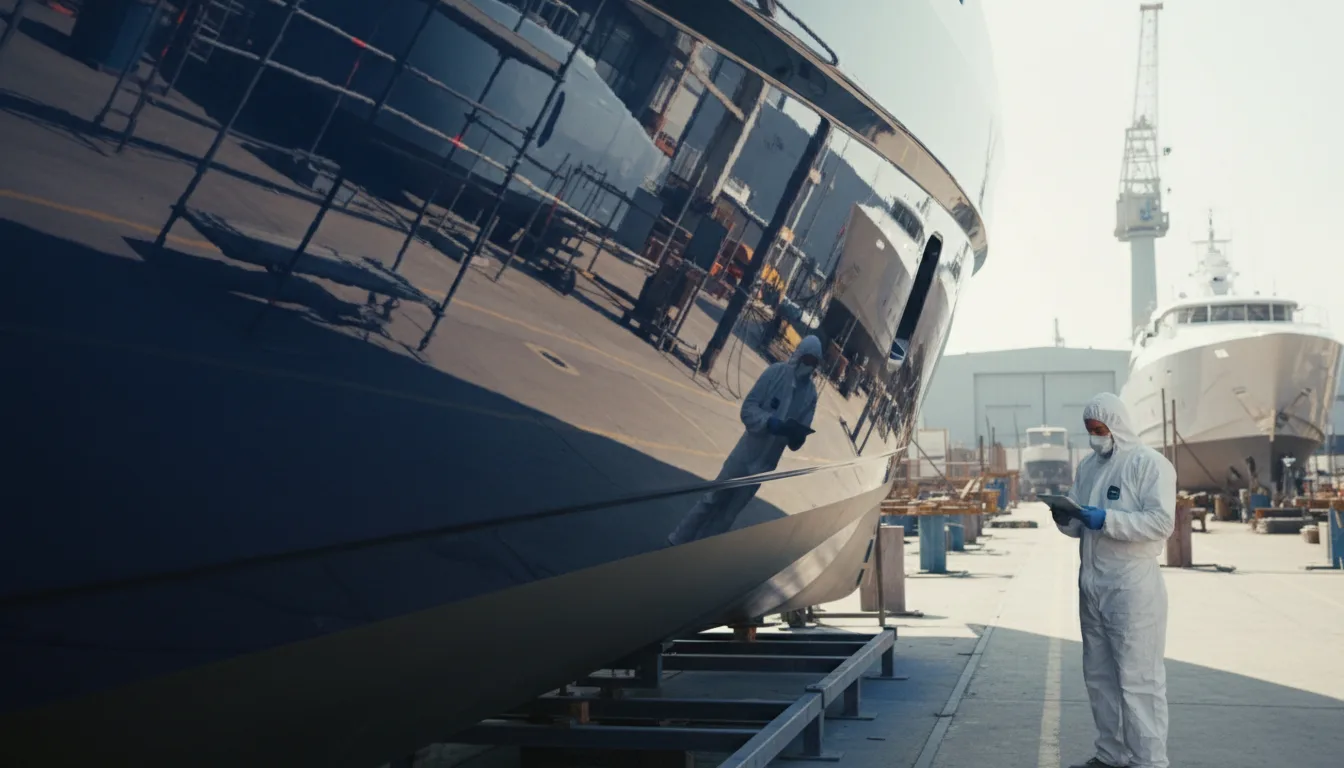
Dust, Salt, and Climate Readings Are Part of the Acceptance Path
Paint inspection is not a visual exercise alone. It is also a measurement job.
ISO 8502-3 sets out a method for assessing dust on cleaned steel surfaces prepared for painting. ISO 8502-6 and ISO 8502-9 cover field methods around water-soluble contaminants and salt assessment. Those checks matter because the coating can fail early even when the surface looks visually ready.
Marine coating standards also treat the application environment as a live inspection item. IMO’s protective coatings standard is very clear on that logic: surface temperature, relative humidity, dew point, dust, soluble salts, and film thickness all belong inside the inspection sequence, and the results need to be recorded.
In yard reality, the inspector will usually want current readings for:
- steel temperature
- air temperature
- relative humidity
- dew point spread
- dust level
- salt contamination where the scope justifies it
The exact limits depend on the coating system and specification. The control principle stays the same: if the environment is outside the allowed window, the workfront should not be released for coating.
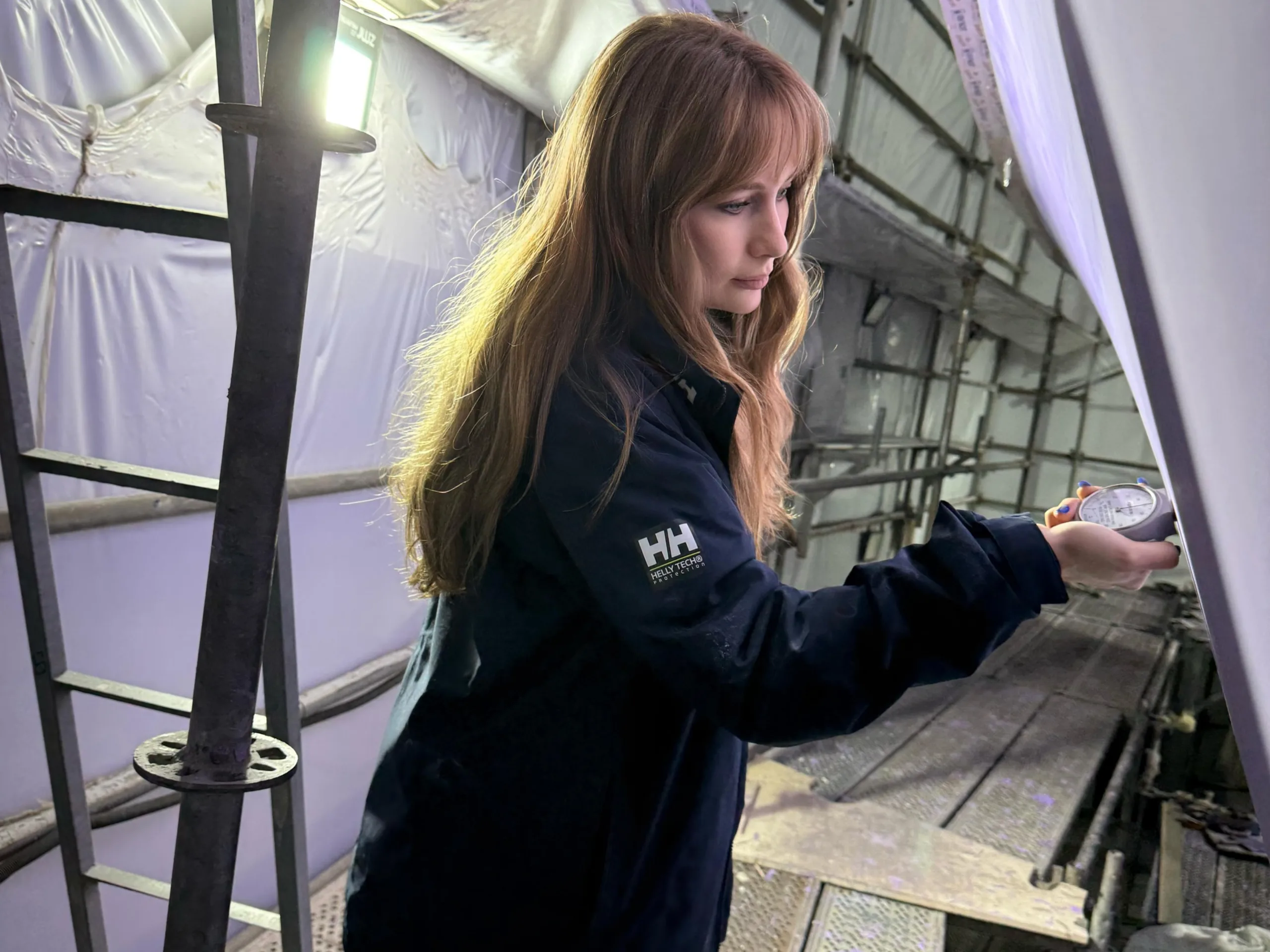
Film Build and Defect Control
Once the coating starts going on, the inspection emphasis shifts from preparation to film control.
The working questions become:
- Is each coat being applied in the right sequence?
- Are stripe coats reaching edges, welds, and hard geometry?
- Are recoat windows being respected?
- Is wet film building toward the specified dry film thickness?
- Are pinholes, misses, runs, voids, blistering, or contamination appearing during the process?
ISO 19840 is central here because it gives the procedure for verifying dry film thickness on rough surfaces, including inspection areas, sampling logic, and acceptance or rejection criteria. In marine coating control, DFT is not a cosmetic metric. It is one of the main acceptance measurements on the job.
A thin system leaves the substrate exposed. Excessive build creates a different problem set around cure, brittleness, cracking, solvent retention, and finish quality. Paint inspection is there to keep the job inside the specified band rather than letting the yard discover those problems after launch or redelivery.
What a Serious Paint Inspection Report Should Contain
A useful report lets the owner team, captain, yard, and survey side understand what was accepted and why.
That report usually needs to show:
- the inspected area and coating zone
- surface preparation status
- climate readings at relevant stages
- dust and salt test records where applicable
- film-thickness readings
- marked defects and repair actions
- re-inspection status
- release or hold decision
On higher-control projects, that reporting becomes part of the handover file rather than a workshop note. If the coating scope is tied to survey, insurance, dispute risk, resale preparation, or a wider inspection regime, the record matters almost as much as the finish itself.
That is where the page starts overlapping with a broader marine survey path. The survey frame defines what the inspection is trying to prove. Paint inspection supplies the coating-specific evidence inside that frame.
When Independent Paint Inspection Pays Back
Independent inspection becomes more valuable as the coating scope becomes more exposed, more expensive, or more argument-prone.
That usually includes:
- full or large-area repaint programs
- tank coatings and technical compartments
- underwater coating packages during docking
- high-visibility topside and superstructure projects
- jobs running under tight redelivery pressure
- projects with several contractors touching the same surfaces
In those situations, paint inspection helps the owner side control three risks at once: hidden preparation failure, disputed acceptance, and late-stage rework.
Paint Inspection Changes the Commercial Outcome
A weak coating job usually gets expensive in two directions.
The first cost lands immediately through rework, overtime, extended shed time, or delayed handover. The second cost lands later through coating breakdown, corrosion restart, warranty argument, and return-to-yard exposure.
That is why paint inspection belongs in decision-stage planning rather than in the last week of the yard period. It gives the project one more release gate before the finish becomes difficult, expensive, or politically awkward to reopen.
FAQ
Is paint inspection mainly about the final gloss and finish?
Final appearance is one output. The heavier job is verifying preparation quality, application conditions, film build, defects, and repair close-out before the finish is treated as accepted.
When should paint inspection begin?
It should begin before blasting, sanding, or coating starts. Once the first control points are missed, later inspection can record the problem, though it cannot reverse the lost preparation window.
Does every repaint need independent inspection?
Small local jobs can often stay under internal yard control. Large-area repainting, docking-led coating work, tank coatings, and dispute-sensitive scopes benefit much more from independent inspection discipline.
What is the most common hidden problem?
Surface condition and contamination are the usual early triggers. Dust, salts, weak edge preparation, flash rust, and poor climate control can all sit under a finish that looks acceptable on day one.
External Sources Consulted
- IMO, Protective Coatings
- IMO, Resolution MSC.215(82), Performance Standard for Protective Coatings
- ISO 8501-1:2007, Visual Assessment of Surface Cleanliness
- ISO 8501-3:2025, Preparation Grades of Welds, Edges and Other Areas with Surface Imperfections
- ISO 8502-3:2017, Assessment of Dust on Steel Surfaces Prepared for Painting
- ISO 8502-6:2020, Extraction of Water-Soluble Contaminants for Analysis (Bresle Method)
- ISO 19840:2012, Measurement of and Acceptance Criteria for Dry-Film Thickness on Rough Surfaces