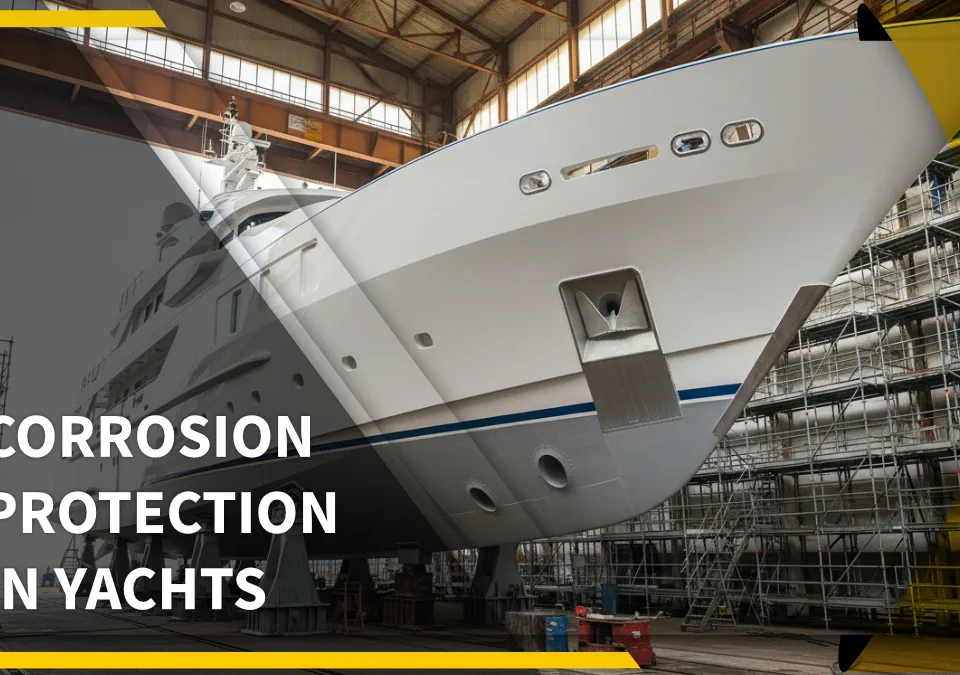
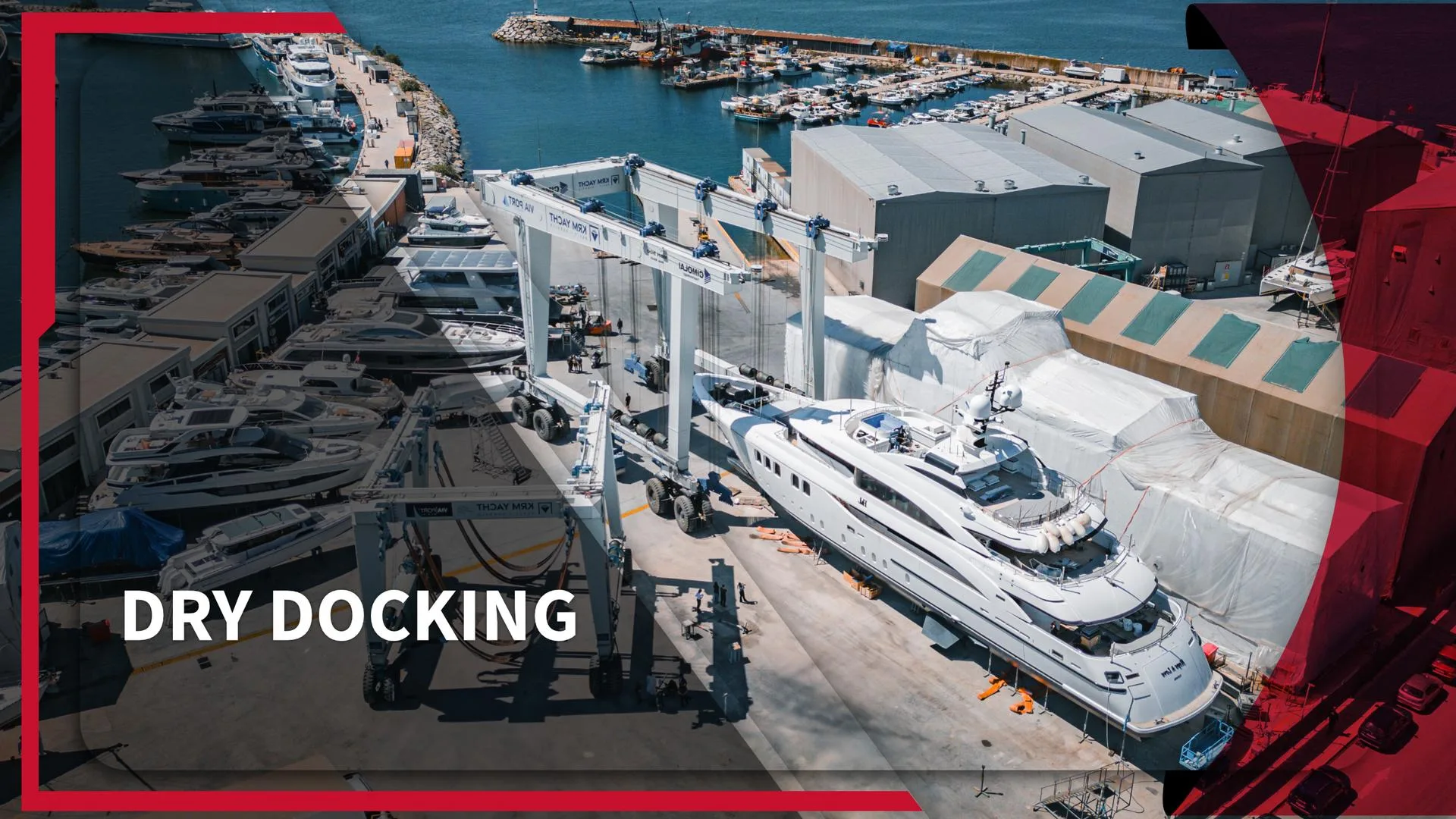
Dry docking is the controlled process of taking a yacht out of the water so the underwater body, appendages, shell openings, coatings, and related systems can be inspected, maintained, repaired, and verified.
In a yacht yard period, dry docking is usually the point where the project stops being abstract. Once the yacht is on the blocks, the team can see the real condition of the hull, running gear, sea chests, valves, thrusters, rudders, stabilizers, and coatings. That is why dry docking often becomes the hinge point between routine maintenance and a wider superyacht refit scope.
IMO’s HSSC guidance treats inspections of the outside of the ship’s bottom as a formal survey event and states that these inspections should normally be carried out in dry dock, although some inspections may be accepted afloat under the right conditions and approvals.
What Dry Docking Opens Up
Once the yacht is out of the water, the team gets physical access to areas that cannot be properly assessed afloat.
That usually includes:
- hull shell and underwater coatings
- anodes and corrosion condition
- propellers, shafts, brackets, and stern gear
- rudders, bearings, and steering-related underwater components
- thrusters and stabilizer units
- sea chests, gratings, intakes, discharges, and valves
- transducers, shell fittings, and underwater openings
This is the physical reason dry docking carries so much commercial weight. It exposes the part of the yacht that can change scope, budget, and schedule fastest once real condition becomes visible.

Why Dry Docking Often Expands the Work List
A docking window starts with a planned list, though it often grows after inspection and opening-up.
The usual triggers are familiar:
- coating failure that goes beyond a straightforward antifouling plan
- corrosion or pitting around shell areas, sea chests, gratings, or fittings
- wear in running gear that widens the package around shafts, seals, bearings, or propellers
- damage or impact findings that require structural repair or survey follow-up
- class or flag-sensitive items that need attendance, records, or additional approval steps
IMO’s survey guidance also connects important repairs and renewals with additional survey activity. That matters because the moment a docking scope turns into repair, renewal, or modification, the inspection path can widen along with the physical work.
If the budget question is already active at that stage, cost to refit a yacht is the nearest support page in this cluster.
Where Dry Docking Sits in the Planning Sequence
A successful docking usually depends on preparation more than on yard arrival.
Owner-side governance guidance for refit work points in the same direction: define the work list early, assign priorities, build a realistic budget frame, contact the relevant authorities when survey-sensitive works are involved, and approach yards with enough lead time for proper quotations and availability.
For a docking-led project, that planning usually needs to cover:
- the underwater scope the yard is expected to price and perform
- survey and attendance items that affect timing and access
- coating system choices and surface-preparation requirements
- parts and OEM exposure for seals, bearings, thrusters, stabilizers, valves, and other underwater equipment
- the undocking sequence including tests, leak checks, alignments, and sea-trial implications where relevant
If the whole yard period is already being built around sequence and approvals, superyacht refit planning guide is the next logical page.
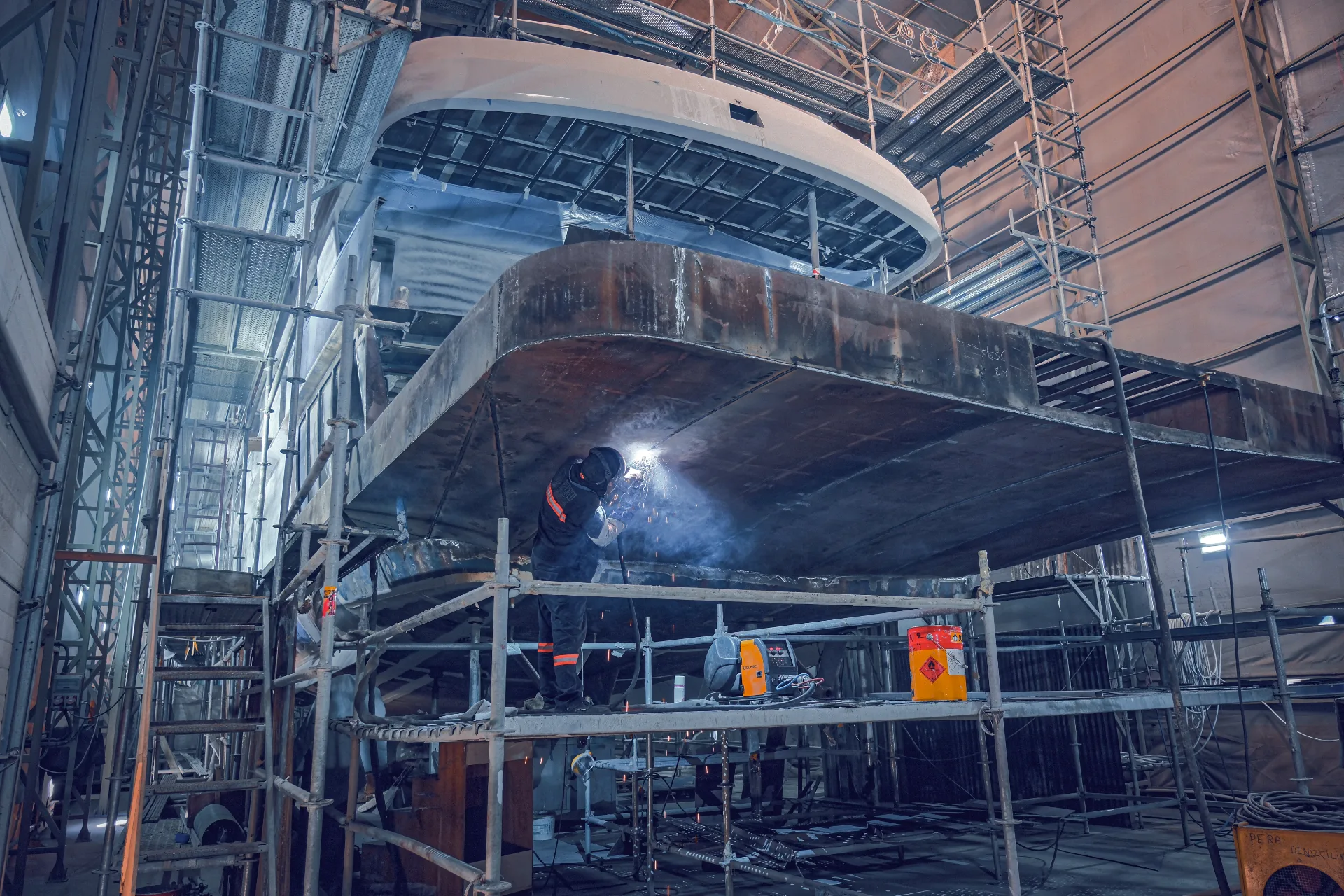
Dry Docking, Haul-Out, and Afloat Inspection
These terms often get blurred, though they do different jobs.
A haul-out may describe the lifting of the yacht for shorter access or smaller works. Dry docking usually implies a more formal yard event with a defined docking slot, broader underwater access, and a stronger survey or repair path. Afloat inspections can satisfy part of the inspection requirement in some cases, though they depend on the vessel type, age, conditions, equipment, and acceptance by the relevant authority or class.
For owner-side decision-making, the useful question is simple: does this scope need the full access, survey control, and workfront that only a dry dock window can provide?
What Usually Drives the Critical Path
Dry docking turns into a schedule problem when several teams are trying to use the same physical access window.
The critical path often sits around:
- surface preparation and coating cure times
- survey hold points and attendance windows
- running-gear dismantling and reinstatement
- underwater equipment parts that were not secured early enough
- late discoveries after the yacht is already on the blocks
That is why docking windows benefit from tighter project control than they first appear to need. Once underwater work, survey activity, and redelivery timing overlap, the docking becomes a live coordination job rather than a simple maintenance stop.
This is also where tests and surveying becomes part of the real delivery path, especially if the undocking sequence depends on witnessed items, measurements, or post-work verification.
What Needs To Be True Before Redelivery
A clean undocking is only one part of the job.
Before the yacht is treated as fully closed out, the owner team should be clear on:
- what underwater findings were corrected
- what was renewed, repaired, or deferred
- which survey items were completed
- which records, measurements, or reports were issued
- which open items remain and whether they affect operation
That is the real commercial meaning of dry docking inside a refit. The value is not in getting the yacht out of the water. The value is in bringing it back into service with the underwater scope genuinely under control.
If the underwater scope is already forming into a live yard package, you can request a refit quote for a docking-led commercial review.

FAQ
Is dry docking always part of a yacht refit?
No. Some refits stay mostly inside interiors, machinery spaces, or above-water packages. Dry docking becomes central when the underwater body, appendages, coatings, shell openings, or survey cycle are part of the live scope.
Can bottom inspections be carried out without dry docking?
In some cases, yes. IMO survey guidance allows some bottom inspections to be carried out afloat when the conditions, equipment, vessel profile, and approvals make that acceptable. Dry dock remains the normal route for full access and control.
Why does dry docking often increase the budget?
Because real condition becomes visible. Once coatings are stripped, appendages are inspected, and underwater systems are opened up, the team can find work that was never visible from afloat condition alone.
What usually causes delay in a docking period?
Late scope discovery, survey timing, coating-system delays, underwater equipment issues, and parts that were not secured before yard entry are among the most common causes.