


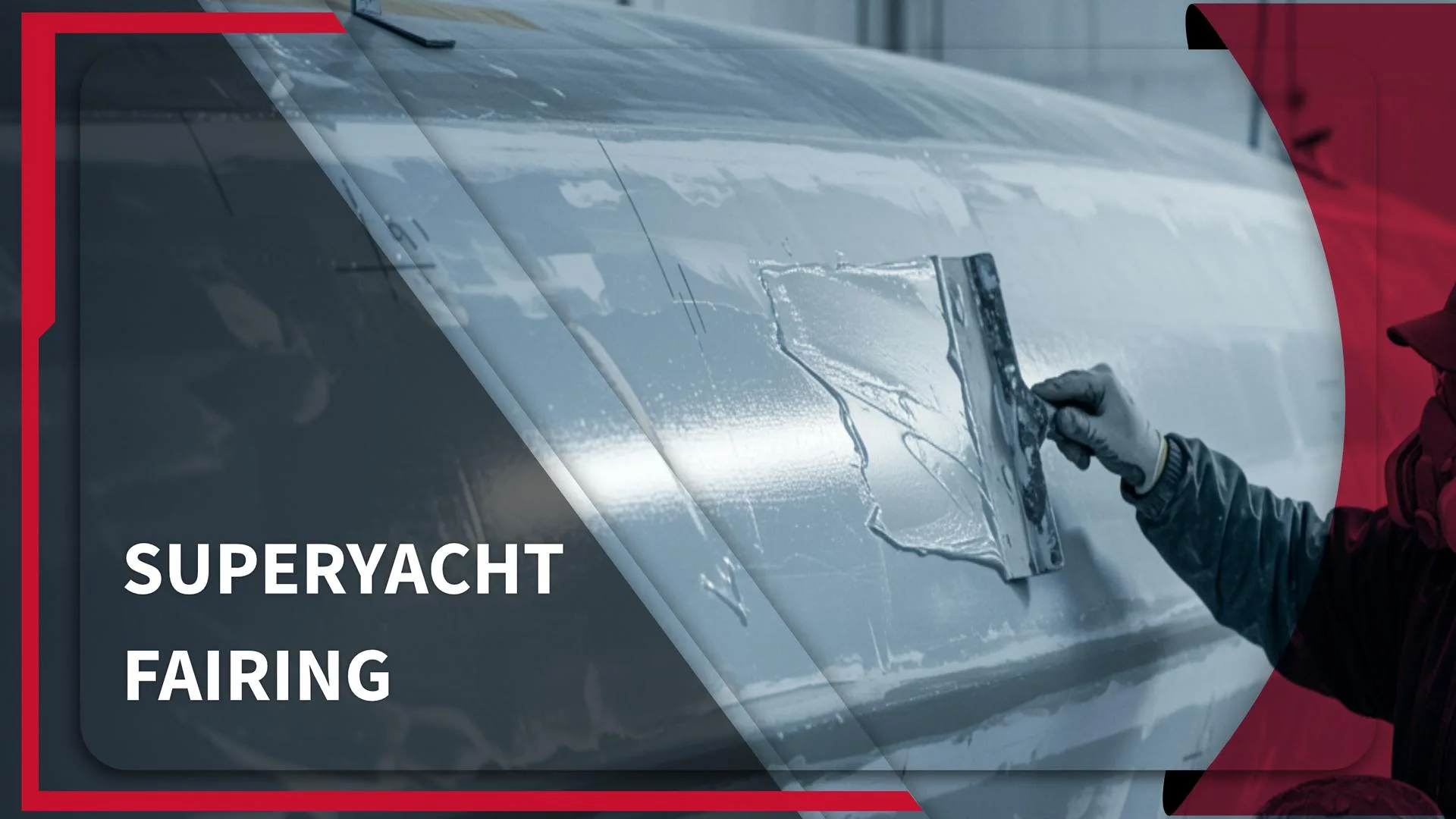
Fairing is the surface-correction work that brings a hull or superstructure back to a clean, controlled shape before the coating system is built over it.
In a refit yard, fairing usually sits between substrate repair and final paint build. It deals with ripples, low spots, weld distortion, repair transitions, print-through, and other surface irregularities that would stay visible once primer, topcoat, and gloss start exposing the line of the yacht. On high-finish projects, fairing therefore belongs inside the wider superyacht refit scope rather than being treated as a late cosmetic extra.
What the Work Package Is Trying to Achieve
A fairing package is there to control line quality, transition quality, and surface continuity.
In practice, the yard is usually trying to achieve four things at the same time:
- restore the visual line of the yacht across hull and superstructure surfaces
- blend repairs cleanly after steel, aluminium, or composite work
- create a suitable base for primers and topcoats
- reduce the risk of visible defects at delivery when light, gloss, and reflection start reading the surface hard
That makes fairing a geometry-control job as much as a paint-preparation job.
Where Fairing Usually Starts Growing
The scope often widens after the first surface opening and repair phase.
Typical triggers include:
- weld distortion and insert-plate transitions after structural repair
- impact damage, dents, and local depressions
- previous patchwork showing through the old coating build
- surface irregularity revealed after stripping or blasting
- older hull and superstructure ripple becoming visible under modern high-gloss finish expectations
On docking-led jobs, the same expansion can happen during dry docking, especially when shell repairs, underwater damage, or renewed plate work start exposing the real surface condition.
Fairing Sits on Top of Surface Preparation Discipline
Fairing quality depends heavily on the substrate underneath it.
ISO 8504-2 sets out abrasive blast-cleaning methods for steel surfaces before coating. ISO 8501-3 defines preparation grades for welds, edges, and other surface imperfections to support efficient corrosion protection. ISO 8503-2 covers on-site assessment of blast-cleaned surface profile. Together, these standards reinforce the part of the job that fairing crews and inspectors already know well: line quality only lasts if preparation, profile, and defect treatment are correct first.
In yard terms, that means the team usually needs clarity on surface cleanliness, profile and key, edge rounding and weld treatment, and substrate soundness before filler and primer systems begin to build.
A weak foundation usually reappears later as cracking, mapping, sinkage, edge read-through, or visible surface instability after the yacht leaves the shed.
How the Fairing Sequence Usually Runs
The exact system varies with substrate, specification, and finish target. The working sequence usually follows the same logic:
- substrate repair and preparation are completed first
- the surface is cleaned, profiled, and released for the fairing system
- fairing material is applied in controlled areas to build out low spots and transitions
- boarding, longboarding, or shaping checks bring the area back toward the required line
- guide coats, battens, templates, or digital checks reveal remaining highs and lows
- repeat fairing and shaping cycles continue until the surface is ready for the next primer stage
- inspection release moves the area into primer build, surfacing, and final coating preparation
This is one reason fairing can consume far more time than the raw square meter figure suggests. The job is iterative. Each pass is checking the truth of the line, not only covering material.
Specification, Inspection, and Finish Target
Fairing extent is normally defined by the project specification, the substrate condition, and the visual standard expected at delivery.
A utility repair standard and a high-gloss superyacht finish do not carry the same tolerance for wave, edge read, or transition visibility. The more reflective and exposure-heavy the final finish becomes, the more sensitive the surface becomes to any irregularity left behind.
This is where paint inspection starts overlapping with fairing control. Inspection is not only looking at the final color and gloss. It is checking whether the substrate, intermediate build, defect correction, and release points were controlled tightly enough for the finish system to hold the line.
On larger projects, that inspection path also belongs inside tests and surveying, especially where acceptance records, repair verification, or owner-side release decisions matter.
What Usually Drives Cost and Schedule
Fairing budgets move with discovery, area growth, and finish standard more than with the headline label alone.
The biggest schedule and cost drivers are usually:
- how much hidden surface irregularity appears after stripping
- how much repair work sits underneath the fairing zone
- the finish expectation at redelivery
- how many repeat correction cycles are needed
- environmental control, staging, and access complexity
- how tightly the fairing program is linked to the paint critical path
If the commercial question is already active, cost to refit a yacht is the nearest adjacent page in the cluster.
When Fairing Becomes a Redelivery Risk
Fairing moves onto the critical path when it is discovered late or specified loosely.
The common failure points are familiar in the yard:
- surface truth discovered after the paint plan is already committed
- repair and fairing teams working on different assumptions
- inspection gates missing between substrate work and coating build
- finish expectations rising after the line has already been accepted once
Once that happens, the project starts absorbing repeat shaping, repeat primer work, repeat inspections, and late-stage visual disagreement. In practical refit terms, fairing is one of the clearest examples of how a visible finish issue often begins much deeper in the work package.
FAQs
Is fairing only for cosmetic perfection?
Fairing controls the shape and continuity that the coating system will expose. The visible result matters, though the work also affects coating build quality, repair blending, and finish stability.
Does every repaint need major fairing?
No. Some repaint programs need limited correction only. The scope grows when stripping, blasting, repair work, or finish expectations reveal a larger surface-control problem.
What usually makes fairing expand after yard entry?
Hidden ripple, old repairs, weld distortion, dents, and surface truth revealed after coating removal are the usual triggers.
Who needs to control the fairing acceptance line?
On larger refits, the yard, paint lead, inspection side, and owner-side control point all need the same release logic so the finish target stays stable before primer and topcoat continue.
External Sources Consulted
- IMO, Protective Coatings
- IMO, Resolution MSC.215(82), Performance Standard for Protective Coatings
- ISO 8501-3:2025, Preparation Grades of Welds, Edges and Other Areas with Surface Imperfections
- ISO 8504-2:2019, Abrasive Blast-Cleaning Methods for Surface Preparation
- ISO 8503-2:2012, Comparator Procedure for Grading Blast-Cleaned Surface Profile
- ISO 12944-3:2017, Design Considerations for Coated Steel Structures
- ISO 12944-5:2019, Protective Paint Systems