
An owner’s representative is the person or team appointed to speak for the yacht owner during a refit, rebuild, or new-build project The role keeps the owner’s brief clear, carries decision authority within agreed limits, and follows that position through scope reviews, variations, approvals, testing, and handover.
In yacht projects, the term usually appears once the project has enough moving parts that the owner needs one accountable voice on the owner side.
What an owner’s representative does
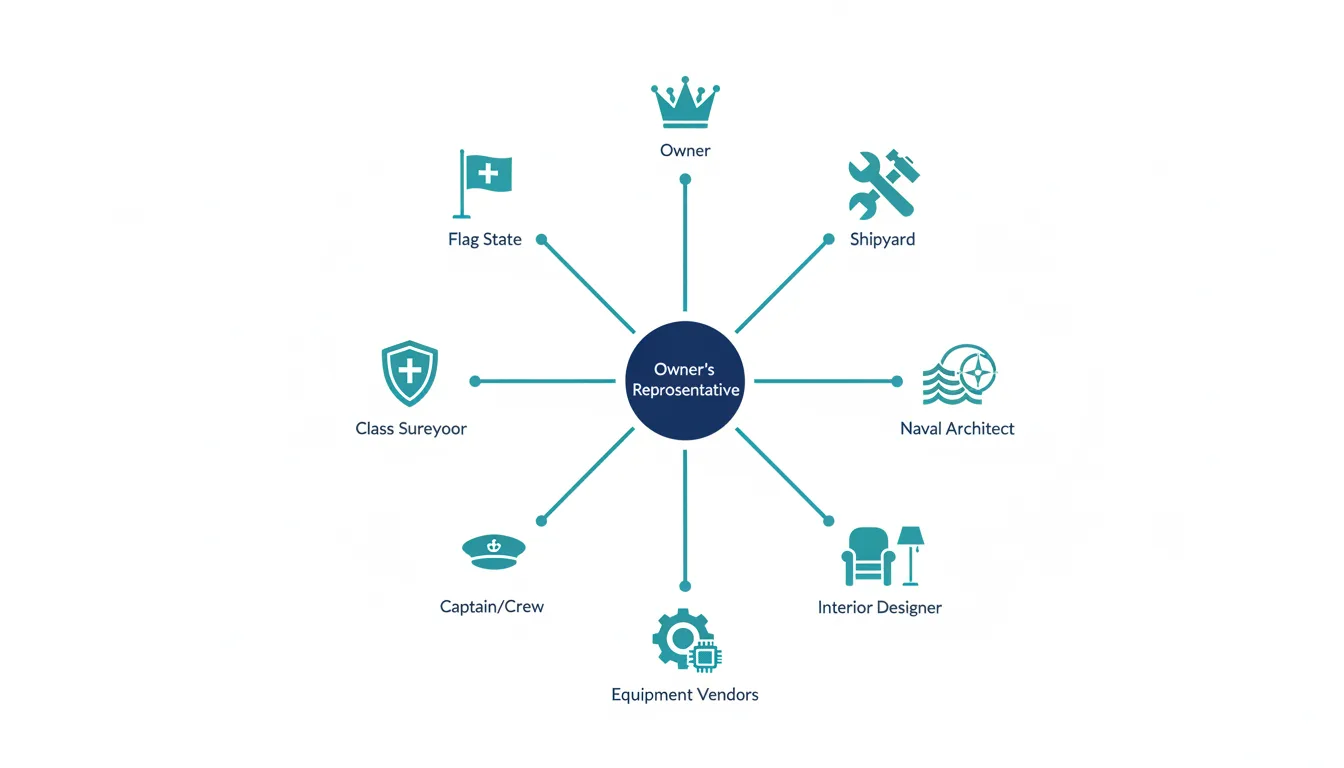
The role sits between the owner and the delivery team. That usually means turning owner priorities into workable instructions, checking that progress aligns with the agreed brief, and keeping commercial decisions from drifting.
Typical responsibilities include:
- Reviewing scope development and change requests
- Tracking cost movement and variation exposure
- Following reporting, milestones, and delivery status
- Coordinating owner-side decisions with the captain, yacht manager, designer, consultants, and yard
- Keeping approvals and acceptance points clear
- Maintaining a usable record of what was agreed, changed, deferred, and accepted
The exact mandate changes from project to project. Some owners appoint one individual. Others use a small team or family-office structure.
Where authority sits
Authority comes from the owner. That sounds obvious, but it is the main point of the role.
A yard can only move cleanly when the owner position is clear. If technical options, finish decisions, procurement changes, or handover comments keep arriving through different people, the project slows down and accountability gets blurred. An owner’s representative closes that gap by carrying one decision route.
On some projects the representative has authority to approve defined items directly. On others, the role prepares options, consequences, and recommendations, then routes the final call back to the owner.
Why the role matters during refit
Refit projects create pressure quickly. Access opens up hidden conditions. Technical findings reshape scope. Owner requests meet yard sequencing. Class, flag, OEM, and survey items can push work into formal approval routes. By the end of the yard period, the same project also needs a clean acceptance record.
That is why the owner’s representative often becomes more visible in refit than in routine yacht operations. The role protects continuity while the job is moving, changing, and closing at the same time. On exposed yard periods, that owner-side continuity becomes part of a wider yacht refit control route.
Owner’s representative, project manager, captain, and yacht manager
These roles often work close together, but they do different jobs.
The project manager drives the project itself: planning, coordination, reporting rhythm, trade interfaces, and delivery control.
The captain brings operational knowledge, onboard practicality, crew impact, and day-to-day vessel understanding.
The yacht manager may carry shore-side administration, compliance follow-up, budgeting support, supplier coordination, and owner reporting, depending on the management setup.
The owner’s representative holds the owner position across those conversations. The role keeps owner intent, approval logic, and acceptance standards consistent while the rest of the team moves the work.
On smaller projects, one person may cover more than one function. Even then, the role boundaries still need to be clear.

When owners usually appoint one
The role becomes more useful when the project carries real commercial or technical exposure, such as:
- Mixed technical and interior scope
- Frequent owner decisions during the yard period
- Live variation risk
- Approval-heavy work
- Multi-party coordination across yard, designers, consultants, and suppliers
- Schedule-sensitive redelivery
- A remote owner or family office structure
For a short and tightly defined yard period, the owner may rely on the captain, manager, or project team without a dedicated representative. Once the decision load grows, owner representation starts protecting project clarity.
What good owner representation leaves behind
A strong owner’s representative does more than attend meetings and pass messages.
By redelivery, the role should leave a clear owner-side record of:
- Key decisions
- Approved changes
- Budget movements
- Acceptance positions
- Open items
- Documentary close-out points
That record matters after departure as much as it does inside the yard. It supports warranty follow-up, deferred-item tracking, future maintenance planning, and any later dispute about what was agreed.
For owners evaluating a refit or rebuild project, the useful question is simple: who is carrying the owner line on scope, money, approvals, and acceptance while the work is live?
That is the job of the owner’s representative.
If the project already needs owner-side control over scope, money, approvals, and acceptance, the next step is to request a refit quote.