

Short answer: Yacht refurbishment is the renewal of a yacht’s finishes, furnishings and fittings, mainly interiors, decks and paint, to restore or update how the yacht looks and feels. It is usually one part of a wider refit. A refit is a programme of work, usually in a planned yard period, that can combine refurbishment with technical, structural and systems work. A repair fixes a specific defect or damage. A restoration returns an older or classic yacht as close as practical to its original condition and character. The terms overlap in everyday use, so the scope of work, not the label, decides the programme, the approvals and the cost.
Owners, captains and managers often use “refit”, “refurbishment”, “repair” and “restoration” as if they were the same thing. In a yard, they lead to different scopes, schedules and approval routes. This guide explains how the terms differ and how a refurbishment fits into a yacht refit and repair programme.
Refurbishment, Refit, Repair and Restoration Compared
| Term | Main aim | Typical scope | Typical trigger |
|---|---|---|---|
| Refurbishment | Renew appearance and comfort | Interior soft furnishings, joinery finishes, upholstery, carpets, bathrooms, lighting, teak decks, exterior paint | Worn or dated interiors and finishes, change of owner, charter presentation |
| Refit | Bring the yacht up to the owner’s current requirements in one planned yard period | Any combination of refurbishment, systems, machinery, electrical, structural and paint work | Survey findings, class or flag requirements, a change of use, or a planned yard period |
| Repair | Fix a specific defect or damage | The damaged item and whatever is needed to access, fix and test it | A failure, an accident or a survey finding |
| Restoration | Return an older or classic yacht to its original condition and character | Original materials, details and lines, often with discreet modern systems | Age, heritage value, an owner who wants the yacht’s original character kept |
| Rebuild or conversion | Change the yacht’s structure, layout or role | Structural changes, extensions, new layouts and systems renewal | A new purpose or a major change in requirements |
A single yard period often includes several of these. A refit may contain an interior refurbishment, a list of repairs found during survey, and paint and deck renewal, all planned together. For the wider definition, see what a yacht refit is; for the difference between refit and retrofit, see refit vs retrofit.
What a Yacht Refurbishment Usually Covers
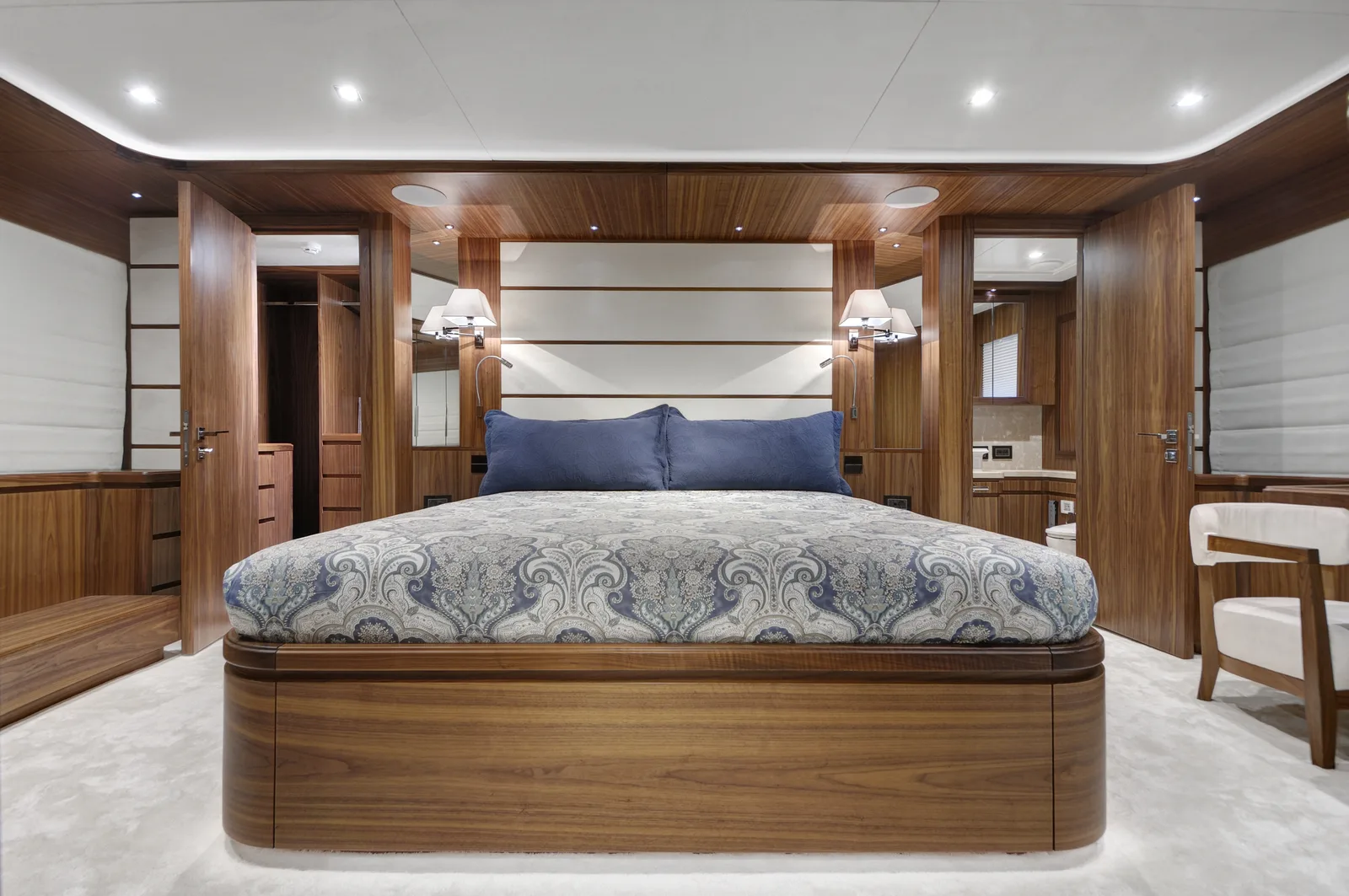
The refurbished master cabin of the motor yacht Corona after her refit at KRM Yacht.
| Area | Typical refurbishment work |
|---|---|
| Interior | Soft furnishings, upholstery, carpets and wall coverings; refinishing or replacing joinery; bathroom and galley renewal; replacement of light fittings and AV equipment on existing circuits |
| Decks | Teak deck renewal, deck furniture, awnings and exterior upholstery |
| Exterior | Topcoat renewal or a full repaint, brightwork and stainless renewal |
| Guest and crew areas | Finishes, storage and fittings in crew mess and cabins, without changing the layout |
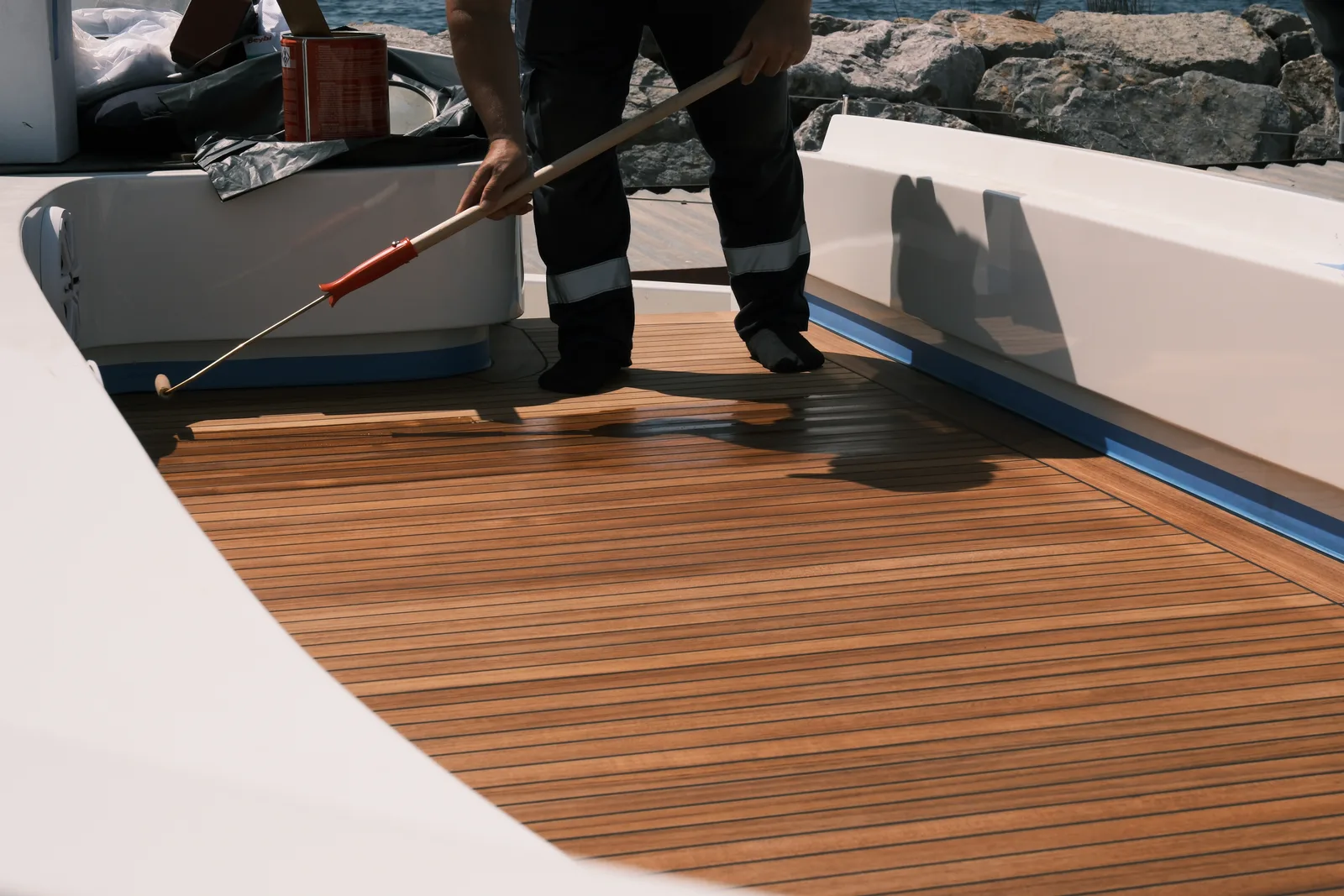
Teak deck renewal is one of the most common exterior refurbishment items.
Interior work is often the most visible part. When it goes beyond finishes into new layouts, joinery and integrated lighting, it becomes an interior redesign and needs drawings, material decisions and more yard time.
When Refurbishment Becomes a Refit
Even a finishes-only refurbishment has to consider the fire performance of new materials and any approval requirements. It turns into a larger refit when the work starts to touch:
- structure, such as openings in bulkheads or decks, or added weight from new stone, joinery or equipment
- fire integrity, insulation or escape routes behind the linings that are being removed
- electrical, HVAC, plumbing or AV systems hidden behind the interior
- stability, because of added weight, or gross tonnage, because enclosed spaces are changed
- applicable class rules and flag requirements, particularly on classed or charter-certified yachts
Opening up an interior often reveals work that was not on the original list, such as corrosion, wet insulation or old cabling. Planning a survey before the scope is fixed reduces surprises. On larger or certified yachts, alterations may also need class and flag approval, which is why the approval route is agreed before work starts.
Restoration of Classic Yachts
Restoration is different from refurbishment because the goal is to keep, not replace, the yacht’s original character. Original timber, joinery details, hardware and lines are repaired or reproduced where possible, while modern systems such as electrical, navigation and safety equipment are added discreetly to meet current requirements. Restoration often takes longer than a refurbishment of the same area, because more of the work is done by hand and materials have to be sourced or reproduced to match the original.
Repair as Part of a Refit
Repairs are usually defined by a specific problem: a damaged hull area, a failed system, a leak or a survey finding. During a refit, repairs found at survey or after opening up are added to the work list, priced and approved as the project goes on. Combining repairs with planned work can reduce repeat access or haul-outs, and verification can include inspections, dockside tests and, where relevant, a sea trial.
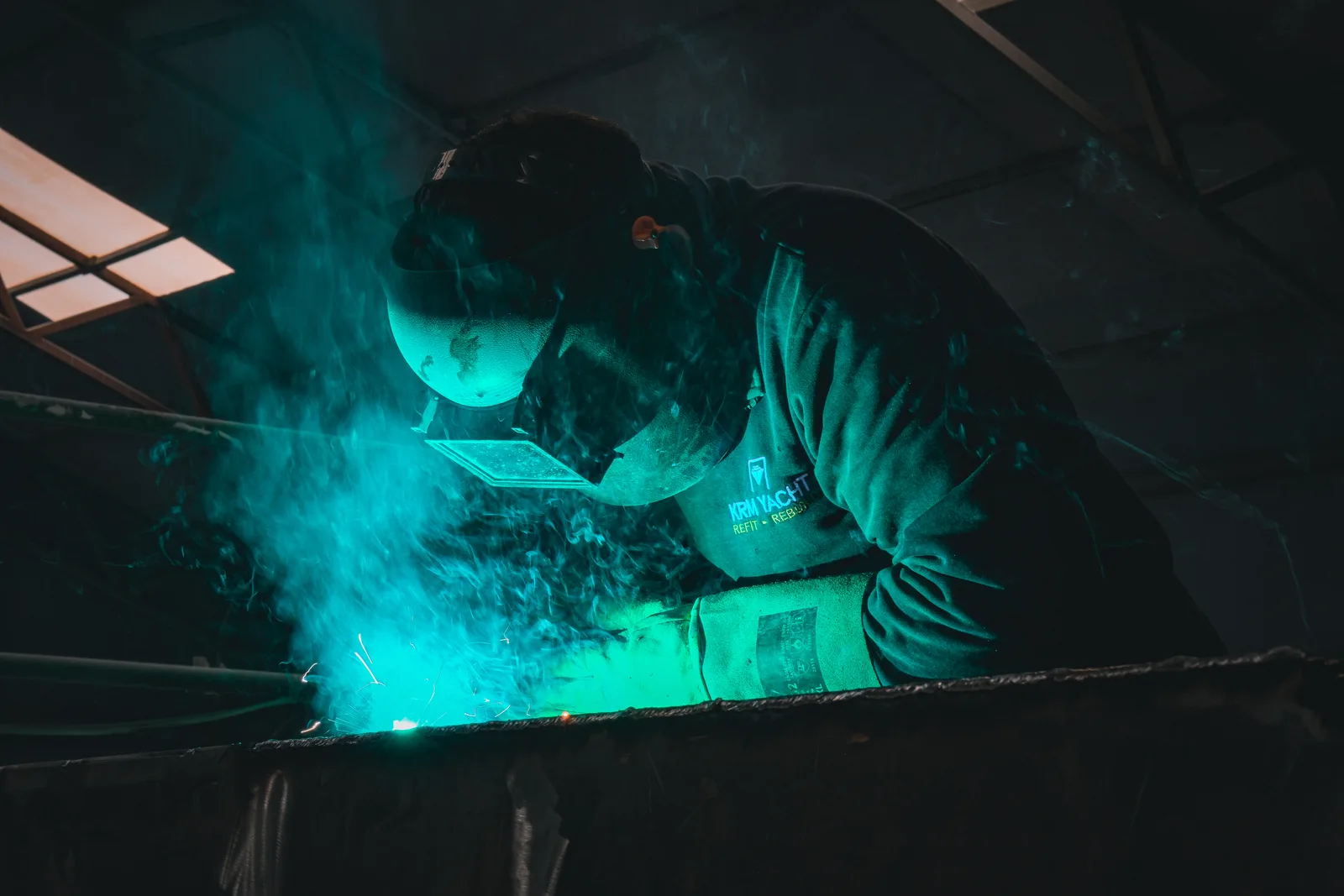
Repairs found after opening up, such as steelwork, are added to the refit work list and approved as the project goes on.
What Drives the Time and Cost of a Refurbishment
There is no fixed price for refurbishing a yacht. The main drivers are:
- the size of the yacht and the areas included
- whether the work is finishes only or reaches structure and systems
- materials, especially stone, special veneers and custom furniture
- design and approval requirements
- what is found behind the linings once the interior is opened
- the yard schedule and the season
The same drivers apply to the cost of restoring a classic yacht, with hand work and matching original materials weighing more heavily. Comparing offers on the same written scope gives a more useful picture than comparing totals. See what it costs to refit a yacht for the wider cost picture.
Frequently Asked Questions
What is yacht refurbishment?
The renewal of a yacht’s finishes, furnishings and fittings, mainly interiors, decks and paint, to restore or update its appearance and comfort. When limited to the interior it is also called marine interior refurbishment or yacht interior renovation. It is often carried out as part of a wider refit.
What is the difference between a yacht refit and a refurbishment?
A refurbishment focuses on appearance and comfort. A refit is a programme of work, usually in a planned yard period, that can include refurbishment together with technical, structural and systems work.
What is the difference between refit and repair?
A repair fixes a specific defect or damage. A refit is a planned programme of work that may include repairs alongside upgrades, refurbishment and systems work.
What is the difference between restoration and refurbishment?
Restoration aims to bring an older or classic yacht back to its original condition and character, keeping original materials and details where possible. Refurbishment renews finishes and furnishings, often with a new design.
How long does a yacht interior refurbishment take?
It depends on the yacht’s size, the areas included, the amount of joinery and custom work, and whether systems behind the linings also need work. A finishes-only refresh is much shorter than a refurbishment that reaches structure, insulation or systems.
Does a yacht refurbishment need class or flag approval?
Approval requirements should be checked against the proposed materials and scope. On commercially certified yachts, new linings, upholstery and floor coverings still have to meet the fire-safety requirements of the applicable code. Changes that affect structure, fire integrity, escape routes, stability or certified equipment may need class or flag approval, especially on classed or charter-certified yachts.
Should a refurbishment be combined with other refit work?
Often, yes. Opening up an interior is a good time to deal with cabling, insulation, HVAC and plumbing behind the linings, and combining the work avoids opening the same areas twice.
What should I ask a yard before a yacht refurbishment?
How the scope will be surveyed and written down, which work is done in its own workshops, how variations found after opening up are priced and approved, whether class or flag approval is needed, and how the finished work is inspected and handed over.