
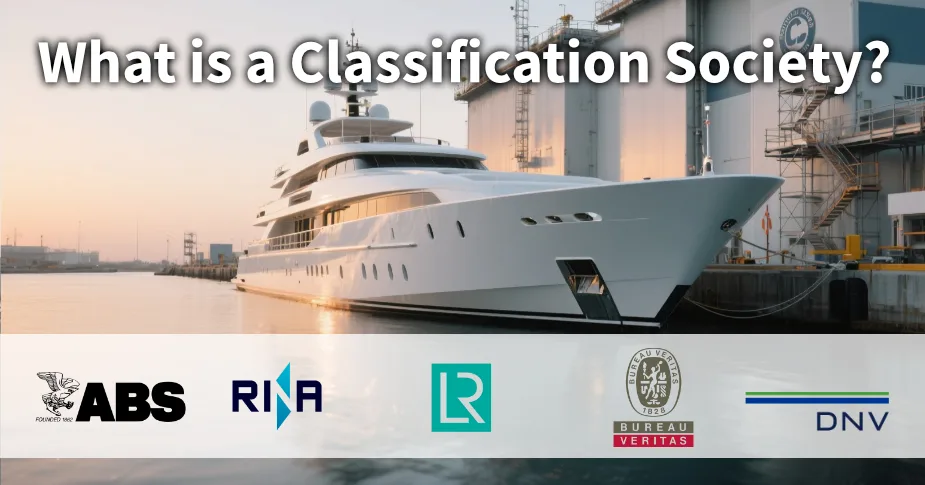
A classification society is a technical organisation that sets rules for the design, construction, and survey of ships and yachts, then verifies whether a vessel meets those rules. In yacht work, “class” usually covers the hull structure, machinery, electrical systems, stability-related items, and other safety-critical parts of the vessel.
What a classification society does
A classification society usually works across four parts of the vessel lifecycle:
- publishes technical rules and class notations
- reviews drawings, calculations, and selected technical submissions
- surveys construction, repair, major modification, and refit work
- maintains class status through periodic surveys and close-out of class items
That role becomes very practical once a yacht is already in class. If the scope touches structure, propulsion, steering, fire divisions, watertight integrity, electrical distribution, or other classed systems, the approval path usually needs to be set before yard work starts.
Class and flag are separate functions
Class and flag work closely together, but they do different jobs.
A classification society applies its own technical rules and confirms compliance through plan approval, survey attendance, testing, and certification.
The flag administration is the state where the yacht is registered. Flag holds the statutory authority behind the yacht’s legal certificates and may authorise recognised organisations, often class societies, to carry out some surveys and certification on its behalf.
For owners, captains, and managers, the working point is straightforward: class status and statutory status often move together during a project, but they follow different authority routes.
Why class matters on a yacht
Class matters because it affects how a yacht is built, modified, surveyed, insured, and kept in service.
It becomes especially relevant when the yacht is:
- operating commercially
- under insurer or finance requirements
- entering a refit with safety-critical or rule-driven changes
- changing structure, layout, machinery, stability, tonnage, or key onboard systems
Even on private yachts, class can shape resale expectations, technical due diligence, and how a future yard period is planned.
When class gets involved in a refit
Class usually enters the project when the refit scope includes work such as:
- structural renewals or insertions
- shell openings, platforms, doors, or watertight boundaries
- engine-room machinery, shafts, steering gear, or pressure systems
- switchboards, generators, emergency power, or other critical electrical work
- fire integrity, escape arrangements, or stability-linked changes
- load line, tonnage, or related statutory items
Once that happens, the project needs more than production planning. Drawings, calculations, maker data, survey hold points, testing, and final documentation all have to line up with the class route.
Common classification societies in yacht work
Common names in yacht projects include Lloyd’s Register, RINA, ABS, DNV, Bureau Veritas, and other recognised societies used according to the vessel’s build route, operating profile, and existing class status.
In refit, the main question is usually not which society sounds most familiar. The real planning question is which society already classes the yacht, what that society requires for the proposed work, and how that approval route affects schedule, access, and redelivery.
What “in class” means
A yacht described as “in class” has current class status under the rules and survey regime of its classification society. A yacht may also be described as “built to class” at delivery, which refers to the way it was designed, reviewed, and surveyed during construction.
After delivery, keeping the yacht in class depends on survey status, approved repairs and modifications, and proper close-out of any outstanding class items.
If a refit touches class items, the class route should be defined at the same time as technical scope, access planning, and budget control. That usually means identifying approval drawings, survey attendance, test requirements, and final documentation before production starts.
For projects where class approval is part of the yard period, KRM can align the yard-side work package around that sequence as part of a superyacht refit project.