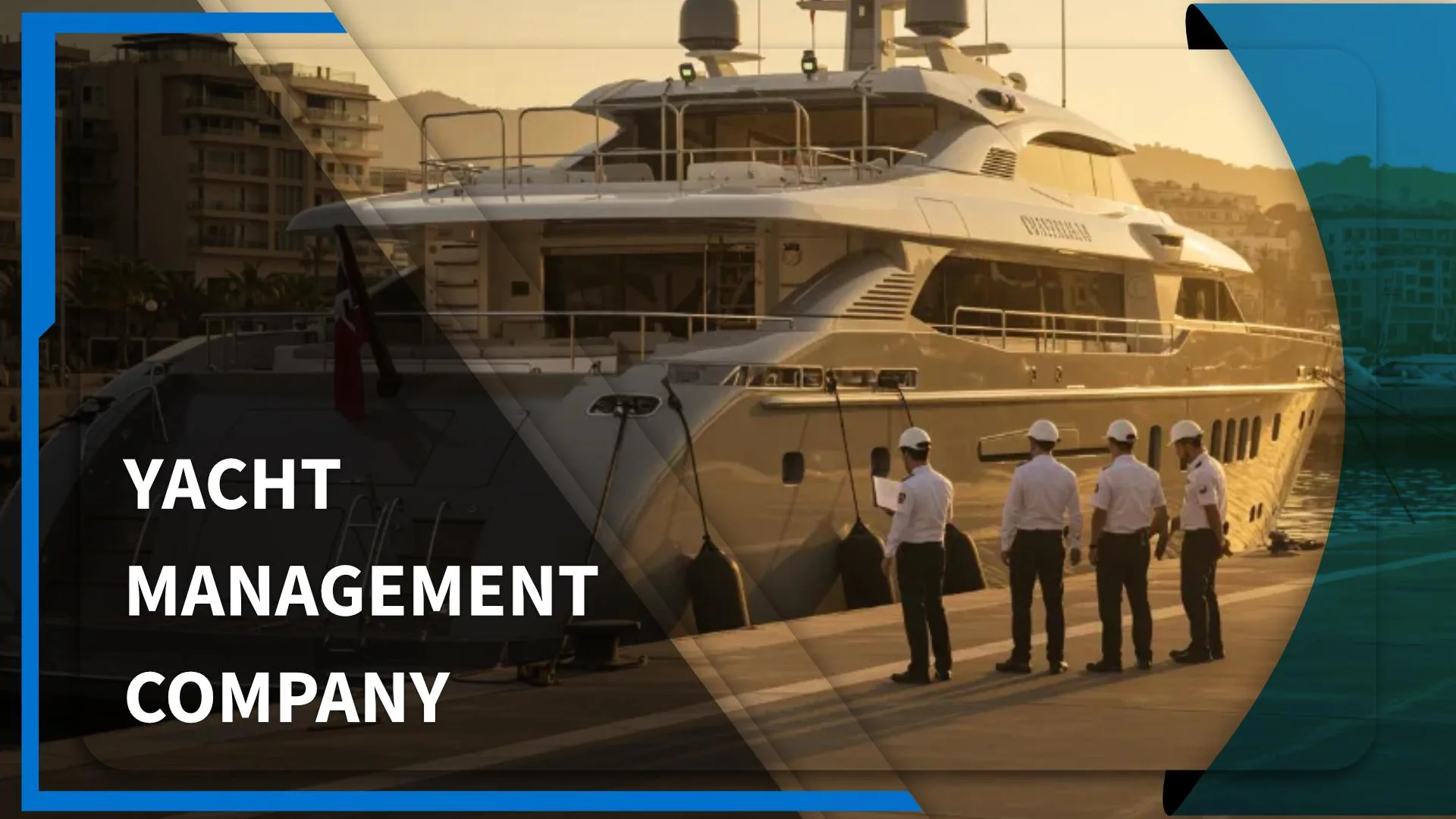
A yacht management company is a specialist shore team that keeps a vessel safe, compliant, crewed, maintained, insured, budgeted, and ready to sail. Think of it as the owner’s proxy and the captain’s support system. On modern yachts, the web of technical systems, regulations, and logistics grows quickly with size, passenger count, and range. Management brings the right expertise together so owners, captains, and crew can focus on the experience at sea.
Core functions, explained clearly
Technical management
This is the engineering heartbeat. Managers coordinate planned maintenance, schedule class and flag surveys, raise work orders, and choose shipyards. They also arrange inspections and tests during dry docking, from non-destructive testing (NDT) and hull thickness measurement to propulsion checks, followed by a proving sea trial before redelivering to the captain. Industry guides consistently list safety, maintenance, crewing, and accounting as the backbone of management services.
Compliance and safety management
Under the ISM Code, companies establish a Safety Management System, appoint a Designated Person Ashore, run drills, and audit procedures. ISM is the international standard for safe operation and pollution prevention and became mandatory through SOLAS Chapter IX. Yachts also follow environmental rules under MARPOL and crew welfare requirements in the MLC, which sets minimum standards for living and working conditions, repatriation, medical care, hours of work and rest, and complaints procedures. For larger passenger capacities, managers ensure conformity with the Passenger Yacht Code under the Red Ensign Group for 13 to 36 passengers, aligning with international conventions through equivalent standards. Alignment with flag state rules ties all this together.
Crewing
Management companies recruit, contract, and payroll crew, verify STCW certificates, manage rotations, medicals, travel, visas, and grievance procedures. A strong crewing desk keeps retention high and unplanned downtime low. Industry explanations emphasize crew administration, repatriation, and MLC compliance as routine management tasks.
Operational support
On the logistics side, the team coordinates itineraries, port and pilotage bookings, bunkers, lubricants, spares, and warranty follow ups. They handle vendor screening, purchase orders, and customs. When complex work is planned, they structure a refit with a clear refit brief, yard selection, risk and scope control, and on site supervision, often delivered via dedicated refit project management.
Financial administration
Expect budgets, cash flow, purchase approval matrices, owner reporting, and annual accounts. Some companies manage charter revenue too, from APA reconciliation to maintenance reserves. Trade publications and buyer guides describe regulatory, financial, and legal oversight as core deliverables.
Commercial operations, if chartered
When a private yacht enters charter, management works with charter brokers on compliance, contracts, and turnaround logistics. Recent summaries also note modern marketing and client management support for chartering programs.
How the system actually works
A good manager builds an integrated Safety Management System (SMS) that fits the vessel. This includes documented procedures for navigation, engineering, drills, incident reporting, internal audits, and a constant feedback loop with the captain and chief engineer. ISM requires safety objectives, responsibilities, and continuous improvement, all verified by external audits against the company Document of Compliance and the yacht’s Safety Management Certificate.
On the technical side, managers map the vessel into systems and components, then assign intervals and triggers. Examples include main engine overhauls, shaft-line checks, steering gear tests, firefighting appliances per the FSS Code, and lifesaving appliances per the LSA Code. When yard time is required, the work list is sequenced and priced, risk items are flagged, and quality control is enforced via tests & surveying.
For people, crewing teams ensure every role is covered and rested, contracts meet MLC standards, and training is current. The shore team stays on call for crew changes, medicals, and urgent relief. MLC 2006 sets the benchmark for these conditions.
When do you actually need management?
- You are stepping up in size, range, or passenger count, where ISM and detailed regulatory frameworks apply.
- You plan extended cruising in multiple jurisdictions and want robust logistics, permits, and technical coverage.
- You will charter and need consistent turnaround, financial controls, and guest standards.
- You are preparing a build or major refit and want objective scope, cost, and quality control with accountable reporting.
Choosing the right partner
Look for a company with a valid Document of Compliance for ISM, a deep technical bench, 24 hour operational support, and transparent reporting. Talk to references, ask how they manage critical spares and yard warranties, and review sample budget reports. Independent articles caution against glossy one stop claims without the structure to deliver across engineering, compliance, crewing, and finance.
Quick disambiguation that helps decisions
Captain vs Management Company
The captain runs the ship. Management backs the captain with shore side systems, approvals, audits, and specialists.
Broker vs Management Company
Brokers market, buy, or charter yachts. Management operates them after the deal.
Shipyard vs Management Company
Yards execute work. Management defines scope, supervises quality, and integrates the yard period into the SMS and maintenance plan. For major work, plan a structured refit with clear specifications, staging, and acceptance criteria.
Why it matters to beginners and professionals alike
For a new owner, management is confidence and continuity. For a captain, it is bandwidth, escalation paths, and documentation. For crew, it is fair employment standards and a safety culture backed by training and drills under ISM and MLC. For fleet managers, it is risk control, predictable budgets, and asset value protection supported by strong records and survey readiness. The best programs treat every maintenance interval, compliance deadline, and voyage as part of one coherent system.
Yachting is freedom, but it is also stewardship of a complex asset that moves between legal regimes and harsh environments. A well chosen yacht management partner turns that complexity into a reliable routine. If you are weighing your next season, your charter plans, or an upcoming yard period, consider how a structured management program could reduce risk, control cost, and leave you free to enjoy the horizon.
FAQs about Yacht Management Companies
Do I really need a yacht management company, or can my captain handle it?
Your captain runs day-to-day shipboard operations, while management handles shore-side systems like budgets, audits, vendor control, and regulatory compliance. On larger or commercially operated yachts, the workload and accountability exceed what a single vessel team can sustain. A management partner adds redundancy, specialist access, and 24/7 escalation so the captain isn’t pulled away from navigation and crew leadership.
What should a good management agreement include?
Look for scope, KPIs, reporting cadence, approval thresholds, and termination terms. Define who signs purchase orders, who approves yard change orders, and how warranty claims are pursued. Include data ownership for logs and maintenance history, plus clear incident reporting lines under the ISM Code.
How do I compare yacht management proposals fairly?
Normalize them to the same operational profile: cruising plan, crew size, flag, class, and charter intent. Ask each provider to price identical work lists and to share a sample monthly report. Weigh the depth of their technical bench and references more heavily than headline fees.
What KPIs should I use to measure performance?
Track technical availability, planned vs unplanned maintenance ratio, budget variance, incident close-out time, and survey findings on first pass. Add crew retention and training compliance for MLC and STCW. For charter programs, include guest satisfaction and turnaround punctuality.
How does a management company help during a refit or dry dock?
They translate owner goals into a structured work scope, vet yards, sequence critical paths, and control change orders. Quality is enforced with inspection points, trials, and documentation tied to a Safety Management System (SMS). This reduces rework and preserves warranty leverage.
What does ISM actually change for my yacht?
The ISM Code formalizes safety, pollution prevention, and continuous improvement. You get documented procedures, drills, internal audits, and a Designated Person Ashore (DPA) who keeps the feedback loop open between ship and shore. It turns good seamanship into repeatable, verifiable practice.
Does yacht management cover crew recruitment and payroll too?
Most full-service teams handle recruiting, contracts, payroll, and rotations, with checks against MLC and STCW. They also manage medicals, visas, and relief plans so the vessel stays adequately manned. This lowers administrative burden and improves retention.
Can I keep control of purchases while still using management?
Yes. Set approval matrices, for example the captain approves up to X, the technical manager up to Y, and the owner’s rep beyond that. You still receive transparent monthly reconciliations and real-time spend visibility via the planned maintenance and procurement systems.
How does management reduce unplanned downtime?
By running a planned maintenance system (PMS) mapped to each critical component, then closing the loop with condition monitoring, spares control, and trend analysis. They also schedule surveys and yard time early, preventing deadline pile-ups. The result is fewer surprises and faster recovery when faults occur.
What’s the difference between charter management and yacht management?
Charter management markets the yacht, manages bookings, contracts, and client service. Yacht management runs the asset itself, covering technical, compliance, crew, operations, and finance. Many owners use both, with tight coordination around turnarounds and maintenance windows.
How do management teams handle emergencies at sea?
They maintain a 24/7 duty officer, escalation protocols, and a vetted vendor network for rapid assistance. The SMS defines communication paths, shoreside support roles, and post-incident investigations. After the event, they manage repairs, documentation, and insurance liaison.
Can a small yacht benefit from management, or is it only for superyachts?
Smaller yachts can still gain from compliance guidance, vendor leverage, and seasonal planning. A scaled package, focused on maintenance scheduling and paperwork, often pays for itself in avoided delays and better resale documentation. Choose a provider with flexible tiers.
How often should I expect reports and what should be inside?
Monthly is common, with ad-hoc alerts for exceptions. Expect budget vs actuals, work orders completed and pending, survey status, incident logs, crew updates, and risk flags. For chartered yachts, add occupancy, APA reconciliation, and maintenance holds.
What happens if I want to switch management companies?
Build a transition plan that transfers the PMS database, technical files, class and flag correspondence, and open warranty items. Set a short overlap to avoid gaps in compliance or payroll. Make sure your contract stipulates data portability to keep your asset history intact.
How does management interact with class, flag, and Port State Control?
They calendar surveys, prepare evidence, attend inspections, and close findings. Shore teams align procedures with flag state requirements, class rules, and Port State Control expectations so visits are routine rather than stressful. Good preparation keeps the vessel moving.
Will management push me toward certain vendors or yards?
Reputable firms operate vendor matrices and competitive bidding, then document why awards were made. You should be able to see at least three comparable quotes for major items and independent QA outcomes. If exclusivity is proposed, ask for clear performance guarantees.
How does yacht management support new builds differently from existing yachts?
During a build, they review specifications, witness factory tests, and plan spares and documentation from day one. They also shape the SMS, crew ramp-up, and warranty strategy before delivery. This shortens the shakedown period and prevents costly retrofits later.
What cybersecurity and data practices should I expect?
Expect policies for network segmentation, updates to navigation and comms systems, and crew training on phishing and device hygiene. Operational data, crew records, and logs should be stored with role-based access and regular backups. Ask how they harden remote monitoring links.
Can I keep my preferred specialists while using management?
Absolutely. Most managers maintain an approved vendor list but will onboard your trusted surveyor or technician if they meet safety and insurance standards. The goal is coordinated execution, not replacing relationships that already work.
What are the early warning signs I chose the wrong provider?
Late reports, opaque spend, high incident recurrence, and crew churn are red flags. Missed survey windows or unexplained change orders point to weak planning and QA. If communication feels defensive instead of proactive, revisit the contract or prepare to transition.