
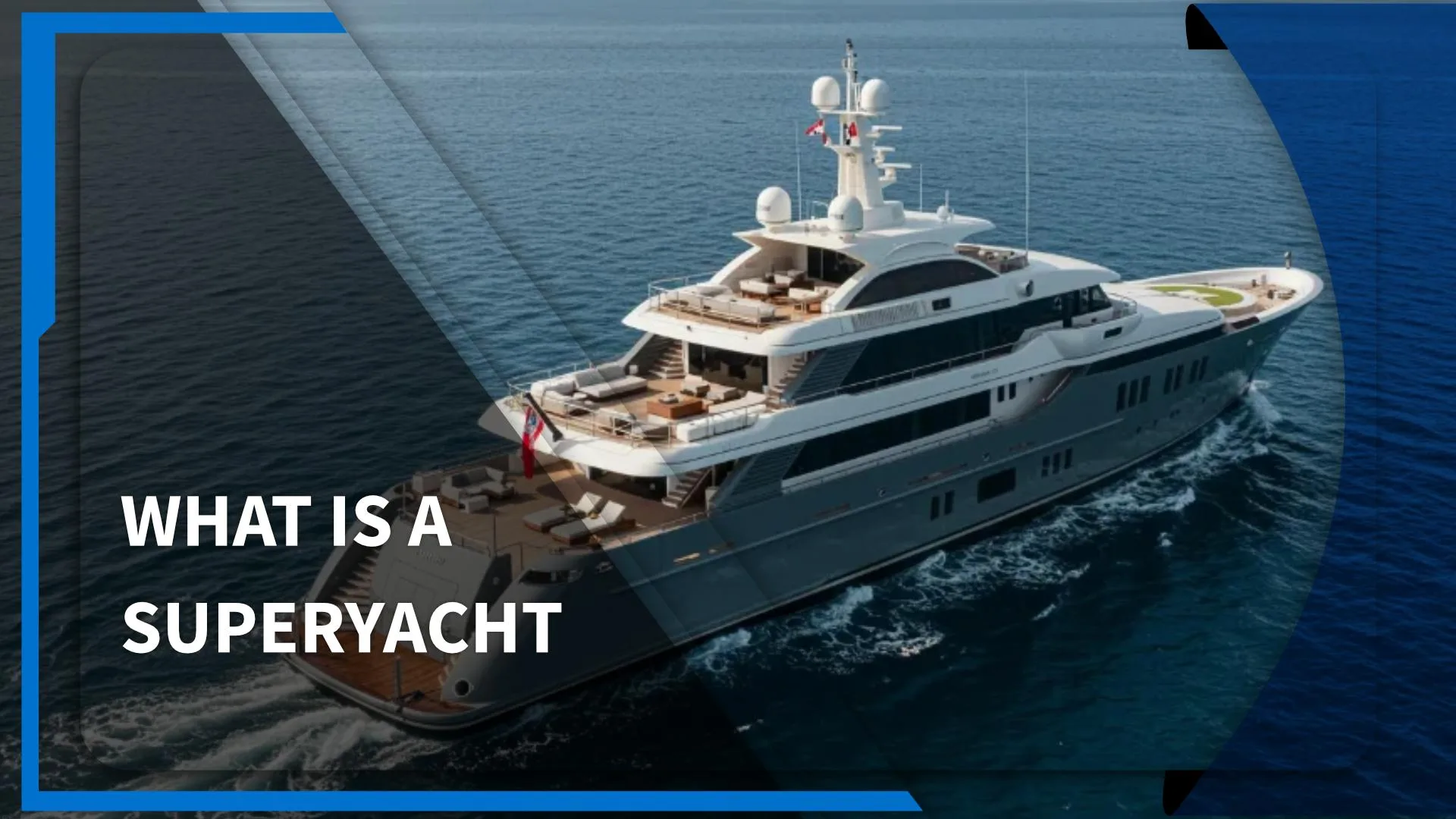
A superyacht is a large luxury yacht, usually understood as a yacht from around 24 metres upward, where professional crew, more complex onboard systems, and stricter operational requirements become normal.
That said, the term is not a single fixed legal category used the same way everywhere. In everyday yachting language, people often use superyacht as shorthand for a yacht that has moved beyond owner-operated leisure boating and into a more demanding class of vessel.
A superyacht is usually a yacht with the scale, layout, equipment, and operating profile to support extended stays onboard, dedicated guest and crew areas, more advanced technical systems, and a higher level of coordination for maintenance, compliance, and refit work.
A superyacht can be either a motor yacht or a sailing yacht. The word describes the vessel’s scale and complexity, not just how it is powered.
Why 24 metres matters
The common 24-metre threshold did not appear by accident. It is widely used in the large-yacht world because commercial yacht codes and regulatory breakpoints often start there.
That is why many industry sources treat 24m+ as the point where a yacht starts to enter superyacht territory.
Still, this is where people get confused. In practice, not everyone uses the word the same way. Some use superyacht for any yacht above 24 metres. Others reserve it for larger, more customized yachts closer to 30 or 40 metres and above.
So the cleanest answer is this:
A superyacht is commonly understood as a luxury yacht of about 24 metres or more, but the label is shaped by industry usage as much as by measurement.
What usually changes at superyacht scale
Once a yacht reaches this level, the main difference is operational complexity.
Typical superyacht characteristics include:
- professional crew rather than casual owner operation
- separate guest and crew circulation
- more advanced electrical, HVAC, plumbing, AV/IT, and machinery systems
- higher maintenance demands and longer technical work lists
- greater involvement from class, flag, survey, and specialist contractors when major works are planned
- storage and handling for tenders, toys, provisioning, spare parts, and hotel services
This is why a 24m-plus yacht is often treated very differently from a smaller leisure yacht during a yard period. Access, safety, coordination, documentation, and commissioning all become more structured.
Superyacht vs yacht, motor yacht, and megayacht
Yacht
Yacht is the broad umbrella term. It can describe a wide range of pleasure vessels, from relatively small private boats to very large custom vessels.
Motor yacht
Motor yacht describes propulsion. It means the yacht is power-driven. A motor yacht may or may not be large enough to be called a superyacht.
Superyacht
Superyacht usually means the yacht has crossed into large-yacht territory, where crew, systems, guest accommodation, and project complexity are on another level.
Megayacht
Megayacht is an informal step above superyacht. People often use it for much larger vessels, often around 60 metres and above, but there is no universal cut-off that everyone follows.
Why the term matters in practice
For an owner, captain, or manager, the word matters because it changes expectations.
A superyacht usually means different berth planning, different crew structure, different maintenance budgets, different survey and compliance touchpoints, and a different kind of shipyard scope when the vessel goes in for work.
That matters even more during refit planning. Mechanical renewal, coating work, interior changes, HVAC upgrades, electrical modifications, and approval workflows tend to be more interdependent on a superyacht than on a smaller yacht. If you are planning yard works rather than just clarifying the term, see our superyacht refit page.