
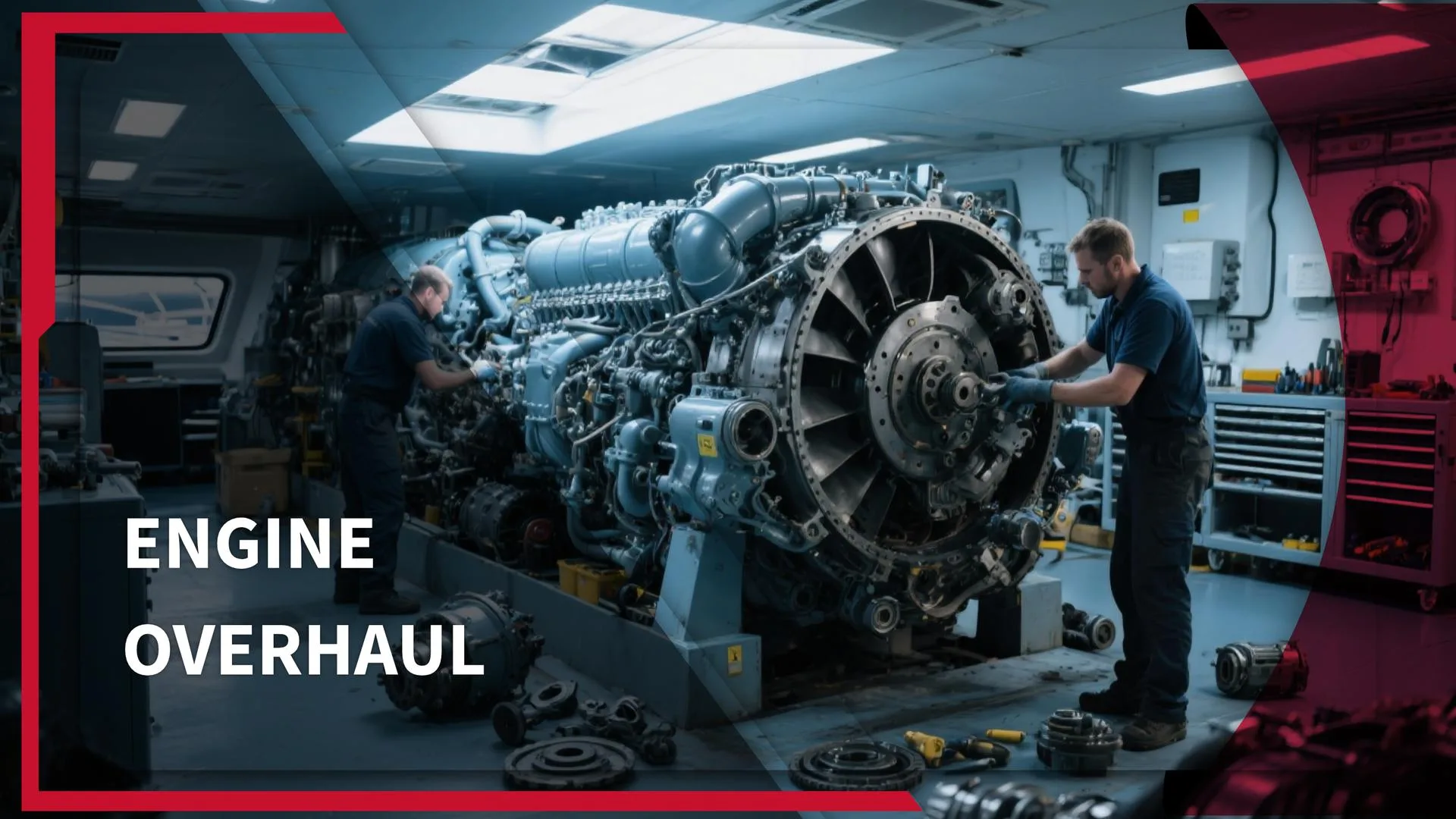
Yacht engine overhaul is a controlled rebuild of the engine’s internal wear condition. The scope reaches far enough into the machinery to inspect, measure, renew, reassemble and prove the engine as a service-ready unit inside the yacht’s wider propulsion route.
In refit terms, overhaul is more than a large repair invoice. It is a yard decision that affects access, lifting, workshop support, parts strategy, cleanliness control, testing sequence and the evidence package required for redelivery. Once the engine is opened at overhaul depth, the work becomes part of a coordinated technical work package.
For KRM’s site structure, overhaul sits closest to machinery and equipment for the physical engine package, with measured checks and running proof closing the job during release.
Overhaul Resets Internal Wear Condition
An overhaul resets wear-critical engine condition through measured opening-up and controlled rebuild. The work reaches into the parts that carry compression, lubrication load, combustion load, cooling integrity and rotating support. Heads, liners, pistons, rings, bearings, sealing surfaces, valve-train components and related running surfaces enter the decision path according to engine type and opening findings.
That reset sits above fault-led repair work in scope maturity. A major repair follows a damaged area. An overhaul follows engine condition as a whole, with the wear route, measurement route and return-to-service route tied together in one package.
For a yacht owner or technical manager, that distinction matters because overhaul changes the acceptance logic. The result is judged through readings, renewed wear sets, reassembly quality, initial running behaviour and load proof. Part replacement on its own gives only partial evidence.
Opening-Up Reveals the Real Scope
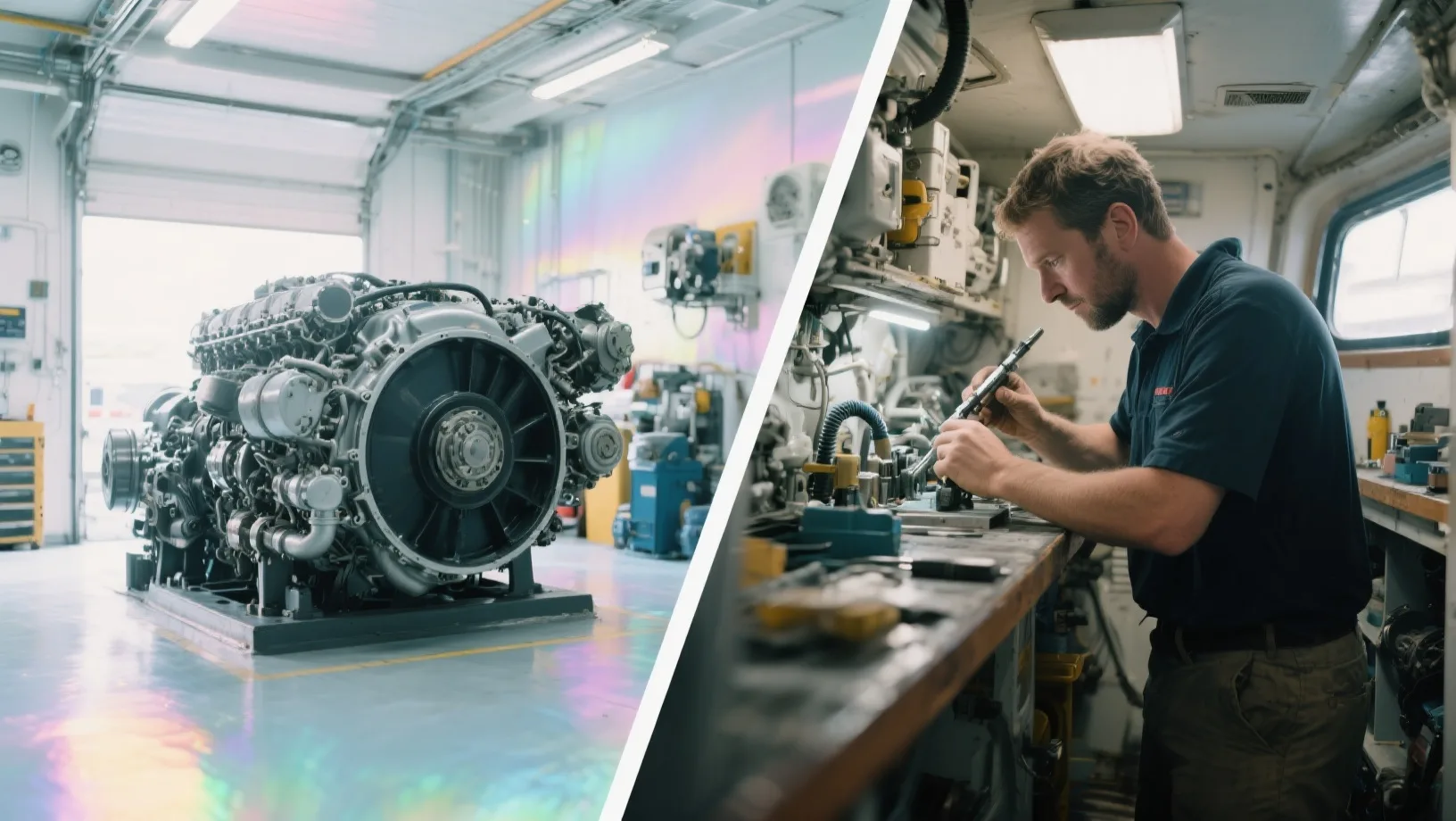
The overhaul scope becomes clear after opening-up begins. Wear pattern, bearing condition, liner surface, piston crown evidence, valve seating, injector condition, contamination marks, local heat damage and oil-side findings often shift the job from a planned scope into a fully evidenced one.
This stage is where estimate becomes project reality. Procurement expands, machining support enters, workshop attendance changes, specialist advice joins the project route and the redelivery sequence tightens around the findings inside the engine.
On larger refit periods, opening-up also protects the owner side from false closure. A narrow scope defined before inspection gives weak control if the internal evidence is already pointing toward deeper wear, contamination history or repeated running stress.
Related Systems Shape the Rebuilt Result
An engine returns to service through more than internal parts. Lubrication quality, cooling performance, fuel cleanliness, air path condition, exhaust restriction, starting arrangement, control settings and alarm integrity all shape the life of the rebuilt engine.
That is where overhaul either gains long-term value or loses it quickly. A rebuilt bottom end running with dirty oil, weak cooling flow, injector imbalance, air restriction or unstable control signals carries the old damage route straight back into the renewed machinery.
The wider context sits within the yacht propulsion system. Overhaul owns internal engine condition; propulsion diagnosis owns the full path from engine output to thrust and measured behaviour under load.
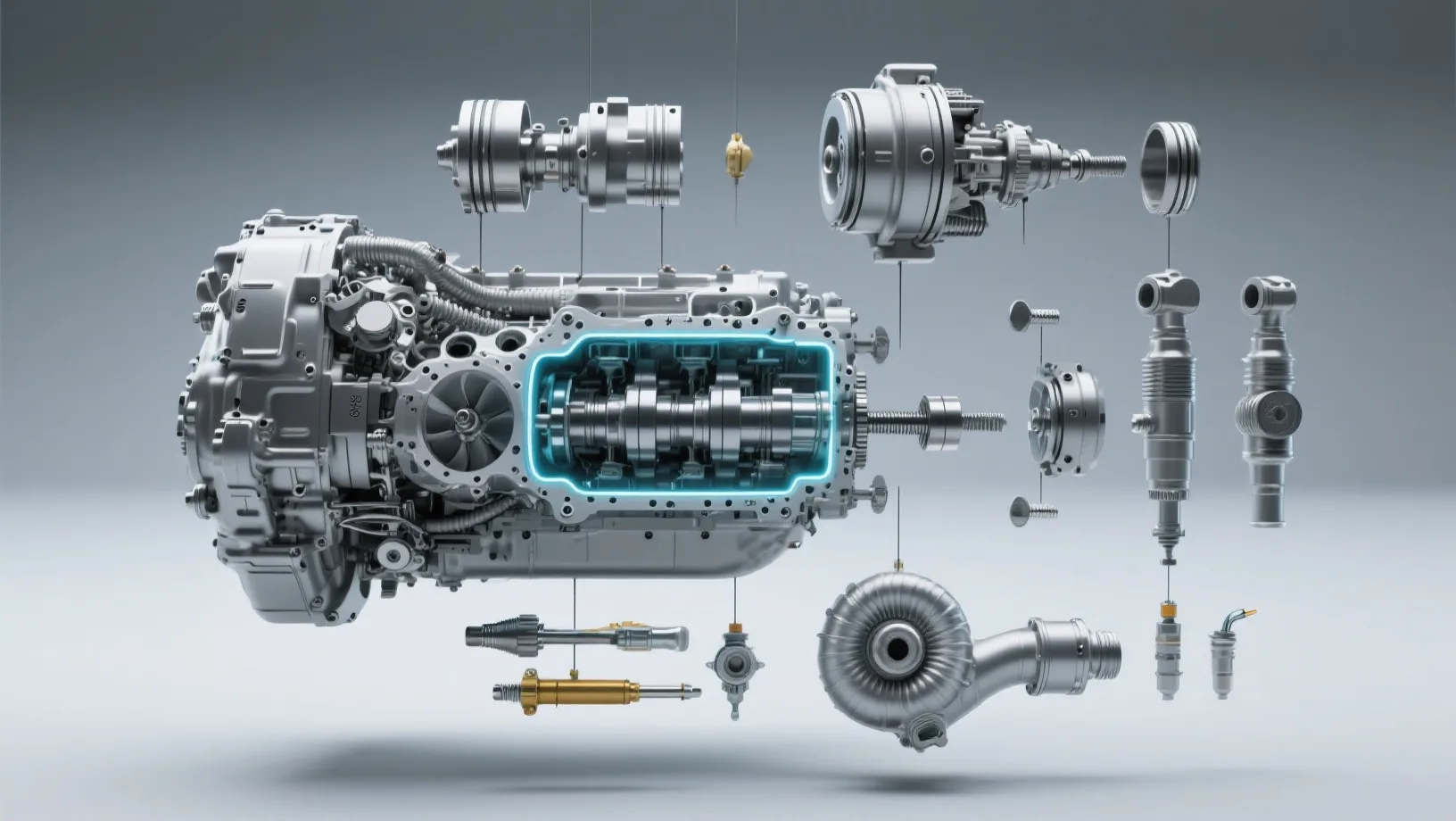
In-Place and Lifted Routes Create Different Yard Packages
Some overhaul scopes stay largely in place inside the machinery room. Others move through partial lifting, subassembly removal or full workshop-supported removal. The correct route follows access, engine size, surrounding structure, contamination control, machining requirements and the practical time cost of working inside the yacht.
An in-place route saves heavy movement, but it also tightens access, tooling reach, cleanliness control and inspection discipline. A lifted route opens the job physically, yet it brings crane planning, transport protection, seating review, reinstallation sequence and interface checks across a wider team.
That route choice needs superyacht refit project management once overhaul becomes a live package. Access windows, subcontract attendance, workshop lead times, trial timing and owner reporting all move with the physical method chosen for the engine.
Engine Seating Still Matters After Internal Work
Overhaul focuses on internal condition, but the engine still returns to a support system inside the yacht. If the machinery has been lifted, reseated or disturbed during the package, engine position, mounts, chocks, foundation condition, gearbox relationship and coupling geometry re-enter the decision path.
That handover point connects overhaul to main engine alignment. Where the shaftline route has also been affected, the related detail page is shaft alignment.
A sound overhaul record therefore carries the internal rebuild and the installed-condition follow-up together. The owner side looks for confidence that the rebuilt engine is healthy inside and correctly seated inside the propulsion train it has to drive.
Commissioning Moves the Scope Out of the Workshop
The rebuild only becomes meaningful when the engine returns to operation in a controlled way. Initial turning, start sequence, oil pressure stability, cooling response, leak checks, temperature trend, alarm behaviour, exhaust appearance, control response and governed running all belong to commissioning.
This evidence stage sits naturally with tests and surveying. The value comes from recorded readings and observed behaviour tied to the work completed. Verbal confidence after reassembly carries little weight.
Commissioning also separates engine condition from surrounding complaints. If the original issue involved vibration, weak speed, unstable load, high temperature or repeated alarms, the rebuilt engine has to be read against the wider propulsion picture before release.
Sea Trial Confirms the Complaint Has Cleared
Alongside running gives one proof layer. Sea trial brings load, rpm range, gear behaviour, vibration response, temperature stability, exhaust behaviour, acceleration and crew observations into one operating picture.
That step matters most when the original complaint involved underway symptoms or when the overhaul package disturbed the propulsion route beyond the engine itself. The relevant proof stage sits with sea trial, where the project verifies that the rebuilt engine behaves correctly in the operating envelope the yacht will actually use.
Trial evidence also closes the conversation between overhaul and propulsion. The engine often looks strong at idle and alongside while another interface still shapes the complaint. Underway proof gives the owner side a more defensible release position.
The Technical File Protects the Next Decision
A credible overhaul file shows why the engine was opened, what the inspection found, which wear-critical parts were renewed or reconditioned, which readings were recorded, what related systems were checked, how the engine was reassembled, what commissioning results were obtained and what trial evidence supports release.
That file protects the next yard period and the next troubleshooting decision. If temperature movement, vibration, oil concern or performance drift returns later, the team has a baseline that separates rebuilt condition, monitored items and later-emerging issues.
For a superyacht, overhaul only closes cleanly when the technical file, commissioning notes and operating proof support the same conclusion: the engine package is ready to leave the yard with traceable evidence behind it.
FAQs
What is engine overhaul on a yacht?
Engine overhaul on a yacht is a structured rebuild of the engine’s internal wear condition through opening-up, measurement, renewal, reassembly and return-to-service proof.
How is engine overhaul different from a major repair?
Major repair follows a local failure or damaged area. Overhaul follows the wider wear condition of the engine and closes through a fuller rebuild, broader measurement route and stronger proof package.
Does a yacht engine have to be removed for overhaul?
Removal depends on access, engine size, required machining, surrounding structure and contamination-control demands. Some scopes stay largely in place, while others move through lifting or workshop support.
Does overhaul solve vibration or speed loss?
It solves engine-side wear when internal condition is driving the complaint. Vibration or speed loss also grows from alignment, shaftline drag, propeller condition, control issues, cooling problems or hull resistance, so the rebuilt engine still has to be judged inside the wider propulsion route.
What proves an overhaul is complete before redelivery?
Completion is proven through overhaul readings, reassembly records, commissioning results, stable running data, relevant sea-trial evidence and a technical file that shows what was found, renewed and released.