

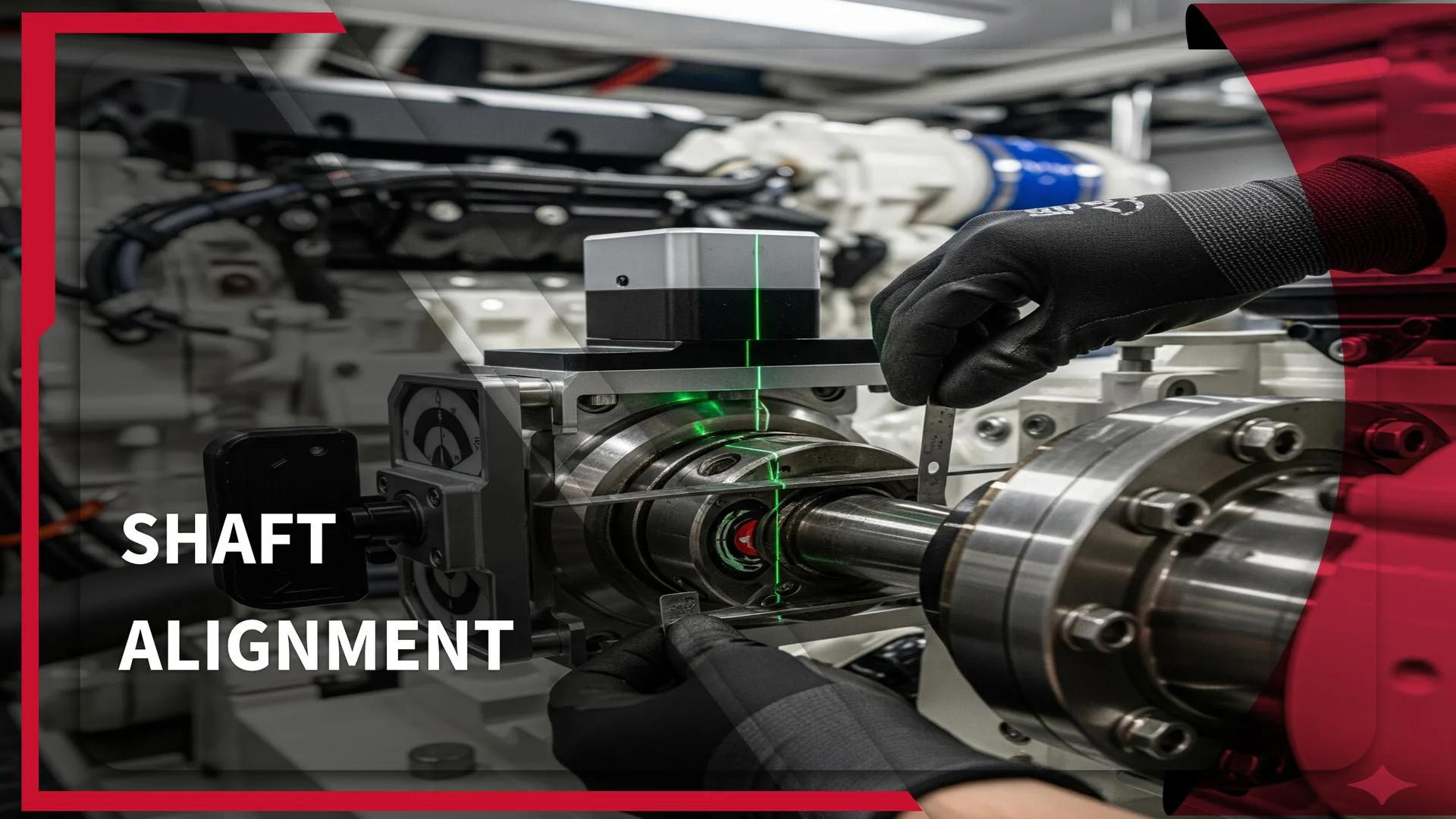
Yacht shaft alignment sets the working relationship between the gearbox or output coupling, shaftline, bearings, seals, stern tube, brackets and propeller. The aim is to let the shaftline carry torque and thrust through the yacht without forcing abnormal load into bearings, seals, couplings, gearbox output, mounts or foundations.
Alignment is part of the wider yacht propulsion system. The shaftline sits between machinery output and propeller thrust, so a small geometry problem turns into vibration, seal wear, bearing heat, noise, coupling stress, reduced efficiency or a weak sea-trial result.
During a refit, shaft alignment sits inside technical release planning. The closest service paths are tests and surveying for measured evidence and machinery and equipment where the alignment work sits inside a larger propulsion or machinery package.
Alignment Starts With the Shaftline as Installed
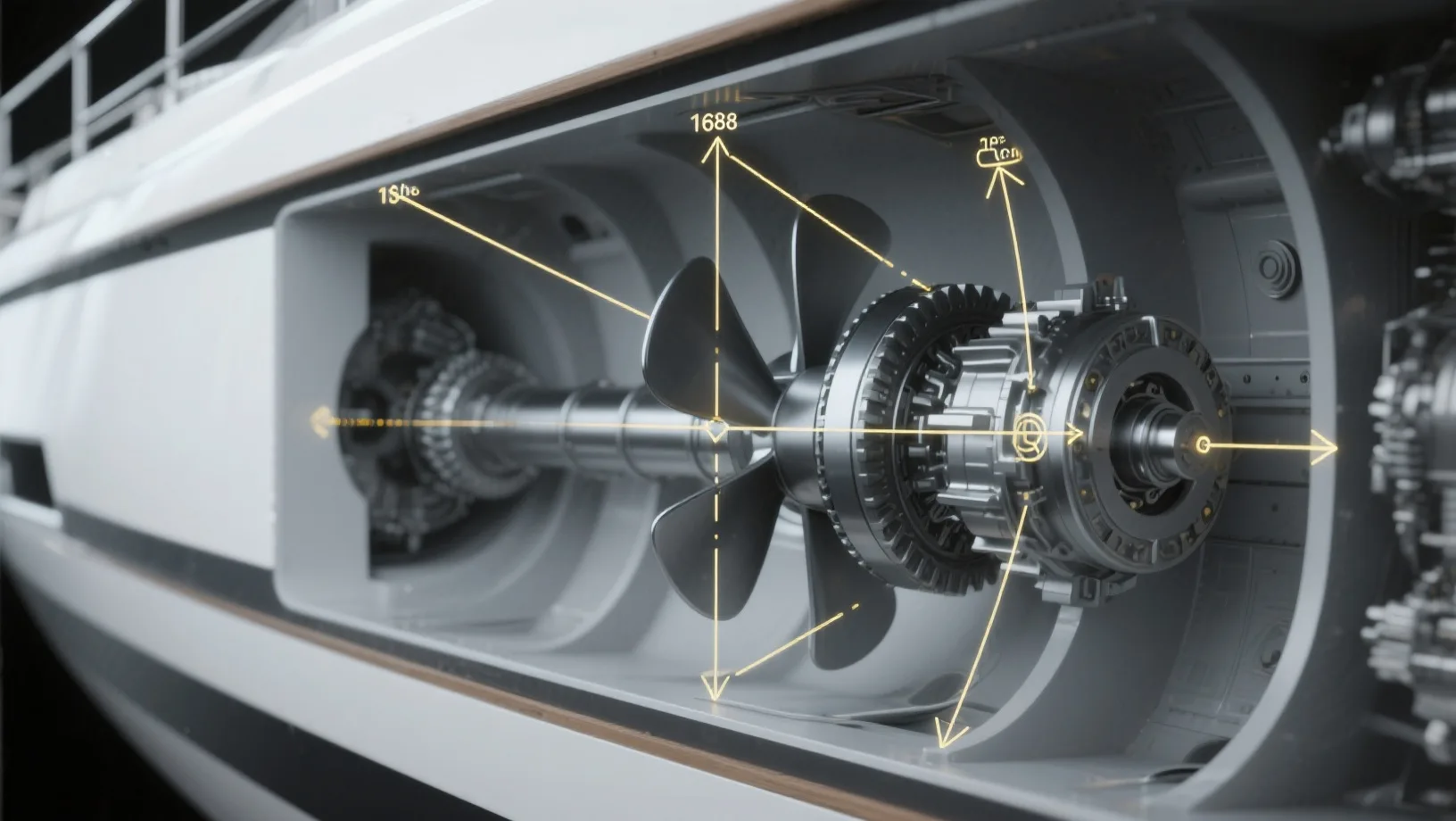
The shaftline has to be read as an installed structure. The route includes the gearbox or output flange, coupling, shaft sections, intermediate bearings, stern-tube bearing, seals, brackets and propeller fit. Each part affects how the shaft sits, how it turns and how load travels through the yacht.
The coupling face gives one visible check point, but the alignment decision belongs to the whole route. A clean coupling reading has limited value if a bearing is carrying the wrong load, the stern tube is forcing the shaft, the foundation has moved, or the yacht is being measured in a condition that will change after launch.
Shaft alignment is a yard-period issue built around installed condition. The yacht, the shaftline and the machinery have to be measured in the condition that matters for operation.
Dry Dock, Afloat and Running Condition Change the Picture
A yacht changes geometry through the stages of a yard period. Dry-dock support, blocking position, hull deflection, tank condition, machinery removal, propeller work, bearing replacement, launch, temperature and operating load all change the relationship between machinery and shaftline.
Dry-dock readings are useful for access, repair and initial correction. Afloat readings matter because the hull is carrying itself in the water. Running behaviour matters because load, temperature, thrust and vibration reveal conditions that static checks miss.
Good alignment work respects those stages. A result taken at one stage is recorded with that stage attached. The owner side then sees whether the reading supports installation, launch condition, commissioning or final operating acceptance.
Coupling Readings Are One Evidence Layer
Coupling readings help show angular and offset relationship between connected components. Dial readings, laser-assisted checks and face/gap measurements all give useful evidence when the setup is correct and the measurement condition is clear.
The reading still has to be interpreted with the shaftline behind it. Bearing condition, bracket position, shaft run-out, coupling fit, flange condition, mount compression, foundation movement and propeller load history all affect the result. The measurement also depends on how the shaft is supported during the check.
For yacht work, the useful output is a recorded alignment position tied to condition, method and corrective action. A number without context creates weak confidence for redelivery.
Bearings and Seals Show the Consequence
Bearings and seals often reveal alignment quality before the owner sees a formal report. Uneven bearing wear, bearing heat, seal leakage, shaft scoring, stern-tube concern, repeated seal replacement, abnormal noise and vibration marks all point toward load distribution along the shaftline.
These signs deserve careful separation. A seal issue comes from alignment, installation, surface condition, pressure, contamination, vibration or operating condition. Bearing wear comes from alignment, water flow, lubrication, material condition, shaft movement or previous damage. The yard has to trace the cause before treating the damaged part.
This protects the refit scope. Replacing a worn part gives short relief if the shaftline geometry keeps producing the same load path.
Main Engine Position is a Related Decision
Shaft alignment often leads back to the engine or gearbox position. Mount condition, foundation condition, soft foot, chock condition, thermal growth, gearbox output height and coupling position all influence how the machinery side meets the shaftline.
That topic has its own decision layer. Where the work focuses on engine mounts, foundations, chocks, gearbox position and output alignment, the adjacent article is main engine alignment. Shaft alignment keeps the focus on the shaftline route and how the geometry reaches the stern gear and propeller.
The two topics meet during propulsion release. The yacht requires the machinery side and shaftline side to agree under the same operating logic.
Vibration Has to Be Separated From Alignment
Vibration is one of the common reasons shaft alignment enters the conversation. It is also one of the easiest symptoms to misread. Propeller damage, fouling, blade condition, shaft run-out, bearing wear, coupling condition, gearbox behaviour, engine load, hull appendages and resonance all sit in the same diagnostic area.
The yard has to separate vibration by speed range, load condition, manoeuvre condition, shaft speed, engine data, bearing response, noise pattern and sea-trial observations. Alignment is one possible finding, and the diagnosis has to prove the route.
Measured support becomes valuable at this point. Vibration readings, bearing checks, alignment records, propeller inspection and trial notes build a stronger picture than one symptom described from memory.
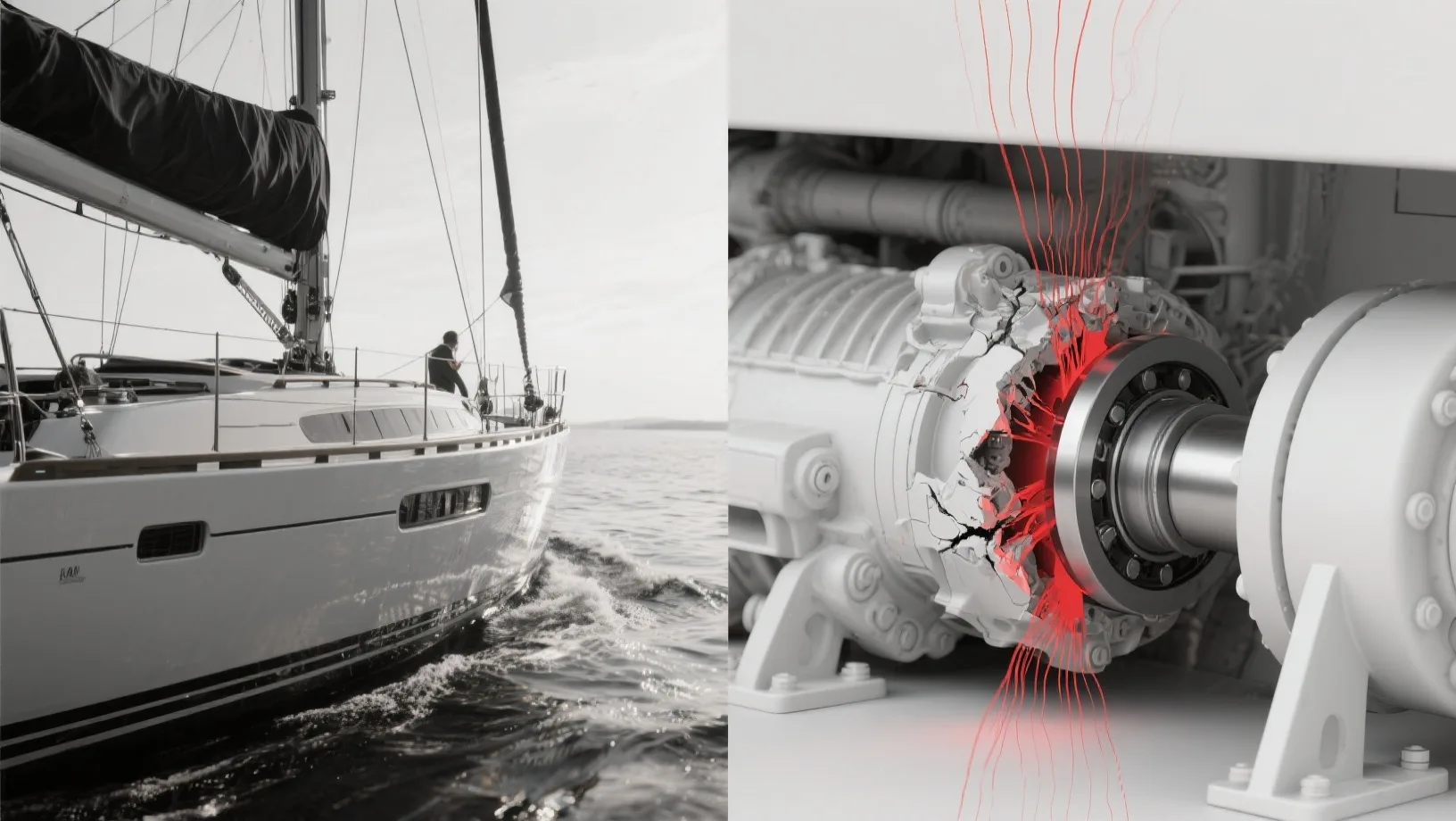
Afloat Verification Gives the Reading Its Weight
Afloat alignment matters because the yacht’s support condition changes after launch. The hull is in its operating environment, machinery temperature is managed closer to service condition, and the shaftline sits in a state closer to real propulsion use.
The check still has to be staged correctly. The yacht’s loading condition, tank state, machinery temperature, recent running, access condition and shaft support all belong in the record. If the yacht has just launched after a heavy yard package, the team also has to consider settling, bearing water flow, seal condition and any findings from dockside rotation.
The value of afloat verification is evidence quality. It shows how the installed shaftline behaves after the yacht leaves the artificial support of dry dock.
Sea Trial Connects Geometry With Behaviour
Sea trial brings the alignment record into the operating picture. Shaftline geometry has to agree with engine load, gearbox behaviour, rpm, vibration, temperature, bearing response, seal condition, speed, noise and crew observations.
The trial route follows the work completed. A bearing replacement, shaft removal, seal package, propeller repair, gearbox work or engine movement each changes the evidence required before redelivery. The yacht has to show stable behaviour under the relevant load range, with findings written clearly enough for owner-side acceptance.
Where the operating run itself is the main proof stage, the adjacent article is sea trial. Shaft alignment uses the trial as confirmation that geometry, installation and load behaviour agree.
The Record Protects Future Troubleshooting
A shaft alignment record describes the yacht condition, measurement stage, loading state, method, readings, adjustment made, bearing or seal findings, related propulsion work, trial observations, open items and final acceptance position.
That record matters after redelivery. If vibration, seal wear, bearing heat or speed loss appears later, the captain, yacht manager and technical team have a documented baseline. Good records also show corrected findings and monitored items.
For larger refit periods, the record belongs inside the wider superyacht refit project management route. Alignment findings affect timing, procurement, access, specialist attendance and redelivery commitments.
FAQs
What is yacht shaft alignment?
Yacht shaft alignment is the measured relationship between machinery output, couplings, shaftline, bearings, seals and propeller. It checks whether the installed shaftline carries load cleanly enough for operation and redelivery.
What is floating shaft alignment?
Floating shaft alignment refers to alignment checked while the yacht is afloat, with the hull supported by water outside the dry-dock block condition. The goal is to measure geometry closer to operating condition.
How does shaft alignment change after launch?
Launch changes hull support, loading state, shaftline position and sometimes machinery relationship. A dry-dock reading and an afloat reading therefore describe different stages of the same shaftline.
Does vibration mean the shaft is misaligned?
Vibration has several possible causes: propeller condition, shaft run-out, bearing wear, coupling condition, gearbox behaviour, engine load, hull appendages, resonance and alignment. The cause has to be proven through measurement and trial evidence.
When is shaft alignment checked during refit?
It is checked after shaftline, bearing, seal, gearbox, engine-mount, foundation or propeller work, and again when the yacht’s launch or sea-trial condition affects the release decision.