

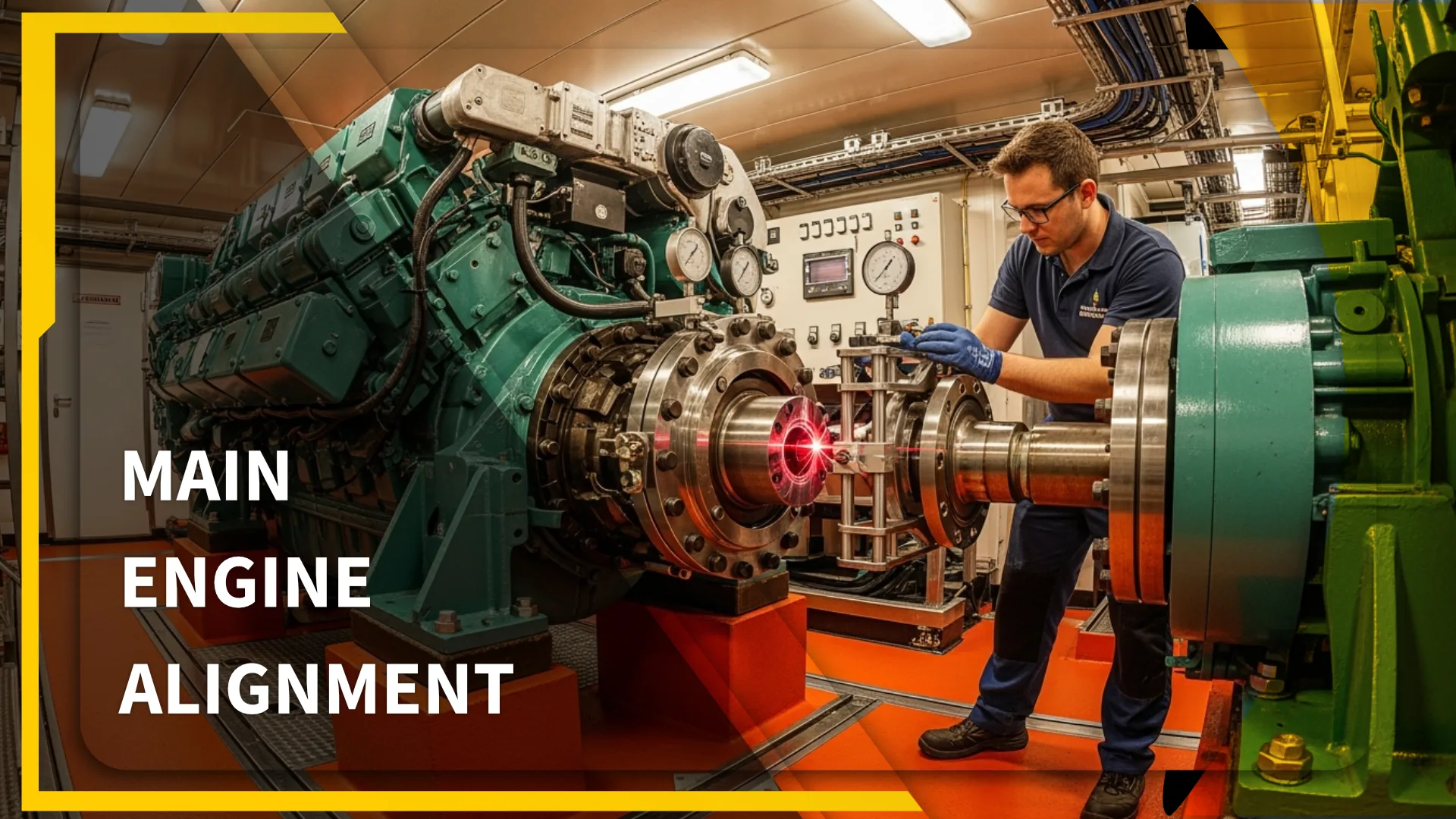
Yacht main engine alignment sets the installed relationship between the main engine, mounts, chocks, foundation, gearbox or output flange and the shaftline that receives power. It is a machinery-side alignment decision, but the effect reaches the whole propulsion train.
During a refit, main engine alignment becomes important after engine removal, mount replacement, foundation repair, gearbox work, shaftline work, vibration findings or sea-trial concern. The job is to place the engine in a position that carries load cleanly, protects connected components and gives the owner side a defensible redelivery record.
Alignment also sits inside the wider yacht propulsion system. Engine position, coupling geometry, shaftline response and running behaviour agree before the yacht leaves the yard with confidence.
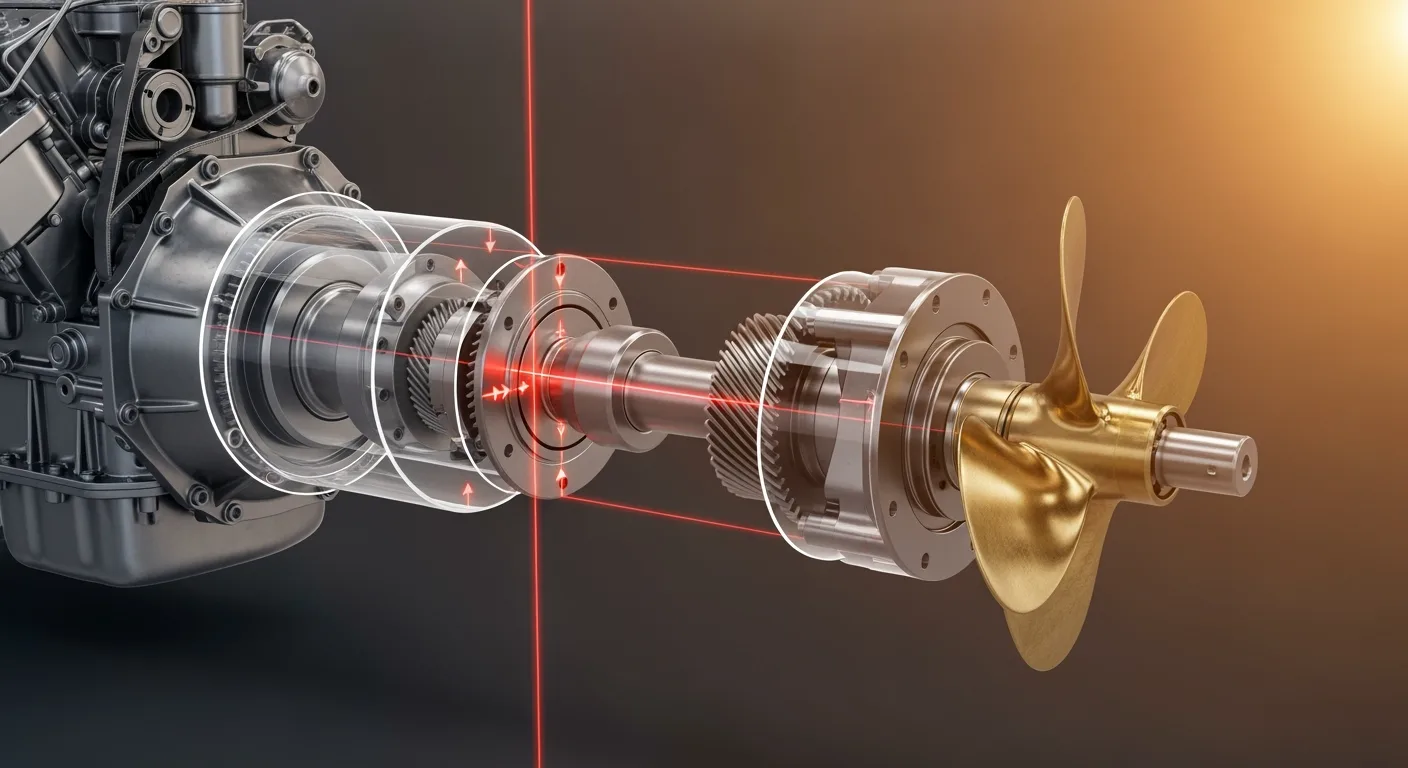
Engine Position Sets the Machinery Geometry
Main engine alignment starts with the engine as an installed structure inside the yacht. The engine bed, feet, mounts, chocks, gearbox, coupling and surrounding access all shape the final position.
The alignment decision covers height, side position, angular relationship, output flange position and the way the engine sits on its support system. A clean reading at the coupling has limited value if the engine is being forced into position by uneven supports or a stressed foundation.
For yacht work, the useful question is practical: does the installed engine sit in a position that supports the propulsion train under real operating load? That answer comes from geometry, support condition, adjustment history and running evidence together.
Mounts and Chocks Carry the Load Path
Mounts and chocks are part of the alignment system. They carry engine weight, absorb or transmit vibration, set height, control movement and preserve the relationship between the engine and gearbox output.
Worn mounts, uneven compression, tired rubber elements, loose fasteners, poor shim contact, damaged chocks or disturbed holding-down arrangements change the reading. The engine then appears aligned at one point while the support system is already telling a different story.
A familiar refit trap follows this pattern. A yacht enters the yard for vibration, leakage, coupling stress or drivetrain noise, and the first visible reading points toward alignment. The yard reads the support condition before adjusting the engine into a number that will move again after load, heat or use.
Foundation Condition Changes the Reading
The foundation under the engine sets the real reference. Previous welding, insert repair, corrosion, coating thickness, local distortion, weak fastener seating, bed movement and old impact history all affect how the engine sits.
Foundation condition matters most after heavy refit work. Engine removal, gearbox removal, structural repair, tank work, heat input, local grinding and new coating systems alter the support environment. If those changes are ignored, the final reading belongs to the yard setup more than the yacht’s operating condition.
Main engine alignment therefore belongs close to machinery and equipment work. The alignment reading is only one part of a package that includes access, lifting history, foundation inspection, mount condition, gearbox interface and final release checks.
Soft Foot Makes the Reference Unreliable
Soft foot describes a condition where one engine foot or support point sits differently from the others. The engine then twists or settles as bolts are tightened, and the output flange reading changes with clamping force.
On a yacht, soft foot comes from uneven foundation surfaces, mount condition, shim stack problems, distorted feet, coating build-up, chock contact issues or previous adjustment shortcuts. It also appears after machinery has been lifted and returned without a careful support check.
The danger is false confidence. The team records an acceptable-looking coupling position, then the engine moves when fasteners are torqued, temperature rises or propulsion load comes on. Soft foot is resolved before the reading becomes useful redelivery evidence.
Gearbox Output Links Engine Alignment to the Shaftline
The gearbox or output flange is the meeting point between machinery alignment and shaftline alignment. It shows whether the engine-side position is feeding the shaftline cleanly, but it also reflects conditions outside the engine package.
Shaft support, bearing condition, stern gear, coupling fit, shaft run-out and hull state influence the same interface. For that reason, shaft alignment remains a separate check with its own evidence route.
Main engine alignment owns the machinery-side position. Shaft alignment owns the installed shaftline route. During propulsion release, both records speak the same language: yacht condition, measurement stage, adjustment made, related work and operating result.
Cold Readings Require Installed Context
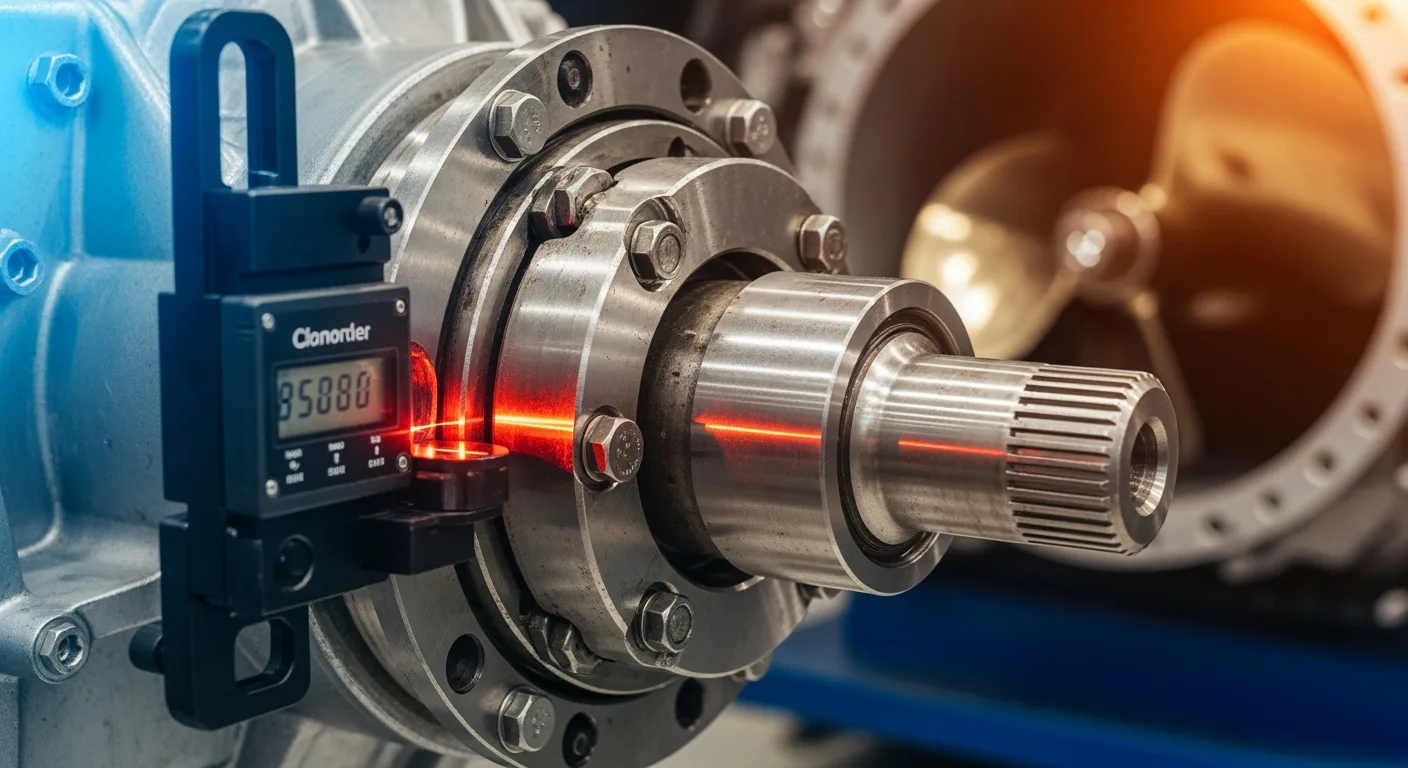
A cold static reading gives a valuable snapshot. It shows the relationship between engine output and connected components before operating heat, thrust load and sea condition enter the picture.
That snapshot gains value when the record includes the yacht’s condition. Dry dock or afloat state, tank loading, recent running, mount temperature, shaft support, gearbox condition, coupling fit and access constraints all influence the interpretation.
For larger refit packages, cold alignment is an early release step inside a wider proof chain. It helps the yard choose the correction, document the position and define the launch, running and trial checks for confirmation.
Running Behaviour Tests the Decision
Main engine alignment earns confidence when static geometry agrees with running behaviour. Engine load, gearbox temperature, vibration character, coupling response, mount movement, bearing temperature, seal condition, noise and rpm range all show how the installation behaves under work.
The measured layer belongs with tests and surveying. Readings, observations and trial notes turn a workshop-style adjustment into evidence for the yacht owner, captain, manager and technical team.
Running behaviour also separates alignment from related causes. Propeller condition, shaftline geometry, bearing wear, engine condition, gearbox behaviour, foundation movement and hull appendage effects share symptoms. The release decision has to follow evidence across the full symptom route.
Sea Trial Gives the Alignment a Final Witness
Sea trial is the point where main engine alignment faces real propulsion demand. The engine is loaded, the gearbox transmits torque, the shaftline turns under service condition and the yacht shows whether the installation behaves cleanly across the relevant operating range.
The trial does more than confirm a number. It connects engine position with vibration, temperature, noise, acceleration, speed, steering feel, gearbox response, seal condition and crew observations.
Where trial evidence is the main release stage, the adjacent article is sea trial. Main engine alignment uses that trial as proof that support condition, machinery position and propulsion behaviour agree before redelivery.
Records Keep the Finding Usable
A useful main engine alignment record identifies the yacht condition, work completed, mount and chock status, foundation findings, measurement method, cold readings, adjustment made, running observations, sea-trial notes, remaining restrictions and final acceptance position.
That record protects the next decision. If vibration, leakage, bearing heat, coupling concern or mount movement appears after delivery, the technical team has a baseline. The owner side also sees the difference between corrected findings, monitored conditions and open items.
On larger projects, this belongs inside superyacht refit project management. Alignment affects access, lifting, specialist attendance, survey timing, launch preparation, trial planning and final handover commitments.
FAQ
What is yacht main engine alignment?
Yacht main engine alignment is the measured and adjusted relationship between the main engine, mounts, chocks, foundation, gearbox or output flange and the propulsion line it drives.
How is main engine alignment different from shaft alignment?
Main engine alignment focuses on the machinery-side position: engine supports, foundation, chocks, mounts and output flange. Shaft alignment focuses on the shaftline route through couplings, bearings, seals, stern gear and propeller connection.
When is main engine alignment checked during refit?
It is checked after engine removal, mount replacement, gearbox work, foundation repair, shaftline work, vibration findings, launch-stage change or sea-trial concern.
Do engine mounts and chocks affect alignment?
Yes. Mount compression, chock contact, fastener condition, shim quality and support stiffness change how the engine sits and how the output flange meets the propulsion line.
How is main engine alignment confirmed before redelivery?
Confirmation comes from installed-condition readings, mount and foundation checks, running observations, sea-trial behaviour and a clear record showing adjustment, evidence and final acceptance position.