


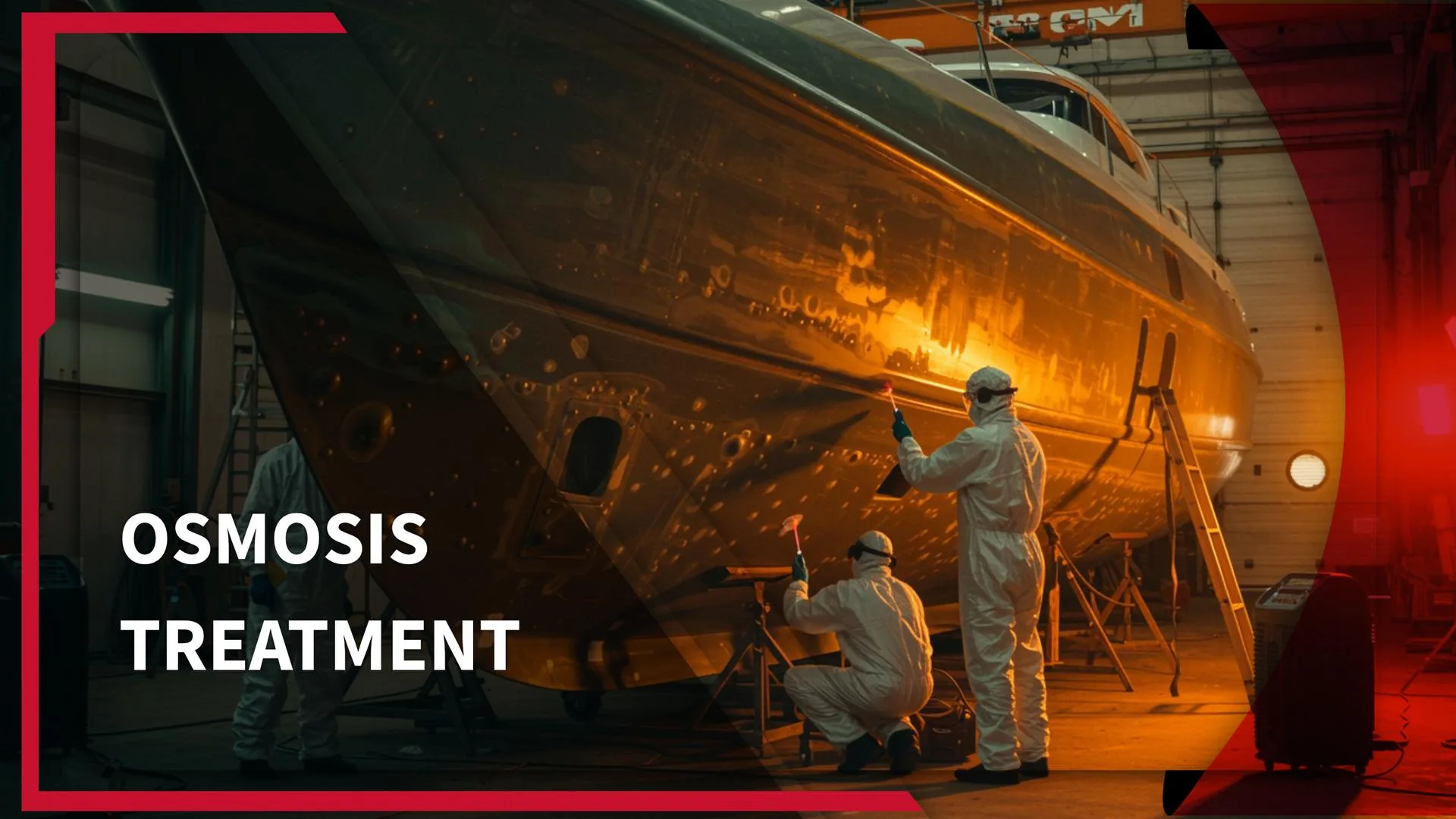
Osmosis treatment is the repair process used when a GRP or GFRP hull develops osmotic blistering and related laminate degradation after long exposure to water. In yacht work, the subject sits somewhere between composite diagnosis, repair planning and underwater coating rebuild.
The important distinction is this: osmosis is not just a cosmetic word for blisters, and it is not automatically a full-hull emergency either. Some cases stay local and manageable. Some widen into deeper laminate, hydrolysis and delamination concerns. The job of treatment is to diagnose the real condition first, then repair to the right level rather than overreacting or underrepairing.
When the damage is broad enough, osmosis treatment becomes part of a wider yacht refit or composite-repair package rather than a quick yard touch-up.
What Osmosis Means in a GRP Hull
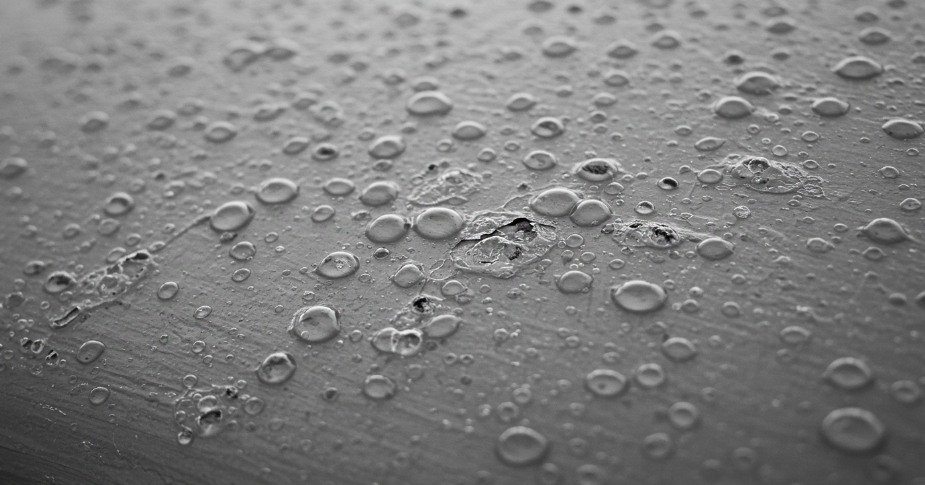
In GRP hulls, water can penetrate through the outer barrier and move into voids, microcracks and other imperfect areas inside the laminate system. Over time that can create fluid-filled blisters, chemical degradation and separation within the laminate structure.
Recent academic work on GRP and GFRP boat hulls describes the same practical pattern seen in yards:
- water uptake starts long before visible damage appears
- blistering often develops below the gelcoat or barrier layer
- more severe cases can widen into hydrolysis and delamination
- proper diagnosis matters because damage may be hard to read once the hull has dried
That last point matters commercially. Drying can hide visible symptoms without removing the underlying problem.
Why Diagnosis Comes Before Full Treatment
The term gets stretched in both directions. Some teams treat any blister as a full-hull emergency. Others treat broad blistering as a cosmetic repaint problem. Neither shortcut is reliable enough for a serious yard decision.
Many older GRP yachts can show elevated moisture without immediate structural failure. At the same time, blistering, acidic fluid, laminate softening or delamination can justify a much deeper repair path. The decision only becomes reliable after inspection, moisture assessment, sounding and opening-up of suspect areas.
That is why diagnosis has to come before committing to treatment scope.
How Osmosis Treatment Usually Runs
The treatment path depends on extent, though the working sequence is generally consistent.
1. Condition assessment
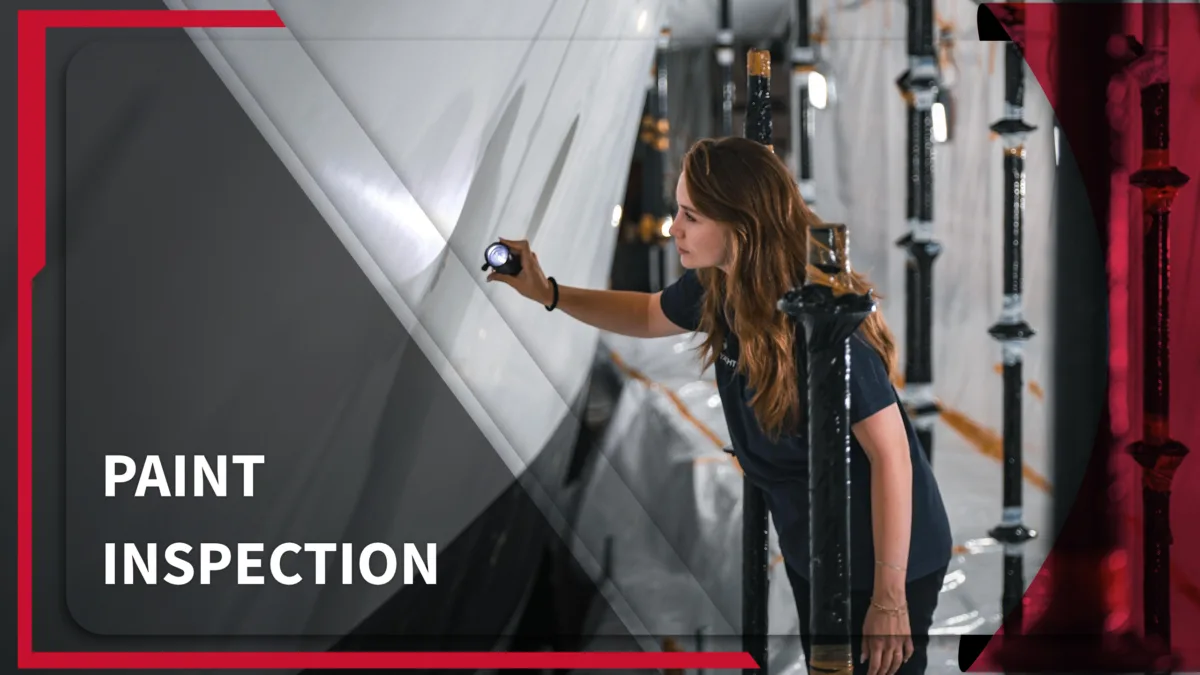
The yard first needs to understand where the damage sits, how broad it is and whether the issue is limited to blistering or already affecting deeper laminate integrity. Moisture measurement, sounding and visual mapping still matter, though academic work also shows why more advanced inspection can be useful when the hull has already spent time ashore.
2. Opening the affected areas
Blisters, failed barrier layers and damaged gelcoat have to be opened so the real condition can be judged. This is where the scope often changes: some hulls remain local-repair jobs, others widen quickly.
3. Cleaning and drying
The exposed laminate needs to be cleaned and dried to the point where repairs can hold. Drying time is one of the biggest schedule drivers in the whole process.
4. Laminate repair and rebuilding
Where the laminate has been compromised, the repair path may include localized rebuilding, fairing and re-establishing the protective barrier. This is where composite and GRP capability matters more than cosmetic finish alone.
5. Barrier rebuild and underwater coating system
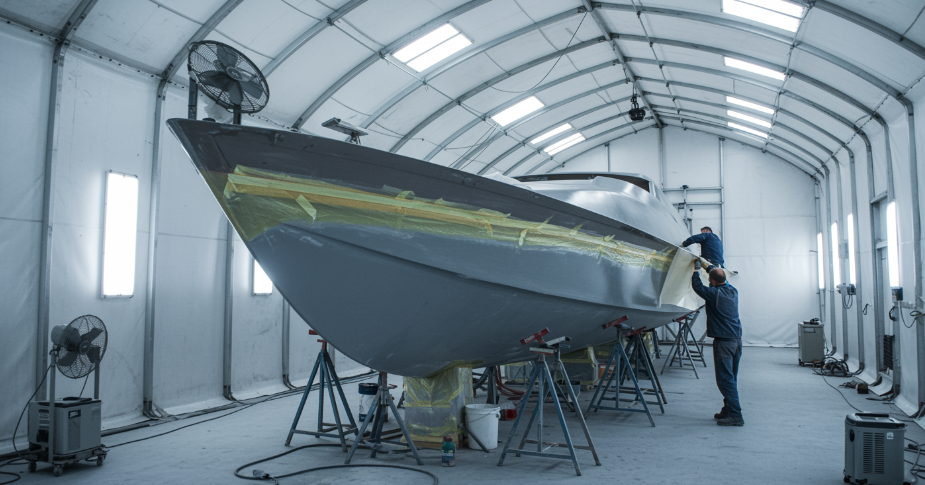
Once the structure is ready, the hull moves back through fairing where needed, barrier restoration and then antifouling as the final underwater system.
Why Diagnosis Has To Come Before Committing to Full Treatment
The most expensive mistake is starting the wrong size of repair.
Under-treatment leaves damaged laminate or trapped moisture behind. Over-treatment pushes the yacht into unnecessary cost, drying time and coating rebuild.
Good diagnosis is trying to answer:
- how much of the hull is actually affected?
- is the damage mainly blistering, or has it moved into deeper laminate degradation?
- does the yacht need local repair or a much broader underwater rebuild?
- what can be proven before the drying and repair sequence starts?
This is one reason osmosis work often overlaps with inspection-led pages such as what is a marine survey and technical support services such as tests and surveying.
What Usually Drives Cost and Duration
The main cost drivers are not hidden.
They are usually:
- the true extent of blistering and laminate damage
- how long the hull needs to dry
- whether the job stays local or becomes a full-hull treatment path
- how much fairing and barrier rebuild is required afterward
- whether other underwater work is being done in the same docking period
So the commercial question is not only “does the yacht have osmosis?” The more important question is “what level of treatment does this hull actually need?”
If the broader budget issue is live, the nearest adjacent page is cost to refit a yacht.
When Osmosis Treatment Becomes Part of a Wider Refit
The project usually stops being a simple underwater repair when:
- the treatment scope is broad enough to dominate the docking schedule
- other underwater repairs are already open
- fairing, barrier rebuild and antifouling all sit inside the same critical path
- the yacht needs stronger documentation, inspection or owner-side control before handover
At that stage, osmosis treatment is not a side job. It becomes one more major work package inside the yard period.
FAQ
Does every blistered GRP hull need full osmosis treatment?
No. The correct repair level depends on extent, laminate condition and what inspection shows after opening-up. Some cases stay local. Others justify a much broader treatment path.
Do moisture readings alone prove structural damage?
No. Moisture readings are useful, but they do not automatically prove serious structural failure. They need interpretation alongside physical inspection and other findings.
Why does drying take so long?
Because the repair is not just about removing visible blisters. The laminate has to reach a condition where the rebuild can hold properly before barrier restoration begins.
Where does osmosis treatment usually sit in the wider yard scope?
It typically overlaps with composite repair, fairing, barrier rebuilding, antifouling and the full underwater docking sequence.
External Sources Consulted
- JMSE, Nondestructive Detection of Osmotic Damage in GFRP Boat Hulls Using Active Infrared Thermography Methods
- Applied Sciences, Possibilities of Detecting Damage Due to Osmosis of GFRP Composites Used in Marine Applications
- Infrared Physics & Technology, Detection of Osmotic Damages in GRP Boat Hulls
- JMSE, Marine Application of Fiber Reinforced Composites: A Review