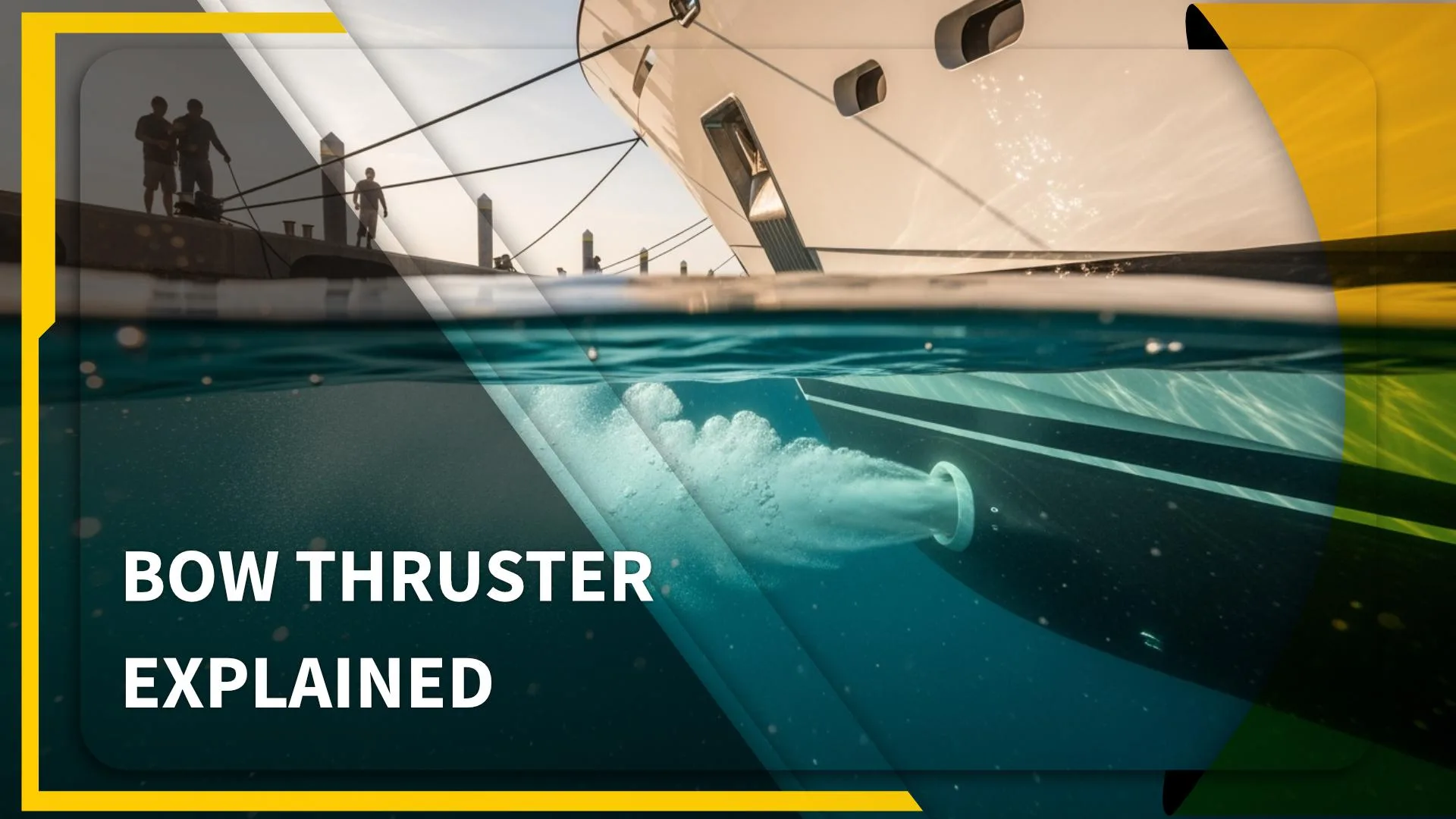
A bow thruster is a low-speed manoeuvring device that gives lateral control at the bow when the yacht is docking, leaving berth, holding position against wind or current, or working through tight marina movements. In yacht refit terms, the useful definition is stricter than “extra pushing power.” A bow thruster is an installed control package whose real value depends on tunnel or retractable geometry, drive condition, power supply, control response and the proof gathered after the work is complete.
Bow thruster problems rarely start and end at the joystick. Weak thrust, delayed response, unusual noise, nuisance trips, vibration, water ingress, motor stress, hydraulic instability or poor harbour handling often come from the surrounding system: tunnel condition, propeller condition, drive load, battery or hydraulic support, controls, installation sequence or local hull condition.
Bow Thruster Authority Begins in Low-Speed Manoeuvring Reality
Bow thrusters earn their value in the part of yacht operation where rudder effect and ahead speed give limited help. Docking, stern-to arrival, crosswind correction, marina turns, berth departure and slow harbour positioning all load the thruster differently from normal passage.
The system has to be read through manoeuvring reality above headline thrust claims. Hull shape, windage, displacement, speed, water depth, tunnel immersion, operator input, harbour conditions and the yacht’s response time all change what the thruster feels like in use.
The practical question is simple: does the installed thruster give clean, repeatable low-speed authority in the situations the yacht actually faces? The engineering answer sits in the package behind the joystick.
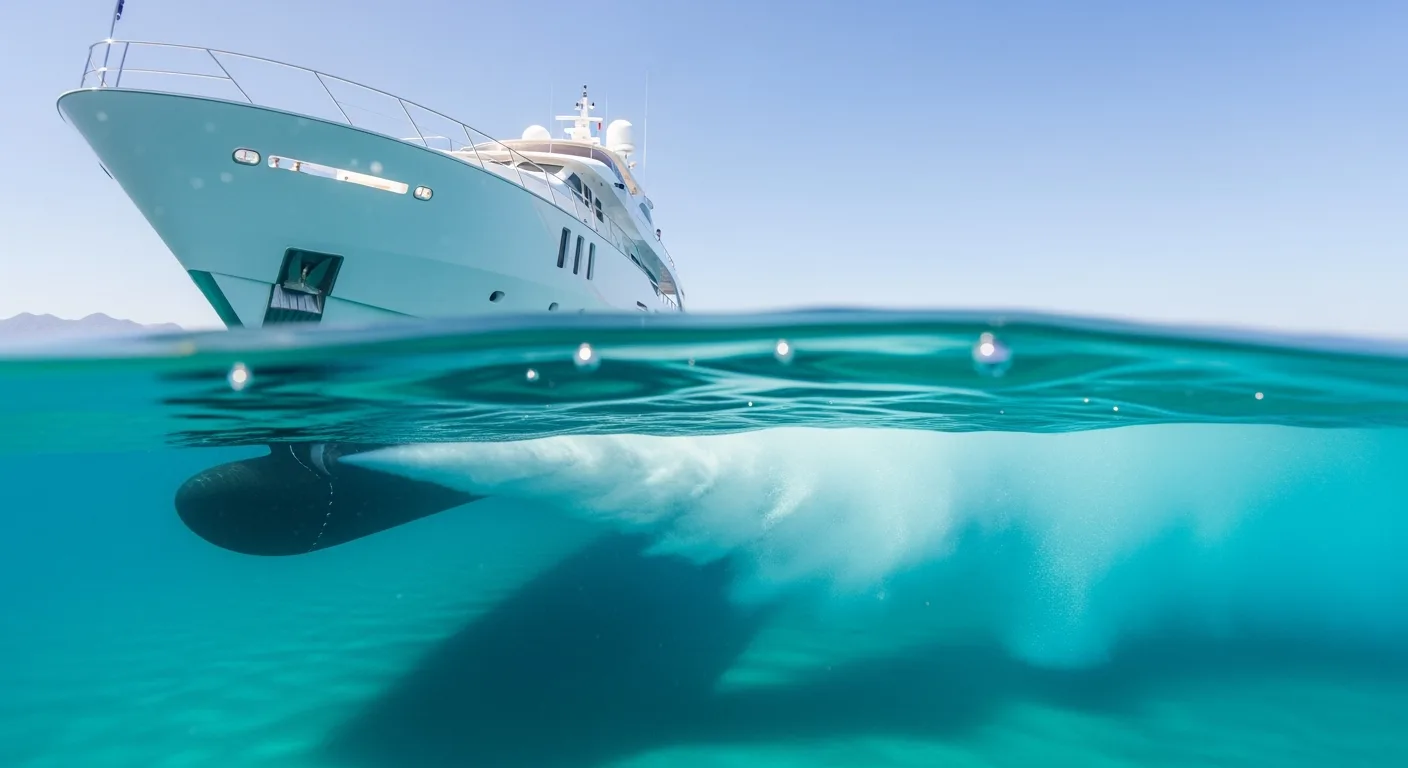
Tunnel and Retractable Routes Create Different Engineering Burdens
Tunnel thrusters generate side force through a transverse tunnel near the bow, with the drive and propeller package fixed around that route. Their behaviour depends on tunnel geometry, fairing quality, local flow condition, propeller state, seal and bearing condition, and the way the tunnel interacts with the hull around it.
Retractable systems move the thrust unit into operating position when needed and reduce appendage drag when retracted. Their engineering burden shifts toward deployment reliability, actuator condition, sealing, structure, space claim and the control sequence that has to put the unit in the right state before manoeuvring demand arrives.
Both routes solve the same problem through different installations. The better fit depends on hull form, operating profile, available internal volume, drag sensitivity, service access and the level of integration the project is ready to carry during refit.
Drive Type Decides How the Thruster Feels Under Load
Bow thrusters are commonly driven by electric or hydraulic power. Electric packages place authority on motor condition, battery support, cabling, switching, protection and voltage stability during short heavy demand. Hydraulic packages place authority on pumps, pressure stability, valves, cooler performance, leakage control and the wider hydraulic system that feeds the unit.
That makes the thruster more than a propeller in a tube. The manoeuvring feel the captain notices often starts in voltage sag, pressure lag, thermal load, weak response, contaminated oil, control delay or repeated protection trips before the underwater unit itself becomes the only suspect.
This keeps the topic connected to mechanic and hydraulic systems and also to electric and electronic systems where controls, power delivery, alarms and signal response shape how quickly the thruster turns command into thrust.
Structure, Sealing and Local Hull Condition Still Control the Result
A bow thruster package lives inside the hull regardless of whether the operator thinks about it. Tunnel fairness, local reinforcement, sealing condition, gear leg support, bearing arrangement, corrosion exposure, water ingress route and access around the unit all affect long-term service behaviour.
This is the point where a “small manoeuvring unit” turns into a proper yard package. A leaking seal, noisy bearing, corroded tunnel, damaged propeller, disturbed fairing, local impact history or poorly finished tunnel opening often widens into underwater work, structural correction, coating repair and internal access effort.
Once the job crosses that line, it becomes superyacht refit work. Hull-opening, underwater closure, internal access and repeated reliability findings all move it into a broader project route.
Control Complaints Require Separation Before Parts Are Blamed
Poor bow-thruster performance is easy to describe and easy to misread. The complaint reaches the project as weak push, slow reaction, poor harbour confidence, noise or intermittent availability. The cause often sits in propeller condition, tunnel fouling, motor load, voltage drop, hydraulic pressure, control input quality, thermal protection, water ingress or a local mechanical wear route.
Diagnosis requires separation before the project starts throwing parts at the unit. A captain’s manoeuvring complaint is operationally valuable, but the release decision still depends on measured checks, condition findings and a clear view of where the authority is being lost.
That release evidence is built through tests and surveying, where dockside measurements, electrical or hydraulic readings, leakage observations, vibration or noise findings and post-work manoeuvring checks support the decision.
Dockside Checks and Manoeuvring Proof Close the Package
Bow thruster work closes through a blend of static and dynamic evidence. Dockside checks show control response, direction change, current draw or hydraulic pressure behaviour, alarm status, leakage, abnormal noise and the basic readiness of the package before the yacht moves.
The more useful proof then comes through harbour manoeuvring or controlled trial conditions. The yacht has to show that the thruster responds cleanly, develops authority predictably and supports the handling expectation the crew and owner side are relying on. Where the release route widens into broader operational verification, the adjacent evidence page is sea trial.
This is the point where the system becomes believable. A thruster that is technically complete on paper but weak in harbour handling still leaves the project open.
Project Control Matters Once Access and Underwater Work Open Up
Bow thruster scope broadens quickly when the unit comes out, the tunnel opens, underwater closure changes, fairing repair enters, cabling or hydraulic lines are disturbed, or local structure requires attention. Dry-dock timing, underwater sequence, specialist attendance, coatings, testing windows and owner reporting all begin moving together.
At that stage the package needs superyacht refit project management. Without one coordinated route, the project ends up with disconnected underwater work, machinery work and acceptance testing that fail to close as one manoeuvring package.
This is especially important when the thruster complaint has already affected operational confidence. The owner side is then judging the package on usable harbour behaviour as much as on workshop completion.
The Technical File Has to Protect the Next Harbour Decision
A credible bow-thruster file shows what unit type is installed, what condition findings triggered the work, what mechanical or electrical or hydraulic elements were opened or renewed, what underwater or structural findings mattered, what dockside checks were completed, what manoeuvring proof was gathered and what limits or monitored items remain.
That file matters after delivery. If the same complaint returns, the team requires a baseline that separates new deterioration from unresolved installation issues or already-monitored conditions.
For a yacht that depends on confident low-speed handling in crowded ports and marinas, that record is part of the equipment value. It keeps the next engineering and operational decision tied to evidence.
FAQs
What does a bow thruster do on a yacht?
It gives lateral control at the bow during low-speed manoeuvring such as docking, berth departure, marina turning and wind or current correction.
How does a bow thruster work?
It develops sideways thrust at the bow through a tunnel or a deployable unit, driven by electric or hydraulic power and controlled from the yacht’s manoeuvring interface.
What is the difference between a tunnel and retractable bow thruster?
A tunnel thruster works through a fixed transverse tunnel in the hull. A retractable thruster deploys into operating position when called for and retracts outside use. The structural, service and drag consequences differ accordingly.
Why does a bow thruster feel weak even when it still runs?
Weak feel often begins in propeller condition, tunnel fouling, voltage drop, hydraulic lag, wear, leakage, control delay or thermal protection before total unit failure enters the picture.
How is bow-thruster work confirmed before redelivery?
Confirmation comes from dockside checks, leakage and noise observations, electrical or hydraulic response, direction-change behaviour and manoeuvring proof that shows clean low-speed authority in service condition.