
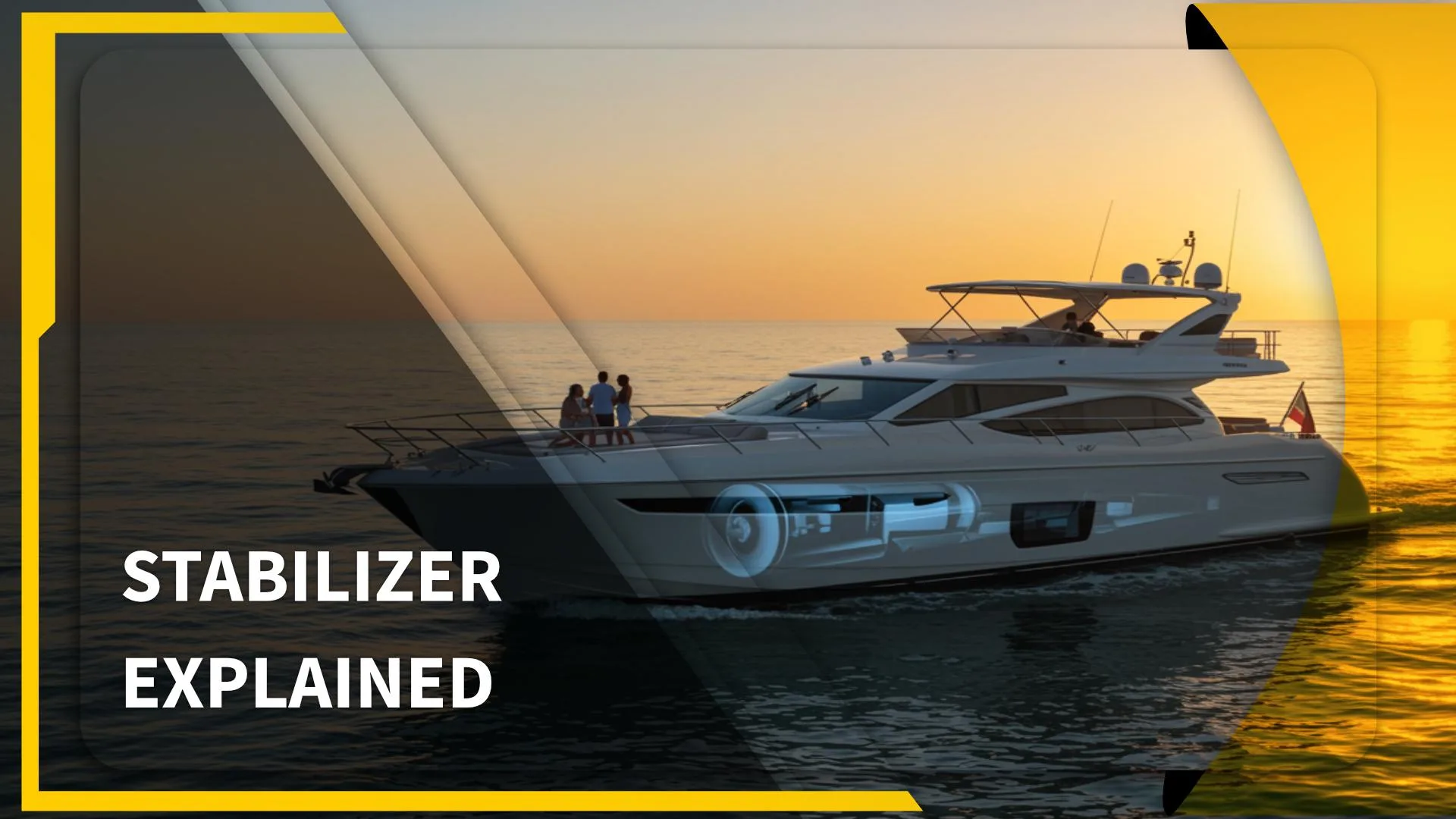
A yacht stabilizer is a roll-control system that reduces vessel motion and protects comfort, operability and confidence on board. In yacht work the term most often points to fin-based or gyroscopic systems, but the useful engineering meaning sits above product type: the stabilizer is an installed motion-control package that senses roll, generates correcting force and keeps doing it in the yacht’s real operating environment.
That makes stabilizer work more than a comfort upgrade. Once the system enters refit scope, the job reaches into structure, foundations, hydraulic or electrical power, sensors, controls, cooling support, alarms, access, commissioning and proof at sea. A weak stabilizer package often looks acceptable alongside and then loses authority when the yacht actually starts moving through the conditions it was meant to control.
Roll Control Starts With Installed Reality
Stabilizer performance begins with the yacht as installed. Hull form, displacement, speed range, tank condition, centre of gravity, appendage arrangement, available volume and mission profile all shape the system response once the yacht is in service.
Stabilizer discussions drift quickly from comfort language into yard language. The real questions are practical: where does the correcting force enter the hull, what supports it structurally, what powers it, how is motion sensed, how is the system controlled and how is the result proven before redelivery?
The answers depend on the yacht more than the headline technology. A system that suits one hull and operating profile often turns into an awkward fit on another where space, power, structural route or zero-speed expectations change the engineering burden.
Fin and Gyro Systems Solve the Same Motion Problem Through Different Paths
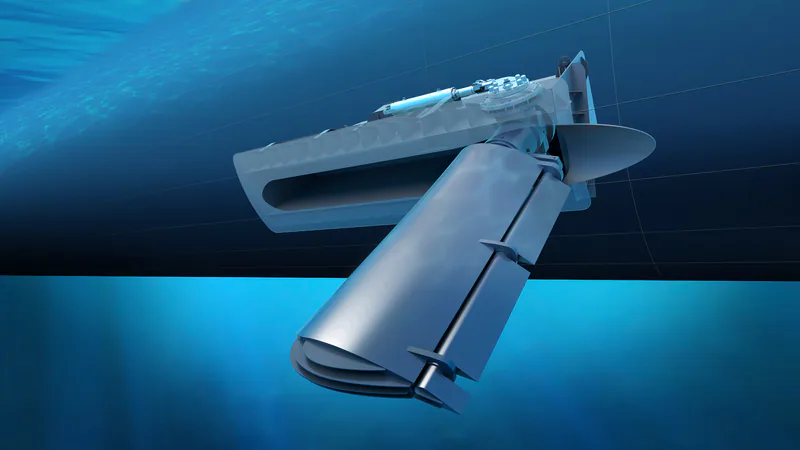
Fin stabilizers reduce roll by using hydrodynamic surfaces that create correcting force through water flow and controlled fin angle. Their effectiveness grows out of fin geometry, shaft support, actuator authority, hydraulic or electro-mechanical drive quality, control logic and the way the fins interact with the hull at speed and at low-speed operation.
Gyroscopic stabilizers work through stored angular momentum and a controlled reaction against hull roll. Their performance depends on foundation stiffness, enclosure integration, cooling, electrical load, control settings, spin-up behaviour and the relationship between the gyro unit and the yacht’s actual motion profile.
Both routes target the same onboard result: less roll and stronger comfort. The engineering path is different, so the refit decision turns on integration burden, available space, structural route, operating profile, power availability, maintenance logic and the type of proof the owner expects before release.

Zero-Speed and Underway Operation Create Different Proof Routes
The yacht asks different things from a stabilizer at anchor, during manoeuvre and underway. Zero-speed service pushes the system toward low-water-flow or static-motion control, while underway service asks for stable authority across speed, heading, sea condition and roll input changes.
That distinction matters because the same system often feels convincing in one mode and underwhelming in another. A yacht owner often remembers anchorage comfort, while the captain and project team are reading roll response underway, control smoothness, alarm behaviour, noise, heat and steering-side consequences.
The proof route therefore has to match the operating expectation. Dockside checks, control calibration and initial movement tests are only one layer. The system earns confidence when its response lines up with the motion profile the yacht actually faces after delivery.
Hydraulic Power, Sensors and Control Logic Carry the Real Authority
The visible fin or gyro unit is only one part of the package. Power packs, pumps, valves, accumulators, coolers, sensors, reference units, control cabinets, feedback loops, alarms and bridge or local interfaces all shape how the stabilizer behaves when the yacht starts moving.
Many motion-control problems appear here. The hardware looks complete, yet the authority is weak because hydraulic response is slow, pressure stability is poor, calibration drifts, sensors are reading badly, cooling is marginal or the control logic is fighting the motion and missing it.
That part of the package often crosses into electric and electronic systems, especially where signal quality, automation interfaces, alarm logic or control hardware sit on the critical path. The stabilizer decision stays mechanical at the hull and becomes electro-hydraulic in operation.
Structure and Access Decide the Refit Burden
Stabilizer work gets expensive or disruptive when foundations, fin pockets, local reinforcement, internal access, tank adjacency, pipe routes, cable routes, cooling runs or equipment removal enter the package. A straightforward service intervention turns into a structural and access-led yard project once the yacht is opened.
That is especially true in retrofit work. Fin systems often pull the project toward hull openings, local steel or composite work, sealing arrangements and underwater geometry decisions. Gyro systems often pull the project toward major internal foundations, equipment movement, cooling support, electrical load review and space sacrifice inside already crowded technical zones.
At that point the system belongs inside superyacht refit logic as a work package with structural, mechanical, electrical and commissioning consequences beyond a standalone equipment insertion.
Condition Findings Often Sit in Bearings, Seals and Heat
A stabilizer system often announces its condition through operating signs well before any dramatic failure. Leakage, unusual noise, weak authority, inconsistent fin movement, alarm activity, rising temperatures, hydraulic contamination, seal wear, bearing distress, vibration or delayed response all point toward wear, calibration drift or system-side weakness.
Those symptoms require separation. Weak roll-control performance often begins in a worn fin mechanism, a struggling power pack, a hot hydraulic circuit, poor sensor input, a structural looseness issue or a mismatch between the system and the operating expectation placed on it.
Condition review sits naturally beside tests and surveying. Measured observations, running data, leakage pattern, temperatures and alarm history turn a comfort complaint into a technical finding with operational value.
Sea Trial Turns Motion Control Into Evidence
Sea trial is the point where stabilizer work becomes believable. The yacht has to show roll response, control smoothness, alarm stability, temperature behaviour, noise level and operating authority in the kind of conditions that make the system relevant in the first place.
The release proof is completed through sea trial. The trial avoids chasing perfect water or theatrical numbers. It confirms that the stabilizer package responds cleanly, remains stable and supports the onboard operating expectation after the yard work is complete.
For refit packages, the trial also closes the gap between workshop completion and owner-side acceptance. A fin serviced in the shed or a gyro recommissioned inside the yacht becomes a release-ready system only when motion response and operating behaviour are recorded in service condition.
Project Control Matters Once the System Opens Up
Stabilizer work broadens quickly when findings appear during opening-up or service. A seal job exposes shaft wear, a hydraulic complaint opens contamination and flushing questions, a control issue widens into sensors and cabling, and a retrofit package touches structure, class-sensitive drawings, access and underwater work sequence.
At that point, superyacht refit project management has to own the package. Procurement, specialist attendance, dry-dock timing, underwater closure, calibration, dockside tests and sea-trial windows all have to stay tied to one release path.
Without that coordination, stabilizer work fragments into disconnected mechanical, electrical and trial tasks, and the owner side receives a system that is technically complete on paper while still weak in operating proof.
The Acceptance File Has to Show More Than Completion
A credible stabilizer file shows what was opened, serviced, renewed, calibrated or changed; what structural or foundation findings were relevant; what hydraulic or control checks were completed; what leakage, temperature or alarm observations were recorded; what dockside tests were run; and what sea-trial behaviour supports release.
That file matters later. When the crew reports noise, weak authority, heat, leakage or unsatisfactory motion control after delivery, the project team requires a baseline that separates completed work, monitored conditions and new deterioration.
For a yacht that depends on stabilizer performance for guest comfort and operational confidence, the acceptance file is part of the system itself. It keeps the next engineering decision anchored to evidence over memory.
FAQs
What is a yacht stabilizer?
A yacht stabilizer is an installed roll-control system that reduces vessel motion and improves comfort and operability. In yacht practice this most often means fin stabilizers or gyroscopic stabilizers.
How do fin stabilizers work on a yacht?
Fin stabilizers use controlled underwater fins to create correcting force against roll. Their result depends on fin geometry, actuator response, shaft support, control logic and the yacht’s actual operating condition.
What is the difference between fin and gyro stabilizers?
Fin systems generate correcting force through water interaction and controlled fin angle. Gyro systems generate correcting force through stored rotational energy and controlled reaction inside the yacht. The engineering burden, space route and proof path differ accordingly.
Do stabilizers work at zero speed?
Some systems are designed to deliver meaningful zero-speed control, while others show their strongest authority underway. The release decision depends on the operating expectation set for the yacht and the proof gathered in that mode.
How is stabilizer work confirmed before redelivery?
Confirmation comes from service records, leakage and temperature checks, control and alarm checks, dockside testing and sea-trial evidence that shows the system responding cleanly in service condition.