


Yacht HVAC is the climate-control system that keeps cabins, guest areas, crew spaces and technical zones inside a usable temperature and humidity envelope while the yacht moves through changing sea, weather and occupancy conditions. In refit work, HVAC means far more than cold air. It is an installed system of plant, pumps, seawater cooling, air handling, ducting, controls, drains and operating proof.
HVAC problems rarely stay inside one grille or one cabin complaint. Warm cabins, high humidity, poor air distribution, condensate overflow, noisy fan coils, unstable chiller loading, weak fresh-air control or generator-heavy electrical demand often point toward a wider system question that lives in layout, sizing, circulation, controls or maintenance condition.
Climate Control Starts With the Whole Yacht
HVAC performance begins with the yacht as an operating environment. Interior volume, glazing, insulation, guest density, galley load, machinery heat, outside temperature, humidity, door opening pattern, service mode and operating geography all shape the load the system has to carry.
That turns HVAC into a yacht-wide technical decision above a cabin-by-cabin comfort request. A warm suite often begins in undersized plant, poor water circulation, fouled heat exchange, weak air distribution, bad zoning logic, condensate restriction or a control layer that is reading the wrong condition.
The useful engineering question is direct: does the installed system hold the intended onboard environment under the load profile the yacht actually sees? Everything else follows from that.
Plant Architecture Shapes the Service Burden
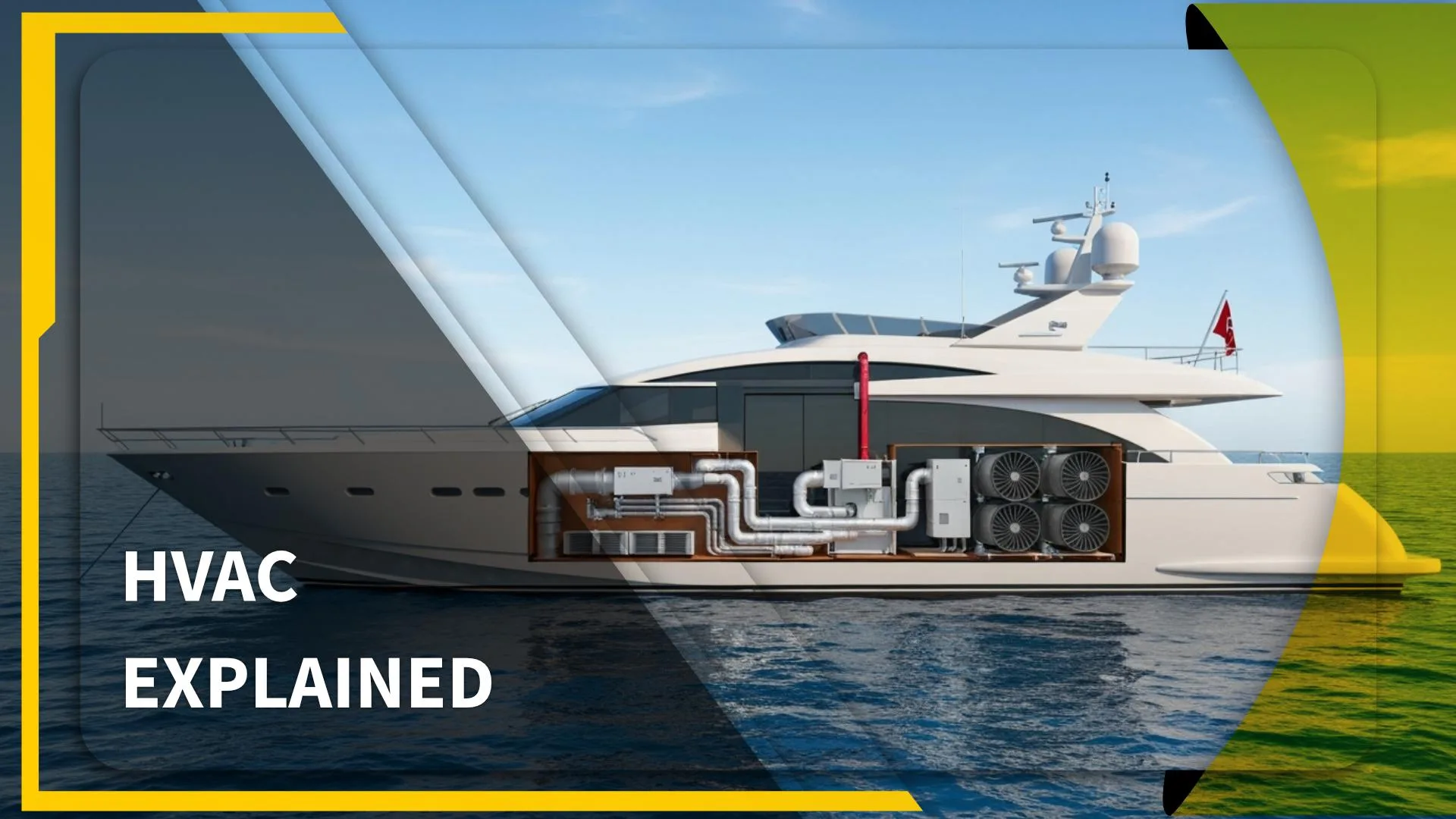
Most yacht HVAC packages are built around a central chilled-water plant or a more distributed direct-expansion route. Chilled-water systems move temperature-controlled water to air handlers or fan coils around the yacht. Distributed systems place more of the cooling route closer to each served zone. The architecture changes the service burden, access burden, noise route and failure pattern.
On larger yachts, chilled-water logic often suits longer pipe runs, finer zoning and cleaner guest-space acoustics because the heavier plant stays concentrated in technical areas. A distributed route fits smaller or more compartmentalized packages where plant concentration, pipework volume or available machinery space push the project toward another layout.
The architecture matters in refit because it determines how deep the package reaches into plant rooms, cable routes, duct routes, technical lockers, ceilings, drains and access panels once the yacht opens up.
Seawater Flow and Heat Rejection Hold the Real Capacity
Marine HVAC earns its cooling capacity by moving heat out of the yacht. Chillers, condensers, seawater pumps, strainers, pipework, valves and heat-exchange surfaces all sit on that route. When seawater flow weakens, fouling builds, strainers load up or heat exchange loses efficiency, the plant starts carrying less authority even while the control screen still looks normal.
This is one of the common marine-specific failure paths. A yacht shows warm cabins, unstable temperature pull-down, high compressor stress or nuisance alarms while the deeper problem sits in seawater-side flow and condenser-side heat rejection.
That route keeps HVAC close to the wider super yacht refit environment because seawater piping, access, cleaning, pump condition and plant-room serviceability often widen into a bigger yard package once the real restriction is found.
Air Handlers, Ducting and Condensate Decide Cabin Reality
The cabin experience is shaped less by the plant room and more by the terminal side of the system. Air handlers, fan coils, duct sizing, grille placement, balancing, return-air path, condensate trays, drains and noise control determine what the guest or crew actually feels.
That is where many comfort complaints become real. One zone overcools, another stays heavy and damp, one cabin pulls down quickly while another struggles, and the project discovers that air path, balancing, condensate management or local control is steering the result more than raw plant capacity.
Humidity control matters as much as temperature. Poor latent-load control leaves cabins cool but clammy, drives mildew risk, creates odour complaints and turns condensate into a service issue outside a controlled system response.
Zoning and Controls Expose the Difference Between Capacity and Control
HVAC complaints often sound like capacity failures while the real weakness sits in control logic. Sensors, thermostats, networked control modules, valve actuation, pump staging, fan-speed control, setpoint logic and fresh-air coordination decide how the plant behaves once the yacht moves from idle mode into full guest use.
HVAC sits partly inside electric and electronic systems. The plant is sometimes mechanically healthy while calibration drift, bad feedback, unstable control logic or weak communication between components keeps the onboard climate unstable.
Good zoning therefore means more than separate thermostats. It means each area receives the right amount of cooling, dehumidification and airflow without destabilizing the wider plant or producing noise, short-cycling or uneven load across the yacht.
Refit Scope Widens Through Access, Noise and Water
HVAC becomes a serious refit package when the project moves beyond routine service and into plant replacement, piping changes, duct rerouting, chilled-water work, insulation renewal, fresh-air revision, control migration or repeated comfort failures that require deeper opening-up.
Access is often the hidden driver. Ceiling voids, joinery constraints, technical lockers, machinery-room congestion, condensate falls, drain routing, acoustic treatment and equipment removal routes all affect what the project changes during the yard period.
Water is the second driver. Chilled-water leaks, condensate overflow, poor drain falls, sweating insulation, corrosion around trays or long-neglected pipework turn climate control into a wider condition-and-reliability decision beyond a comfort-only issue.
Larger HVAC packages need superyacht refit project management so access, procurement, commissioning windows and redelivery expectations stay tied to one coordinated route.
Commissioning Turns a Cold Plant Into a Working System
HVAC work only closes properly through commissioning. Plant start-up, flow verification, pull-down behaviour, supply and return temperatures, humidity response, valve action, fan operation, alarm behaviour, control calibration, condensate drainage and zone balance all belong to that stage.
Measured verification belongs with tests and surveying. Without measured checks, the project ends up relying on a short comfort impression over a documented view of how the system behaves through operating states.
Commissioning also separates local fixes from system performance. A replaced fan coil or cleaned strainer improves one symptom while chilled-water balance, humidity control or fresh-air distribution remain weak elsewhere in the yacht.
Operating Proof Matters More Than a Dockside Impression
HVAC often looks acceptable on a calm dockside day and then struggles once ambient temperature rises, guest load increases, galleys heat up, exterior doors keep opening or the yacht changes operating pattern. Proof therefore belongs to the conditions that matter for actual use.
Where wider operational confirmation is part of the release path, the adjacent evidence route is sea trial. The trial reads onboard systems, occupancy, noise, temperature stability and control behaviour once the yacht is functioning as a yacht in service condition.
That operating proof becomes especially important after major HVAC refit work, chilled-water package changes, control migration or repeated guest-area complaints that had already escaped routine maintenance.
The Technical File Keeps the Climate Decision Usable
A credible HVAC file shows what plant was serviced or replaced, what flow and temperature readings were recorded, what control changes were made, what zones were balanced, what drain and condensate findings mattered, what alarms were seen, what commissioning checks were completed and what operating evidence supports release.
That file matters later. If cabins go warm, humidity climbs, noise returns or drains overflow after delivery, the project team requires a baseline that separates completed work, monitored conditions and later deterioration.
For a superyacht in service, that file protects the next engineering decision. It turns climate complaints into traceable system history over memory and frustration.
FAQ
What is HVAC on a yacht?
HVAC on a yacht is the installed heating, ventilation and air-conditioning system that controls temperature, humidity, airflow and fresh-air management across guest, crew and technical spaces.
How does a chilled-water yacht HVAC system work?
A chilled-water system cools or heats water in a central plant and circulates it to air handlers or fan coils around the yacht. Those local units transfer the temperature control into each zone while the plant and pumps carry the wider load.
Why does a yacht cabin feel cool but still humid?
That often points toward weak latent-load control, poor airflow, bad drainage, incorrect coil or valve behaviour, fresh-air imbalance or a wider control issue that keeps moisture removal behind the cabin temperature reading.
Why do some yacht cabins cool well while others stay warm?
The cause often sits in zoning, airflow, balancing, valve response, duct routing, control logic or plant distribution beyond one simple “bigger chiller†answer.
How is yacht HVAC work confirmed before redelivery?
Confirmation comes from flow and temperature checks, humidity response, control calibration, alarm review, condensate and drain checks, zone balance and operating proof that shows the system holding the intended onboard environment.