

Glossary Term
Load Line
A load line is a mark on each side of a vessel's hull, amidships, showing the deepest she may be loaded for the relevant sea area, season and water density. The distance measured vertically down from the upper edge of the deck line to the upper edge of the relevant load line is the assigned freeboard, so the mark is the visible form of a minimum freeboard. The arrangement is widely known as the Plimsoll mark.
The international rules sit in the International Convention on Load Lines, 1966. Its freeboard regulations take account of the different hazards in different zones and seasons, which is why one hull carries several lines.
What the marks show
In the 1966 Convention’s Annex I, the load line mark is a ring 300 millimetres in outside diameter, crossed by a horizontal line 450 millimetres long. The upper edge of that line marks the summer load line. Shorter lines beside the ring, each read at its upper edge, give the other limits:
- S: Summer, at the same level as the line through the ring.
- W: Winter. The winter freeboard is the summer freeboard plus an addition, so this line sits below S.
- WNA: Winter North Atlantic. For ships not more than 100 metres long, it is the winter freeboard plus 50 millimetres when entering the defined North Atlantic area in the winter period. For longer ships it equals the winter freeboard.
- T: Tropical. The tropical freeboard is the summer freeboard less a deduction, so this line sits above S.
- F: Fresh water in summer.
- TF: Tropical fresh water.
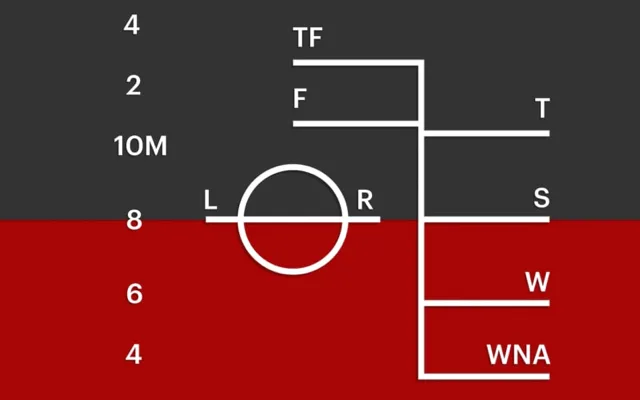
The fresh water lines sit higher because fresh water is less dense than seawater. A vessel of the same weight floats deeper in fresh water, then rises as she moves into the sea. Article 12 of the original 1966 Convention allows the appropriate load line to be submerged by the allowance recorded on the certificate in fresh water of unit density (1 tonne per cubic metre). For other water densities, the allowance is adjusted proportionately.
The mark of the authority that assigned the load line may be shown beside the ring as initials. The deck line above the mark is a horizontal line 300 millimetres long and 25 millimetres wide.
A yacht’s mark may be simpler. Under Part A of the REG Yacht Code (July 2024 edition including Corrigenda No. 1), where a yacht is assigned more than the minimum freeboard and her load line sits at or below the lowest seasonal line assigned at minimum freeboard, only the fresh water line need be marked.
Load line and draft marks
Draft marks at the bow and stern show the actual draft and trim at a given moment. The load line is a limit. The REG Yacht Code requires datum draft marks at the bow and stern, port and starboard, for assessing a yacht’s condition and trim, alongside the freeboard mark amidships.
Load line length is also a defined measurement, based on a waterline at 85 per cent of the least moulded depth. It is not length overall, so a yacht’s LOA does not settle whether a length threshold applies.
Which yachts need a load line
As adopted in 1966, the Convention applies to ships engaged on international voyages. Article 5 excludes, among others, new ships of less than 24 metres in length and pleasure yachts not engaged in trade. A private yacht does not fall under the Convention through her size alone.
Commercial yachts are treated differently. REG Yacht Code Part A, which the code describes as an equivalence under Article 8 of the 1966 Convention, applies to motor and sailing vessels of 24 metres load line length and over, or built before 21 July 1968 and of at least 150 gross tons measured under the tonnage rules in force on 20 July 1968, which are in commercial use for sport or pleasure and carry no cargo and no more than 12 passengers. For yachts subject to these provisions, freeboard is assigned under the 1966 Convention and an International Load Line Certificate (1966) is issued. Where the load line assigned is not all-seasons, the code says the operating limitation should be stated on the load line certificate and the yacht’s code certificate.
The 2024 Code’s application also depends on its edition and transition provisions: qualifying existing yachts may continue under earlier survey standards. Chapter 12 specifically uses the unamended 1966 Convention for its freeboard requirements.
Whether a particular yacht needs a load line depends on her flag, load line length, build date, private or commercial use, passenger numbers and voyages. Confirm the requirements for a particular yacht with her flag Administration.
Assignment, certificate and port checks
Under Article 13 of the original 1966 Convention, survey and marking are carried out by officers of the flag Administration, or by surveyors or recognised organisations it nominates; the Administration remains fully responsible for the work. Under the REG Yacht Code, the freeboard must be compatible with hull strength, intact and damage stability, and the Convention’s minimum bow height. The mark must correspond to the deepest loading condition in the yacht’s stability information booklet.
Subject to Article 12’s fresh water and river or inland-water departure allowances, the original 1966 Convention states that the appropriate load lines shall not be submerged when the ship puts to sea, during the voyage or on arrival. The REG Yacht Code adds that a yacht shall not operate in any condition that submerges her appropriate freeboard marks when at rest and upright in calm water.
Article 21 of the original 1966 Convention provides for certificate checks in another contracting party’s port. With a valid International Load Line Certificate, those checks are limited to permitted loading, the mark’s position against the certificate, and specified material alterations affecting fitness to proceed. For a valid exemption certificate, the check concerns its conditions. Control on the material-alteration ground may go only as far as needed to ensure the ship does not sail until she can proceed to sea without danger to passengers or crew.
Refits and alterations
Article 15 of the original 1966 Convention bars changes after survey to the structure, equipment, arrangements, material or scantlings it covered without the Administration’s sanction. The 1966 text also requires the certificate to be cancelled where material alterations to the hull or superstructure would need an increased freeboard.
For REG yachts, areas of a yacht that undergo alterations substantially changing her dimensions are treated as new construction, and a change that reaches a new threshold, such as load line length, requires compliance with the relevant provisions for a new vessel of that size. Detailed proposals go to the Administration at the earliest possible opportunity, which matters when planning a refit that lengthens the hull. The Administration and the assigning authority decide what is reassessed.
FAQs: Load Lines in Yachting
Do all yachts need a load line?
No. Load line requirements depend on a yacht’s flag, load line length, build date, commercial or private use, and operating conditions. Under the REG Yacht Code Part A, commercial yachts of 24 metres or more in load line length, carrying no cargo and no more than 12 passengers, generally require an assigned freeboard and an International Load Line Certificate (1966). The Code also covers certain yachts built before 21 July 1968 that meet the applicable tonnage threshold. Private pleasure yachts not engaged in trade are excluded from the original 1966 Convention, although national requirements may differ.
Can a load line change after a refit?
Yes. A refit involving significant structural alterations, changes to hull dimensions, or modifications affecting loading conditions may require reassessment of the yacht’s assigned freeboard. Changes to superstructures, tank arrangements, or equipment weight can also require a review of stability information. However, not every modification results in a new load line. Alterations affecting previously surveyed arrangements require the flag Administration’s approval, and substantial changes may trigger additional certification requirements.
What happens if a yacht exceeds its load line?
A yacht exceeds its permitted loading limit when the waterline rises above the upper edge of the applicable load line mark, subject to permitted fresh water and inland-water allowances. This reduces freeboard and reserve buoyancy and may compromise safety. For yachts subject to load line regulations, such overloading can result in inspection deficiencies, operational restrictions, or detention. Loading to a shallower draft is generally permissible, provided the yacht also meets its approved stability, trim, and operating requirements.
How do tropical and winter marks on the load line differ in practice?
Tropical and winter load lines reflect the different environmental hazards associated with designated sea areas and seasons. The tropical mark (T) sits above the summer mark (S), allowing a deeper draft under the applicable tropical conditions. The winter mark (W) sits below the summer mark, requiring greater freeboard to account for more severe seasonal conditions. These differences primarily concern seasonal sea hazards, while the fresh water marks (F and TF) account for differences in water density.
Is the load line the same as the draft marks near the bow and stern?
No. Draft marks indicate the yacht’s actual draft and help assess its trim and loading condition. The load line, positioned amidships, establishes the maximum permitted draft for the applicable season, sea area, and water density. While draft marks are used to assess how the yacht sits in the water, the load line represents an assigned minimum freeboard that must be respected during operation.
Who assigns or certifies a yacht’s load line?
The yacht’s flag Administration is responsible for load line assignment and certification. Surveys, calculations, and marking may be performed by the Administration or by authorised surveyors or recognised organisations, including classification societies acting on its behalf. The process involves assessing compliance with the applicable freeboard, structural strength, stability, and marking requirements. For qualifying yachts under the REG Yacht Code, the approved assignment is documented in an International Load Line Certificate (1966).
Does the load line affect a yacht’s charter license or insurance?
It can. Commercial yachts subject to load line requirements must hold the applicable certification to demonstrate regulatory compliance. Missing or invalid certification can affect their authorisation to operate commercially, including charter operations. Insurance implications depend on the policy terms and circumstances, particularly where non-compliance contributes to a loss or breaches an applicable policy condition. Load line compliance is therefore an important consideration for both commercial certification and insured operations.
Can a yacht operate without a visible load line mark?
A yacht required to display load line markings must maintain the markings specified by its applicable regulations and certificates. Missing, obscured, or improperly altered marks may lead to inspection deficiencies, operational restrictions, or detention. However, the full set of seasonal marks is not always required. Under the REG Yacht Code, certain yachts assigned greater than minimum freeboard may use simplified marking arrangements. The markings that are required must be permanent, correctly positioned, and legible.